


Listen to the article
The Central Bank of Nigeria (CBN) has firmly denied claims circulating on social media that its headquarters in Abuja was engulfed by fire, labeling the reports as “totally false” and urging the public to disregard them as fake content.
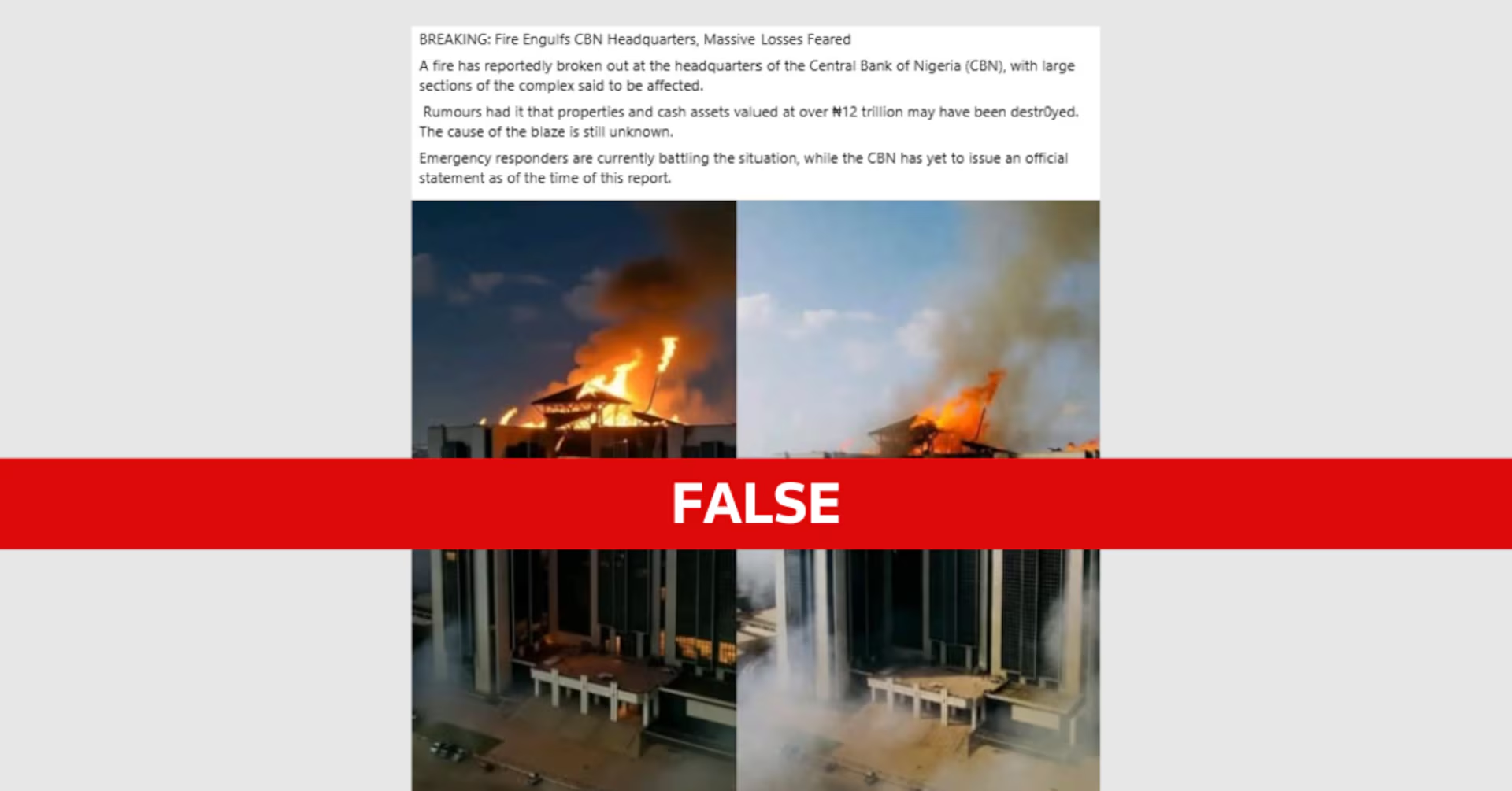
Social media posts that appeared on December 20 claimed the CBN headquarters had been “reportedly on fire,” suggesting that properties and cash assets worth an estimated 12 trillion naira (approximately $8.26 billion) may have been destroyed in the alleged blaze.
These posts were accompanied by images purportedly showing the CBN’s high-rise building with flames and smoke billowing from its roof. However, an examination of the uncropped versions of these images revealed they contained a watermark from “Grok,” an artificial intelligence image generator associated with X (formerly Twitter), indicating the images were fabricated rather than authentic photographs.
A Reuters Nigeria staff member confirmed no such fire had occurred at the CBN headquarters, corroborating the central bank’s official denial. The bank took to multiple social media platforms, including Instagram, Facebook, and LinkedIn, on December 21 to categorically refute the claims.
“The information going round social media that the CBN Head Office building has been engulfed by fire is totally false and should be considered Fake Content,” the bank stated in its official communications.
The false reports may have stemmed from confusion with a separate, genuine fire incident that occurred the same day at one of Nigeria’s Federal Inland Revenue Service (FIRS) offices in Abuja. The tax authority confirmed in a statement posted on X that a fire had indeed broken out that morning at their office located at No. 15, Sokode Crescent, Wuse Zone 5, Abuja—approximately 4.5 kilometers (2.8 miles) from the CBN headquarters.
According to the FIRS, the fire originated on the fourth floor of their building but was successfully contained by emergency responders. The tax authority reported that no injuries or fatalities resulted from the incident.
The timing of these events suggests the fabricated reports about the central bank may have been an attempt to exploit news of the real FIRS fire by creating more sensational claims about Nigeria’s banking regulator.
False information about financial institutions can potentially create unnecessary public panic and impact market confidence. The CBN plays a crucial role in Nigeria’s economy as the country’s monetary authority and financial system regulator. Any disruption to its operations could have significant implications for Africa’s largest economy, which explains the bank’s quick action to counter the misinformation.
Several government emergency response agencies, including the Federal Capital Territory Emergency Management Agency, the FCT Fire Service, the Federal Fire Service, the National Emergency Management Agency, and the Nigeria Police Force, did not respond to requests for comment on the matter.
This incident highlights the growing challenge of misinformation in the digital age, particularly with the advancement of AI image generation technology that can create increasingly convincing fake imagery. The CBN’s prompt response demonstrates the importance financial institutions place on maintaining public trust and quickly addressing false information that could potentially undermine confidence in critical economic institutions.
Fact Checker
Verify the accuracy of this article using The Disinformation Commission analysis and real-time sources.

10 Comments
Fabricated imagery is a growing challenge in the digital age. This incident underscores the importance of having authoritative sources quickly address and debunk false narratives.
It’s unsettling to see how AI-generated content can be used to create false narratives. Kudos to the central bank for taking steps to debunk these claims and maintain transparency.
While concerning to see AI-manipulated images, I’m glad the central bank was proactive in responding and clarifying that no actual fire occurred. Fact-checking is crucial in the digital age.
The central bank’s quick response to address this misinformation is commendable. Fabricated imagery can be a powerful tool for spreading falsehoods, so vigilance is key.
Interesting, so the images claiming a fire at Nigeria’s central bank were fabricated using AI technology. It’s good the bank was quick to address and debunk this misinformation.
This is a good example of how AI can be misused to generate misleading content. I’m glad the central bank acted swiftly to set the record straight and maintain public trust.
This incident highlights the growing challenge of combating AI-powered disinformation. I’m glad the central bank took swift action to correct the record and reassure the public.
This is an important fact check. Spreading false information, especially about critical financial institutions, can cause real harm. Kudos to the bank for swiftly refuting these claims.
It’s alarming that AI-powered disinformation can so easily spread these days. I hope the public will be vigilant about verifying claims, especially around sensitive topics like financial institutions.
While concerning to see AI-generated images intended to mislead, I’m glad the central bank took prompt action to correct the record. Maintaining trust in key economic infrastructure is crucial.