


Listen to the article
Viral Image Claiming to Show Melania Trump Pole Dancing for Jeffrey Epstein Confirmed as Artistic Fiction
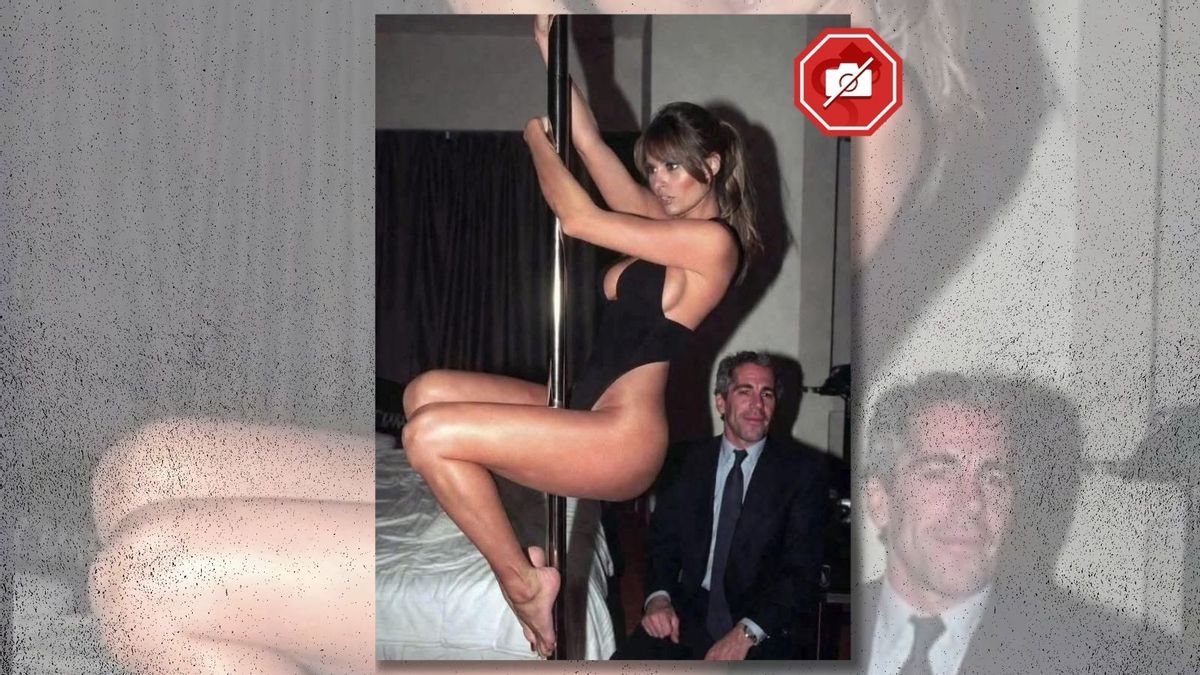
A viral image purportedly showing former First Lady Melania Trump pole dancing for convicted sex offender Jeffrey Epstein has been definitively debunked as a piece of artistic fiction, not an authentic photograph from the recently released Epstein files.
The manipulated image began circulating widely online in February 2026, shortly after Melania Trump made a surprise statement to the media denying ties to Epstein. In her statement, she described her correspondence with Epstein associate Ghislaine Maxwell as “casual” and explicitly stated, “I am not Epstein’s victim. Epstein did not introduce me to Donald Trump.”
The timing of the image’s circulation appears deliberately linked to the U.S. Department of Justice’s late January release of more than 3.5 million files related to Epstein, creating the false impression that it originated from those documents.
Fact-checkers have traced the image to its actual source: British artist Alison Jackson, who specializes in creating “convincingly realistic photographs, films and sculpture depicting celebrities doing things in private,” according to her website. Jackson posted the image to her Instagram account on February 9 with a caption stating, “Apparently, Melania was introduced to Donald Trump by Epstein…” However, the post included a crucial disclaimer: “Fictional image. No factual claims implied.”
Jackson is known for her provocative work using celebrity lookalikes and, more recently, AI technology to create realistic-seeming scenarios involving public figures. Her representatives have previously confirmed that her images combine lookalikes and digital manipulation techniques to achieve their realistic appearance.
Media analysts point out several technical inconsistencies that reveal the image’s manufactured nature. The shadow behind the female figure casts inconsistently, with peculiar lighting effects on Epstein seated in the background. Additionally, the woman’s fingers appear unnaturally cropped around the pole, and shadow placement between the pole and the woman’s legs lacks proper light source logic.
Multiple AI detection tools were employed to analyze the image, with mixed but telling results. Google’s SynthID found no specific Google AI watermarks but noted limitations in detecting other editing tools. Other detection platforms including Hive Moderation and Zero-GPT determined the image likely contained AI-generated or deepfake elements, while Sight Engine suggested it might not be AI-generated—highlighting the ongoing challenges in definitively identifying sophisticated digital manipulations.
The Department of Justice’s Epstein files, while extensive, contain no such photograph—a fact that media experts note would have been impossible to overlook had such an inflammatory image actually existed in the official documentation. Major news organizations would have immediately reported on such a discovery given its political significance.
This incident continues a pattern of misinformation surrounding Melania Trump’s past connections to Epstein and Maxwell. Previous investigations have addressed unsubstantiated claims that Melania was an escort before meeting Donald Trump at a party thrown by Maxwell, as well as other manipulated images purporting to show her with Maxwell and unidentified young women.
Media literacy experts caution that the combination of high-profile document releases, political polarization, and increasingly sophisticated image manipulation tools creates fertile ground for viral misinformation. The public is advised to verify extraordinary claims through multiple reputable sources, especially when sensational images emerge during politically charged moments.
The incident also highlights the growing challenge of distinguishing between artistic fiction meant as commentary and deliberate disinformation when images are shared without proper context on social media platforms, where disclaimers are often stripped away in subsequent reshares.
Fact Checker
Verify the accuracy of this article using The Disinformation Commission analysis and real-time sources.

9 Comments
It’s disheartening to see such blatantly manipulated content being passed off as real, especially around a sensitive political figure. Kudos to the news outlet for taking the time to thoroughly investigate and debunk this.
Interesting to learn this image was created by an artist known for staging realistic-looking celebrity scenarios. It’s a good reminder to be cautious about unverified content, even when it seems convincing.
Absolutely, fact-checking is so important these days with the prevalence of misinformation online. I’m glad the origins of this image were traced back to the artist.
Artistic expression can sometimes push boundaries, but in this case the fabricated image seems to have crossed an ethical line. I’m glad the truth has been uncovered and the public informed.
While I appreciate the artistic intent behind this type of staged imagery, the use of Melania Trump’s likeness in a sexual context is highly inappropriate and misleading. I’m glad the facts have been established.
While the subject matter here is concerning, I appreciate the news outlet taking the time to thoroughly investigate and debunk this fabricated image. Maintaining public trust in the media is vital.
This seems like a calculated attempt to spread misinformation and damage Melania Trump’s reputation. I’m glad the facts were able to be established, but it’s troubling that such content continues to circulate online.
You’re right, the timing of this image’s spread seems suspicious and aligned with the recent Epstein document release. Diligent fact-checking is the best way to counter such efforts.
This is a concerning fabrication, but I’m glad it’s been confirmed as artistic fiction rather than a real photo. Maintaining accuracy and integrity in the news is crucial, especially around sensitive political figures.