


Listen to the article
AI-Generated Image Falsely Links Pam Bondi and Trump to Epstein
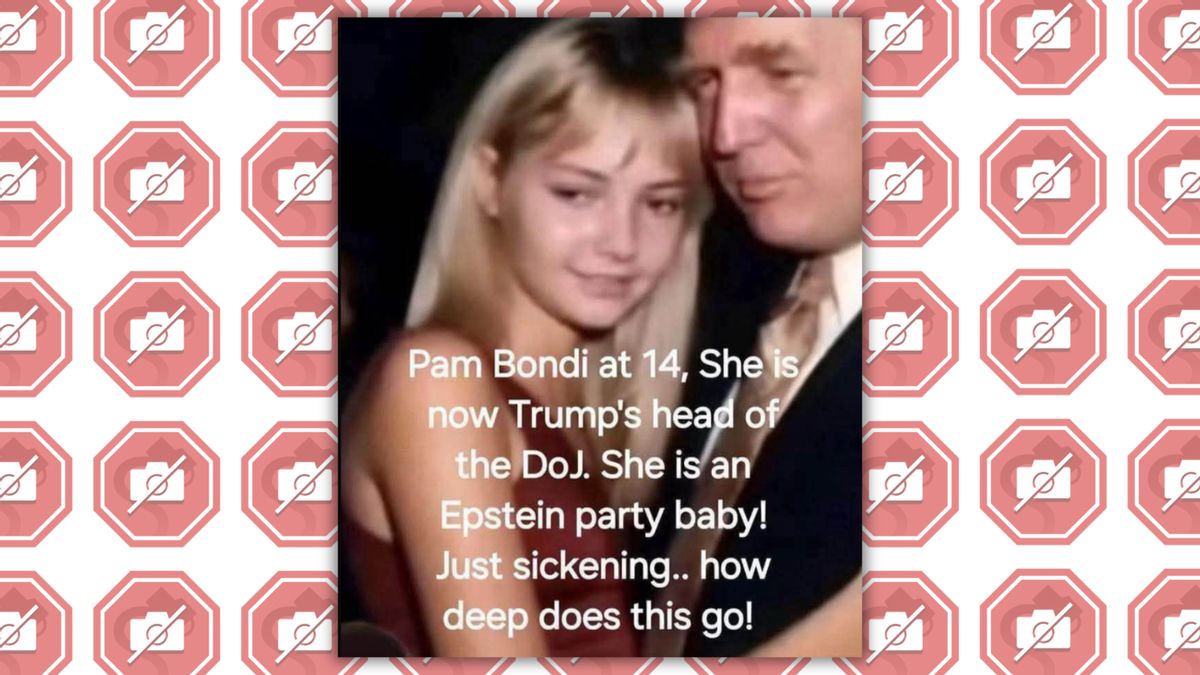
A manipulated image circulating on social media platforms since February 2026 falsely claims to show U.S. Attorney General Pam Bondi at age 14 with Donald Trump at a party connected to convicted sex offender Jeffrey Epstein. The viral posts, which appeared on Threads, Facebook, and X, include text suggesting Bondi was an “Epstein party baby.”
Fact-checkers have determined the image is fake, generated by artificial intelligence, and has been circulating in various forms since at least 2025.
The fabricated photo first surfaced last year with claims it depicted an anonymous 13-year-old girl with Trump on Epstein’s island. While the specifics of the claim have evolved to now identify the girl as Bondi, the image itself remains the same AI-generated creation.
Several technical inconsistencies reveal the image’s artificial nature. The 2025 version displayed clear markers of AI generation, including unnatural hair and skin textures on the girl. Perhaps most telling, the image shows Trump with brown eyes, when the former president actually has blue eyes, as confirmed by numerous authentic photographs.
The more recent 2026 version appears to have been deliberately manipulated to hide some obvious AI artifacts. Someone added grain, blur effects, and cropped the image to conceal telltale signs of its artificial origin. This strategic editing explains why some AI detection tools like Hive Moderation failed to identify the newer version as synthetic despite correctly flagging the original 2025 version.
Beyond the technical problems, the purported image doesn’t match verified pictures of a young Bondi. A comparison with an authentic high school senior photo of Bondi published by the Tampa Bay Times reveals significant differences in facial features, particularly the nose width and jawline shape.
The timeline proposed by the false claim also lacks credibility. Trump himself told New York magazine in 2002 that he had known Epstein for approximately 15 years, placing the beginning of their relationship around 1987. Bondi, born on November 17, 1965, would have been 14 in 1979 – years before Trump reportedly became acquainted with Epstein.
“It doesn’t make sense to claim that she attended a party with Trump and Epstein — or that she was in the two men’s circuit — at age 14,” noted fact-checkers investigating the claim.
Furthermore, if such an incriminating image of the current Attorney General as a minor with an adult Trump actually existed, it would have generated substantial news coverage from legitimate media outlets. No reputable news organization has reported on this image as authentic.
The Department of Justice has not yet responded to requests for comment about the fabricated image.
This fabrication represents a growing trend of AI-generated content being weaponized to create political disinformation. As technology advances, such fakes become increasingly sophisticated and harder for the average person to identify. The evolution of this particular image – from its original form to a more convincingly edited version – demonstrates how bad actors can refine AI-generated disinformation to bypass detection methods.
The case highlights the importance of critical media literacy and verification from trusted sources, especially when encountering potentially inflammatory political content on social media platforms.
Fact Checker
Verify the accuracy of this article using The Disinformation Commission analysis and real-time sources.

10 Comments
The evolution of this manipulated image, from an anonymous 13-year-old to now identifying the individual as Pam Bondi, is a concerning tactic to create a false narrative. Your thorough investigation and exposure of the technical flaws are commendable in combating the proliferation of these types of digital forgeries.
This is a prime example of the dangers of deepfakes and AI-generated content. The ability to fabricate images of people in false contexts is alarming and can be easily used to spread misinformation. Fact-checking is crucial to combat these types of manipulated visuals.
The details you provided about the image’s origins and visual anomalies are really helpful in debunking this claim. It’s important for the public to be aware of these AI-generated forgeries and the motives behind their creation and distribution.
It’s disturbing to see how sophisticated AI-generated images have become, to the point where they can fabricate false connections between individuals. Rigorous fact-checking is essential to maintain the integrity of public discourse and prevent the exploitation of these technologies.
While the image may initially seem convincing, the inconsistencies you highlighted, such as the eye color mismatch, clearly demonstrate that this is an AI-generated fabrication. Fact-checking is crucial to prevent the spread of misinformation and hold those responsible accountable.
Kudos to the fact-checkers for identifying the technical flaws that reveal this image as an artificial creation. In the age of digital media, verifying the authenticity of visual content is becoming increasingly critical to combat the spread of misinformation.
This serves as a valuable lesson on the importance of scrutinizing the source and verifying the authenticity of visual media, especially when it involves sensitive political figures. The technical analysis you provided helps expose the manipulative nature of this AI-generated image.
While the image may seem convincing, the technical inconsistencies you point out clearly show it was generated by AI, not a real photo. It’s a good reminder to be cautious of digitally altered media, especially when it comes to sensitive political topics.
Interesting fact check. It’s concerning to see manipulated images like this circulating, especially ones that try to link public figures to controversial figures like Epstein. It’s important to scrutinize claims and verify authenticity before sharing content online.
This fact check serves as an important reminder of the need for digital literacy and critical thinking when it comes to evaluating online content, particularly visual media. Identifying the technical markers of AI generation is a valuable skill in the fight against misinformation and deepfakes.