


Listen to the article
In a dramatic legal development that has captured international attention, former Philippine President Rodrigo Duterte remains in custody at the International Criminal Court (ICC) detention center in Scheveningen, The Hague, Netherlands, awaiting a crucial court decision expected by the end of April 2026.
Duterte, who has been detained since March 2025, faces serious charges of crimes against humanity linked to killings during his controversial war on drugs campaign and alleged Davao Death Squad murders during his time as mayor of Davao City.
The ICC recently concluded a four-day confirmation of charges hearing on February 27, 2026. Under ICC procedural rules, the pre-trial chamber now has 60 days to determine whether there is sufficient evidence to proceed to a full trial, with the decision anticipated in late April. Should the charges be confirmed, trial proceedings would likely commence toward the end of 2026, allowing all parties adequate preparation time.
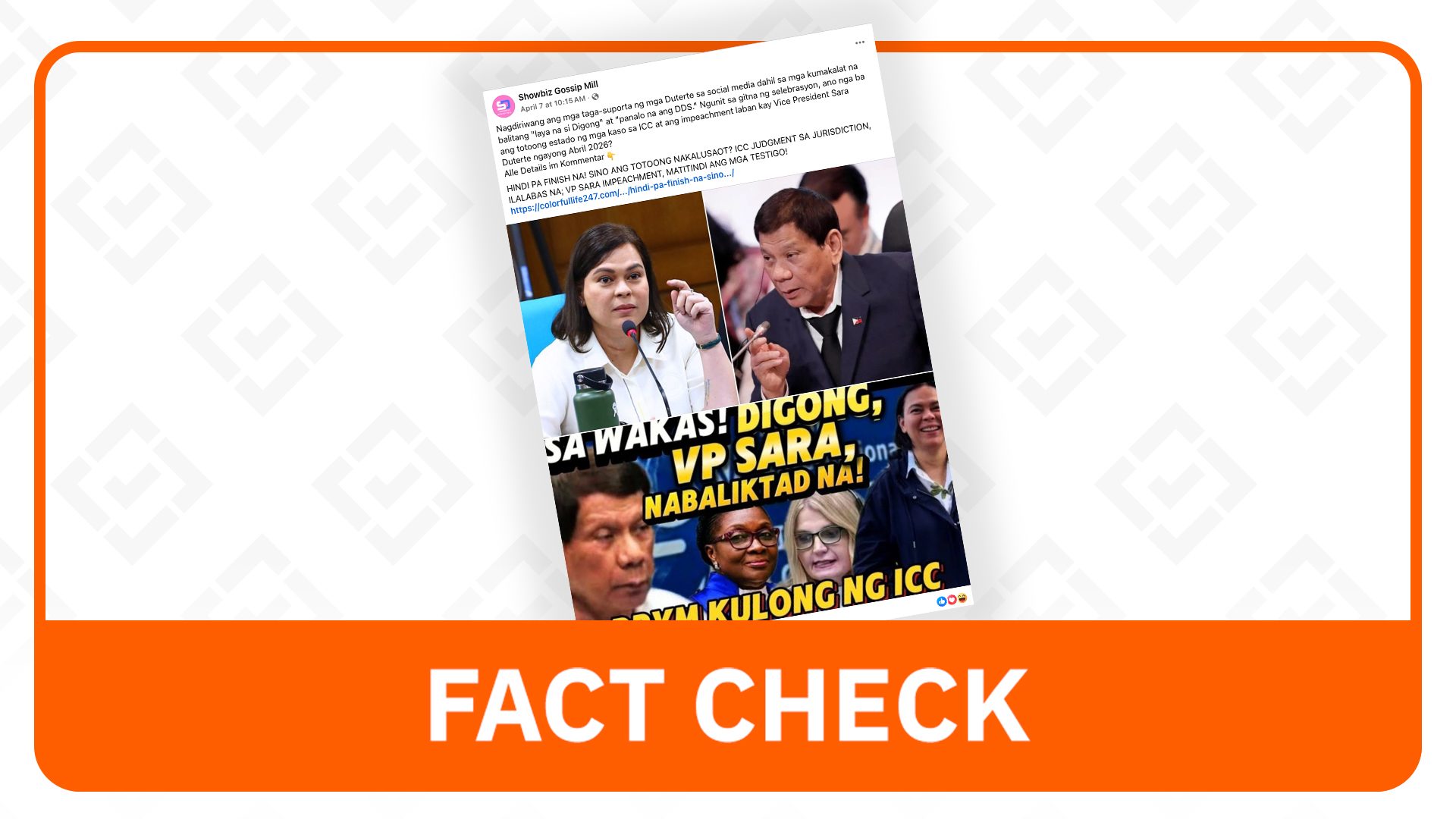
Contrary to misleading claims circulating on social media, the ICC has not ordered Duterte’s release, nor has it issued any detention order against current Philippine President Ferdinand “Bongbong” Marcos Jr. A Facebook page with 51,000 followers recently published false information suggesting that Duterte had been freed and Marcos imprisoned, generating hundreds of engagements despite having no factual basis.
The post featured an image of Duterte with ICC judges and text in Filipino claiming, “At last! Digong and VP Sara have been turned around. BBM is jailed by the ICC.” The post further alleged that Duterte supporters were celebrating his supposed release on social media platforms.
Legal experts note that Duterte’s one-year detention may represent only the beginning of what could become a lengthy legal process. Historical ICC cases indicate that detainees typically spend between five and eight years in custody during proceedings. For perspective, Al Hassan Ag Abdoul Aziz, formerly of Mali’s Islamic Police, has been detained for nearly eight years, while Mahamat Said Abdel Kani, an alleged former Seleka militia commander, has spent over five times the duration of Duterte’s current detention period.
The pre-trial phase has already experienced significant delays due to multiple legal challenges, including motions contesting Duterte’s fitness to stand trial and the ICC’s jurisdiction over the case. Should the case advance to trial, the proceedings themselves could extend for several years, with potential appeals and sentencing decisions further extending the timeline.
As for President Marcos, there are currently no ICC cases, arrest warrants, or detention orders against him, making the viral claims completely unfounded.
Duterte’s case represents one of the most high-profile prosecutions in recent ICC history, drawing significant attention to the court’s role in pursuing accountability for alleged human rights violations. The case continues to be closely watched by international observers, human rights organizations, and Philippine citizens as it moves through the ICC’s judicial process.
The circulation of false information regarding this case highlights the ongoing challenge of misinformation surrounding high-profile legal proceedings, particularly those involving prominent political figures. Fact-checkers continue to monitor and address such misleading claims as the actual legal process unfolds according to established international criminal justice procedures.
Fact Checker
Verify the accuracy of this article using The Disinformation Commission analysis and real-time sources.

10 Comments
While the charges against Duterte are serious, it’s crucial that the ICC proceedings are conducted in a fair and impartial manner. The rule of law must be upheld, regardless of the political sensitivities involved.
Well said. The ICC’s credibility and legitimacy depend on its ability to adhere to due process and uphold the principles of international justice, even in high-profile cases.
This case highlights the complexities of transitional justice and human rights accountability, especially for high-level officials. I hope the ICC proceedings can shed light on the alleged crimes and provide some measure of justice for victims.
You make a good point. Upholding the rule of law and human rights is essential, even for former leaders. The ICC plays an important role in that regard.
The article provides a balanced and detailed overview of the current status of the Duterte case at the ICC. It’s important to closely follow these developments, as they could have significant implications for the Philippines and its political landscape.
Absolutely. This case is a prime example of the ICC’s role in holding leaders accountable for alleged human rights abuses. The outcome will be closely watched both domestically and internationally.
Interesting to see the legal developments around former President Duterte’s case at the ICC. It’s important the process is fair and impartial, regardless of the political implications. Curious to see how the pre-trial chamber rules on the evidence.
Agreed, the decision by the pre-trial chamber will be crucial. The charges against Duterte are serious, so a thorough and independent investigation is warranted.
Disappointing to see the spread of misleading claims about the ICC’s actions. It’s critical that the public has access to accurate, fact-based information on such high-profile cases. Transparency and due process must be upheld.
I agree, misinformation can be very damaging, especially when it involves serious allegations against government officials. Fact-checking and reliable reporting are crucial in these situations.