


Listen to the article
A fiery photograph from Caracas has sparked false claims on social media that Hugo Chávez’s mausoleum was targeted during recent U.S. military operations in Venezuela, Reuters fact-checkers have revealed.
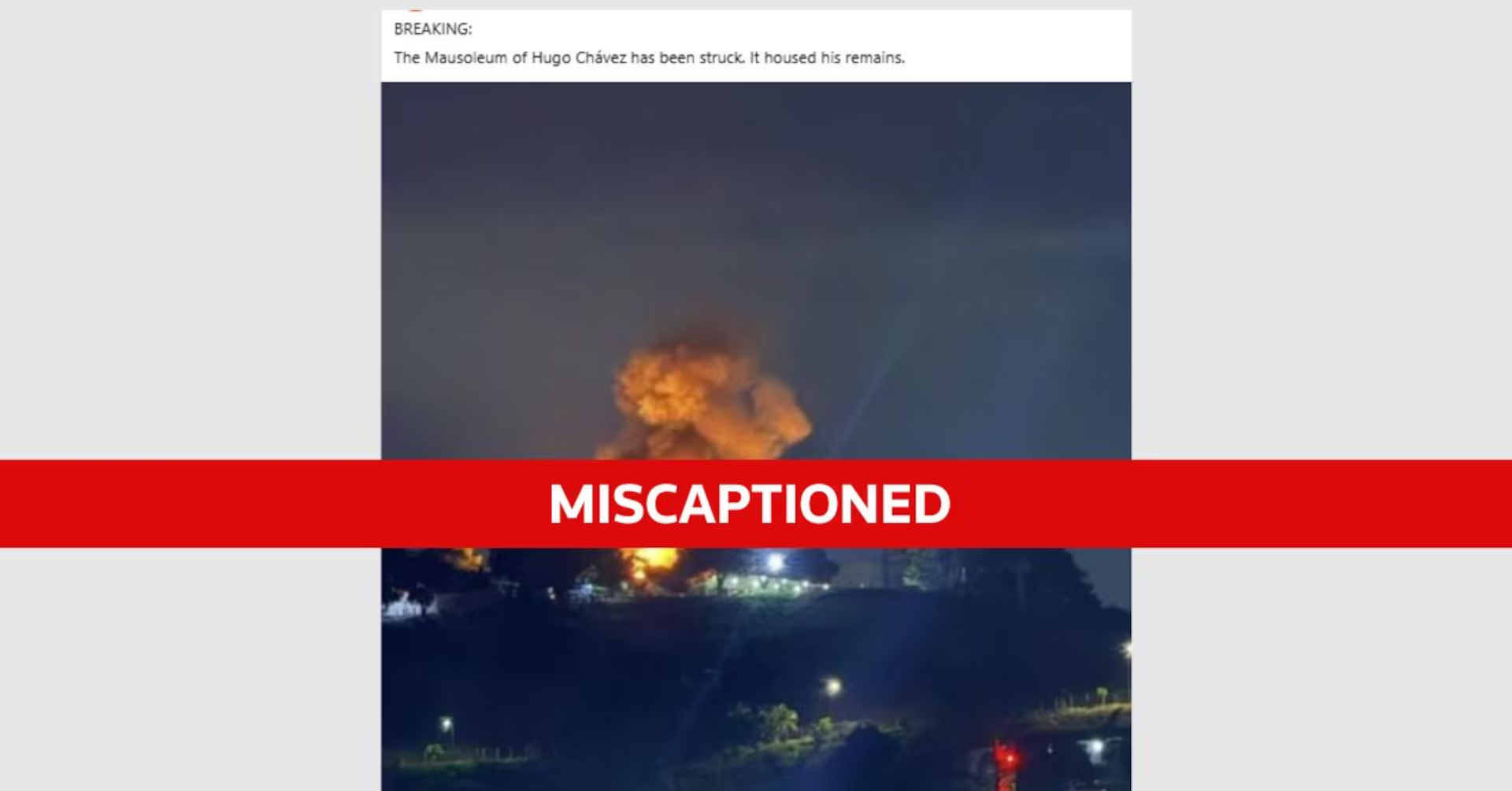
Social media posts circulating on January 3 shared dramatic nighttime images showing plumes of smoke rising in Venezuela’s capital, with captions claiming, “BREAKING: The Mausoleum of Hugo Chávez has been struck. It housed his remains.”
A detailed analysis of the image, however, shows the fire depicted is approximately 500 meters (1,640 feet) away from Chávez’s actual resting place, which isn’t even visible in the photograph.
Through geographical verification, fact-checkers determined the location shown is actually the north side of the Cagigal Naval Observatory in Caracas. The distinctive flora surrounding the plume of smoke in the viral image matches satellite imagery of this location. Additionally, the illuminated structure visible in the foreground corresponds to the metal obelisk in Plaza 4F, further confirming the location.
The Cagigal Naval Observatory serves as headquarters for the General Command of the Bolivarian Militia, a reserve force composed of civilian volunteers that supports Venezuela’s armed forces.
Chávez’s remains, by contrast, are housed in a marble sarcophagus at the Cuartel de la Montaña, a military museum located behind and to the right of the photographer’s position in the widely shared image. The two sites, while both militarily significant, are entirely separate locations.
Visual evidence further disproves claims of damage to Chávez’s resting place. Reuters published a photograph taken on January 6 showing the eastern side of Cuartel de la Montaña completely undamaged following the U.S. military operation.
The Hugo Chavez Eternal Commander Foundation, which manages the mausoleum compound, posted video on Instagram on January 5 appearing to show the eastern side of the museum intact. The video prominently displays a phone screen showing the date as January 4, suggesting the facility remained unharmed a day after the military action.
Additional photographic evidence emerged on January 5 when Venezuela’s vice president’s office published images on Facebook showing Vice President Delcy Rodríguez, who has since become interim president, visiting Chávez’s mausoleum without any visible damage.
The circulation of this miscaptioned photo highlights the ongoing challenge of misinformation during international conflicts. In the wake of U.S. forces attacking the Venezuelan capital and capturing President Nicolas Maduro, who succeeded Chávez after his death in 2013, social media has been flooded with unverified claims about the extent of damage and military targets.
This incident underscores the importance of careful verification before sharing dramatic imagery during developing international events, particularly those involving military actions where accurate information can be difficult to obtain.
Fact Checker
Verify the accuracy of this article using The Disinformation Commission analysis and real-time sources.

8 Comments
This highlights the need for thorough investigation and fact-checking before spreading unverified information, even if it seems sensational. Kudos to the Reuters team for the detailed analysis.
Yes, in the age of misinformation, maintaining journalistic integrity and rigorous verification is crucial. This report sets a good example.
I appreciate the effort to correct the misleading claims about the fire in Caracas. Fact-checking is essential to combat the spread of false narratives, especially around politically charged events.
Interesting fact check. It’s good to see the details verified instead of relying on unsubstantiated social media claims. The fire appears to have occurred near a militia headquarters, not Chavez’s mausoleum as falsely reported.
Agreed, it’s important to separate fact from fiction, especially around sensitive political issues. The location verification helps clarify what actually happened.
The detailed location verification is a valuable contribution to understanding the true nature of the incident in Caracas. It’s a good example of responsible journalism in the face of misinformation.
This is a good reminder that we should be cautious about jumping to conclusions based on limited information, especially when it comes to politically sensitive incidents. Kudos to the fact-checkers for their thorough investigation.
Absolutely. It’s important to withhold judgment until the facts are clearly established, rather than fueling the spread of misinformation.