


Listen to the article
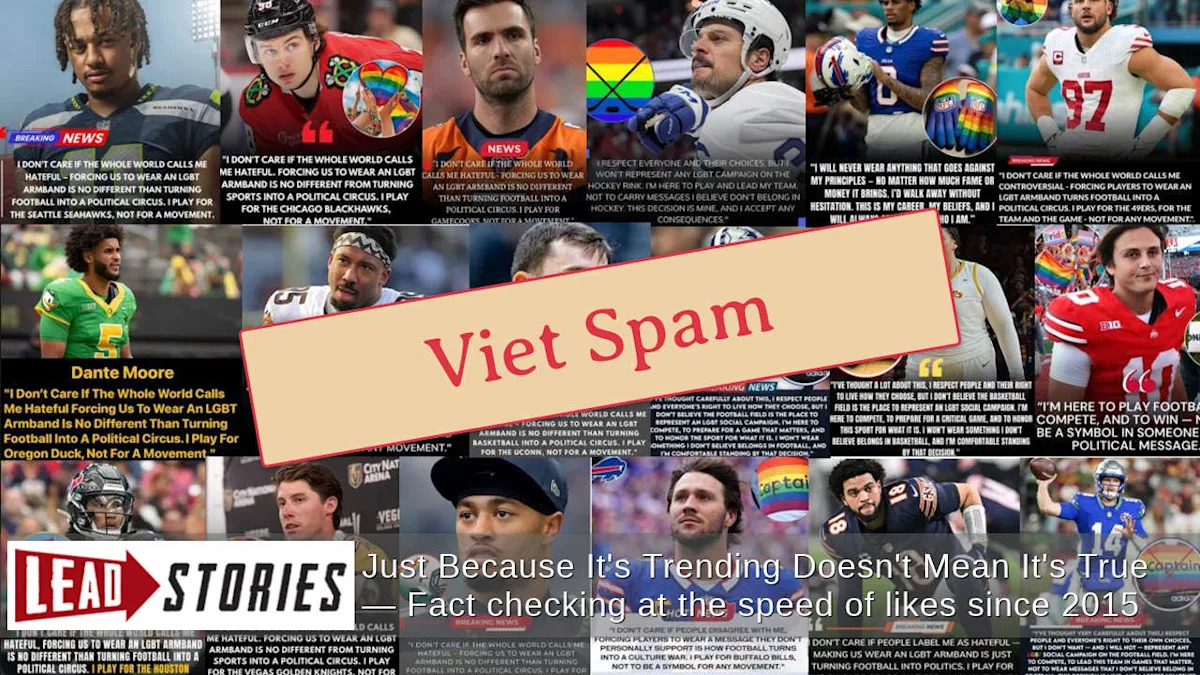
Waves of misinformation targeting prominent athletes have surged across social media platforms in recent weeks, with fabricated claims about sports stars refusing to wear LGBTQ+ armbands going viral despite having no basis in fact.
Digital media researchers have traced the majority of these false posts to networks operating from Vietnam, revealing a sophisticated effort to generate engagement through manufactured controversy about well-known sports personalities.
The deceptive campaign follows a consistent pattern: posts claim a high-profile athlete has taken a controversial stance against wearing rainbow-colored armbands or symbols in support of LGBTQ+ rights. These fabricated stories typically include doctored images or out-of-context photographs alongside inflammatory captions designed to provoke strong reactions from users across the political spectrum.
“What we’re seeing is a coordinated attempt to exploit existing cultural divides through sports, which naturally commands massive attention,” explained Dr. Melissa Chen, digital forensics specialist at the Center for Media Integrity. “The operators behind these campaigns understand that content suggesting resistance to LGBTQ+ symbols will generate significant engagement, regardless of whether users agree or disagree with the purported stance.”
The Vietnamese origin of many of these posts has been confirmed through technical analysis of posting patterns, account creation data, and linguistic markers present in the content. While some accounts attempt to mask their location, investigators have identified consistent networks that appear to be monetizing the controversy through affiliated websites and advertising revenue.
Facebook and Twitter have removed hundreds of accounts linked to these operations, though new iterations continue to emerge. Platform representatives acknowledge the challenge of keeping pace with these evolving tactics.
“The sophistication of these campaigns has increased dramatically,” noted Sam Wilson, content policy director at a major social media company. “What begins as obviously fake content often gets refined through repeated attempts until it becomes convincing enough to be widely shared, even by legitimate news sources in some cases.”
Sports organizations including FIFA, UEFA, and various national leagues have found themselves responding to these fabrications, issuing denials about policies that never existed in the first place. The International Olympic Committee recently released a statement clarifying that no athletes had been disciplined for refusing to wear rainbow symbols, contrary to viral claims about several medal winners.
The financial incentives driving these misinformation campaigns appear substantial. Analysis of traffic data suggests that even moderately successful viral posts can redirect users to ad-heavy websites generating thousands of dollars in revenue. The Vietnam-based networks have demonstrated remarkable adaptability, quickly shifting tactics when detection algorithms are updated.
Media literacy experts emphasize that the sports-focused nature of these false claims makes them particularly effective at crossing political boundaries and reaching diverse audiences.
“Sports fans represent an incredibly valuable demographic that spans political divides,” said Teresa Ramirez, professor of digital media studies at Northwestern University. “When misinformation is packaged around beloved athletes, it penetrates audiences that might otherwise be skeptical of political content.”
The phenomenon highlights the evolving nature of misinformation, moving beyond purely political targets to leverage cultural touchpoints with broad appeal. Sports stars themselves have become unwilling participants in these fabricated controversies, with several athletes issuing statements denying involvement after being falsely portrayed in viral posts.
Cybersecurity firms tracking these operations report that the Vietnam-based networks appear to be expanding their focus beyond sports to entertainment and business figures, suggesting a strategic broadening of targets to maximize engagement across platforms.
Fact-checking organizations recommend that users verify information through official athlete and league channels before sharing content about controversial stances, particularly when posts contain emotional language designed to provoke strong reactions.
As platforms continue developing countermeasures against these campaigns, the perpetrators remain several steps ahead, demonstrating the persistent challenge of combating financially motivated misinformation in an ecosystem where engagement often takes precedence over accuracy.
Fact Checker
Verify the accuracy of this article using The Disinformation Commission analysis and real-time sources.

10 Comments
It’s disheartening to see this kind of coordinated effort to manufacture controversy around sports stars and their stances on LGBTQ+ issues. Fact-checking and media scrutiny are essential to exposing these deceptive tactics and maintaining public trust.
Exploiting cultural divides for engagement is a troubling tactic. Athletes should be free to express their views, but these deceptive campaigns undermine legitimate dialogue. Fact-checking and media literacy are crucial to combat the spread of disinformation.
Absolutely. We need to be vigilant about the sources of information we consume and share, especially when it involves sensitive social and political issues. Spreading false claims, even inadvertently, can have real consequences.
The coordinated effort to spread false claims about athletes and their stances on LGBTQ+ issues is deeply concerning. Maintaining trust in our institutions and public figures requires vigilance against the spread of misinformation, even when it plays to our existing biases.
Absolutely. We must remain vigilant and fact-check information, especially when it involves sensitive social and political topics. Spreading false claims, even inadvertently, can have real consequences and undermine public discourse.
The use of doctored images and out-of-context information to generate outrage is a disturbing tactic. Sports should be a unifying force, not a battleground for manufactured controversies. Fact-checking and media literacy are key to combating this kind of disinformation.
This is a troubling example of how disinformation campaigns can exploit cultural divides and target public figures for engagement. It’s essential that we approach news and information with a critical eye and rely on authoritative sources to separate fact from fiction.
This is a concerning example of how disinformation can be weaponized to target public figures and stoke division. While athletes have the right to express their views, fabricated stories undermine legitimate discourse and erode trust in our institutions.
I agree. It’s crucial that we remain vigilant and rely on authoritative and reputable sources when it comes to news and information, especially around sensitive social and political issues. Fact-checking is the best defense against the spread of misinformation.
This is a concerning trend of fabricated stories targeting high-profile athletes. It’s important to verify information and not spread misinformation, even if it stokes outrage. Sports should bring people together, not divide them through manufactured controversies.