


Listen to the article
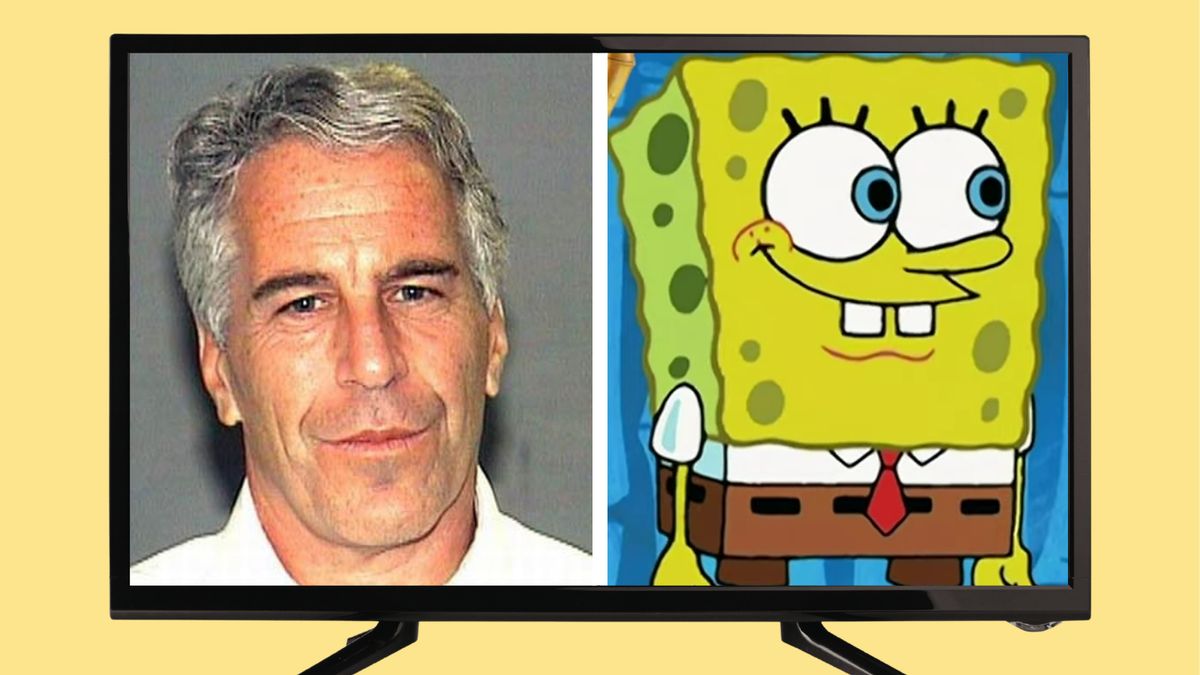
In the wake of the recent congressional approval of the Epstein Files Transparency Act, a wave of unfounded conspiracy theories has emerged connecting the late sex offender Jeffrey Epstein to unexpected cultural entities. Among the most bizarre claims to gain traction online is the assertion that the beloved children’s cartoon “SpongeBob SquarePants” was specifically created to entertain children who were victims of Epstein’s trafficking operation.
This claim has spread rapidly across social media platforms, with proponents offering two primary pieces of supposed evidence. First, they allege that SpongeBob’s driver’s license in the show displays an address on Little St. James Island—the notorious private island owned by Epstein where much of his criminal activity took place. Second, conspiracy theorists point to supposed similarities between Nickelodeon’s logo and the shape of Little St. James Island itself.
Upon investigation, both supporting claims have been thoroughly debunked. Fact-checking organization Snopes had previously examined and disproved both assertions well before this latest rumor began circulating.
The broader claim about “SpongeBob SquarePants” being created for Epstein’s victims falls apart under the slightest scrutiny. Following the passage of the Epstein Files Transparency Act, the government has released most of its investigative files on Epstein. If there were any connection between the animated series and Epstein’s criminal enterprise, one would expect to find references to the show or its creator, Stephen Hillenburg, within these documents.
A comprehensive search of the released files reveals only seven passing references to “SpongeBob,” none of which indicate any connection to Epstein’s crimes. These mentions appear in unrelated contexts: a New York Times article, an academic paper, a business pitch, an email newsletter, and three versions of the same crime report featuring a screenshot of a MySpace page with a SpongeBob screensaver advertisement.
Notably, Stephen Hillenburg’s name does not appear anywhere in the Epstein files. Given the exhaustive investigation into Epstein’s associates and activities, any connection between Hillenburg and Epstein would almost certainly have been documented and subsequently revealed in these files or other public records.
The actual origin story of “SpongeBob SquarePants” is far more innocuous. Hillenburg, who passed away in 2018 at age 57 from complications of ALS, was a marine biology teacher with artistic aspirations before creating the show. His background in marine biology directly influenced the underwater setting and marine-themed characters that would become iconic in the series.
After teaching marine biology, Hillenburg transitioned to animation, working on Nickelodeon’s “Rocko’s Modern Life” before developing his own show. He pitched “SpongeBob SquarePants” to Nickelodeon with relatively limited animation experience, but his unique vision resonated with the network.
According to a Los Angeles Times piece published after his death, Hillenburg was described as a “private person” who enjoyed “surfing, snorkeling, scuba diving and playing music”—interests that clearly influenced his creation of an underwater animated world.
The show debuted in 1999 and quickly became a cultural phenomenon, beloved by children and adults alike. Its success has led to a media franchise that includes movies, video games, and merchandise—all stemming from Hillenburg’s genuine passion for marine life and animation rather than any nefarious purpose.
The spread of this unfounded conspiracy theory highlights a troubling pattern in the aftermath of high-profile criminal cases, where genuine public interest in justice can sometimes give way to baseless speculation that unfairly tarnishes unrelated individuals and creative works.
The simple truth remains that “SpongeBob SquarePants” was created by a former marine biology teacher with a passion for animation and the ocean—not as entertainment for victims of a trafficking operation. Such false connections not only dishonor Hillenburg’s legacy but also distract from the serious nature of Epstein’s actual crimes and their impact on real victims.
Fact Checker
Verify the accuracy of this article using The Disinformation Commission analysis and real-time sources.

10 Comments
While I understand the desire to uncover the full truth about Epstein’s crimes, making unfounded connections to unrelated cultural entities is not the way to go about it. Spreading misinformation, even with good intentions, can be incredibly harmful. Let’s focus on the facts and support victims.
While it’s understandable to want answers and accountability regarding Epstein’s crimes, fabricating false connections is not the way forward. We should focus on supporting victims and ensuring justice is served through proper legal channels, not unsubstantiated rumors.
Attempting to link a beloved children’s cartoon to the Epstein trafficking scandal is not only false, but also deeply disrespectful to the victims. I’m grateful for the work of fact-checkers in exposing this conspiracy theory as baseless. We must be responsible in how we discuss such sensitive topics.
The fact that this conspiracy theory has been so thoroughly debunked is a relief. Linking a children’s cartoon to human trafficking is both false and deeply insensitive. We must be extremely cautious about amplifying unsubstantiated claims, especially when they involve such sensitive and tragic subject matter.
This is a completely baseless conspiracy theory with no credible evidence to support it. Trying to connect a beloved children’s cartoon to Epstein’s crimes is both outrageous and disrespectful to victims. Let’s stick to the facts and avoid spreading harmful misinformation.
This is a prime example of how misinformation can spread rapidly online, even in the face of clear evidence to the contrary. I appreciate the diligence of fact-checkers in setting the record straight. We should be wary of buying into sensational claims without solid proof.
I’m glad this claim has been thoroughly debunked. Spreading falsehoods and conspiracy theories can be extremely damaging, especially when they involve sensitive topics like human trafficking. It’s important we rely on reputable fact-checking sources to separate truth from fiction.
This is a disturbing example of how conspiracy theories can spread misinformation and exploit sensitive issues for nefarious purposes. I’m glad to see this claim thoroughly debunked. We must remain vigilant against the spread of such harmful falsehoods.
Connecting a beloved children’s cartoon to such a horrific crime is not only false, but deeply insensitive. I’m glad this conspiracy theory has been exposed as baseless. We should be cautious about amplifying unsubstantiated claims, especially those that could cause harm.
Absolutely. Promoting misinformation, even inadvertently, can have serious consequences. It’s crucial that we rely on credible sources and fact-based reporting, particularly when it comes to sensitive topics like this.