


Listen to the article
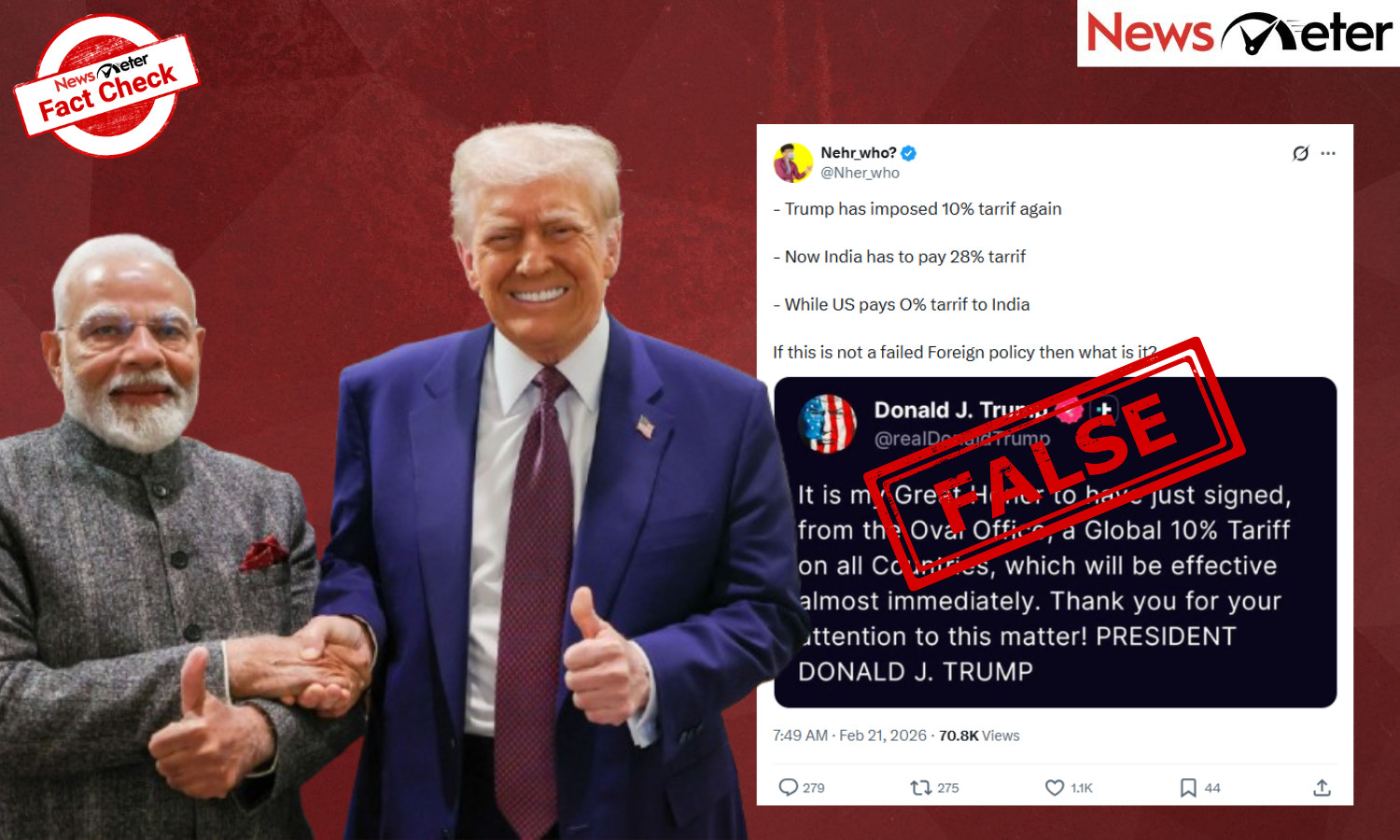
After a Supreme Court ruling invalidated many of President Donald Trump’s tariff policies, confusion has emerged regarding the specific rates that will apply to imports from India, though claims of an additional 10 percent tariff on Indian goods have been proven false.
The situation developed following a significant Supreme Court decision on February 20 that struck down several of Trump’s previously imposed global tariffs. In response to this judicial setback, the President announced a new blanket 10 percent worldwide tariff via his Truth Social platform on February 21.
This announcement created immediate uncertainty about India’s position in the revised tariff structure. When questioned specifically about India, Trump initially indicated that the 18 percent rate previously negotiated with India would remain in place, according to reporting from Hindustan Times published on February 21.
However, contradicting information emerged from the White House the same day, with administration officials stating that India would, at least temporarily, fall under the new 10 percent global tariff framework. News On AIR similarly reported that a White House spokesperson had clarified that tariffs on Indian imports would temporarily decrease to 10 percent as part of the broader global tariff policy scheduled to take effect on February 24.
The conflicting statements from the President and his administration have created a lack of clarity about exactly which rate will ultimately apply to goods imported from India. Trade experts suggest this uncertainty reflects the hurried policy response to the Supreme Court’s ruling rather than a deliberate targeting of Indian commerce.
India represents an increasingly important trading partner for the United States, with bilateral trade in goods and services reaching approximately $191 billion in 2022, according to U.S. Trade Representative data. Major imports from India include precious metals, pharmaceuticals, machinery, and textile products.
The tariff situation remains significant for both nations as they continue to navigate complex trade relationships. India has been working to expand its manufacturing base and increase exports under Prime Minister Narendra Modi’s “Make in India” initiative, making tariff rates a particularly sensitive issue for Indian exporters seeking access to the lucrative American market.
American importers of Indian goods also face operational challenges with the shifting tariff landscape, as they must adjust pricing strategies and supply chain decisions based on evolving trade policies.
Economic analysts note that the confusion surrounding these tariff rates exemplifies the broader unpredictability that has characterized American trade policy in recent years, creating planning difficulties for businesses engaged in international commerce.
While the exact tariff rate remains to be clarified, fact-checking organization NewsMeter has determined that claims suggesting Donald Trump has imposed an additional 10 percent tariff on India—which would have resulted in a combined 28 percent rate—are demonstrably false. The current evidence indicates that India will either continue with the previously agreed 18 percent rate or temporarily shift to the new global 10 percent tariff framework.
The Biden administration is expected to provide further clarification on the specific tariff rates as the February 24 implementation date approaches, potentially resolving the current ambiguity surrounding India’s trade status.
This situation highlights the delicate balance of international trade relationships and how judicial decisions, executive policies, and diplomatic considerations intersect in shaping the economic relationship between the United States and India.
Fact Checker
Verify the accuracy of this article using The Disinformation Commission analysis and real-time sources.

3 Comments
I’m curious to learn more about the Supreme Court ruling that invalidated some of Trump’s previous tariff measures. What are the broader implications for US trade policy going forward?
The constantly shifting tariff landscape makes it challenging for businesses and consumers to plan. Hopefully, more stability and predictability can be achieved in the US-India trade relationship.
Interesting to see the confusion around Trump’s tariff policies and their impact on India. This is a complex issue with a lot of moving parts. Looking forward to more clarity as the situation develops.