


Listen to the article
Double Victimization: Fake Anti-Scam Pages Target Victims of Online Fraud
Victims of online scams in the Philippines are facing a disturbing secondary threat as fraudulent recovery services proliferate across social media platforms, according to a recent investigation by MindaNews.
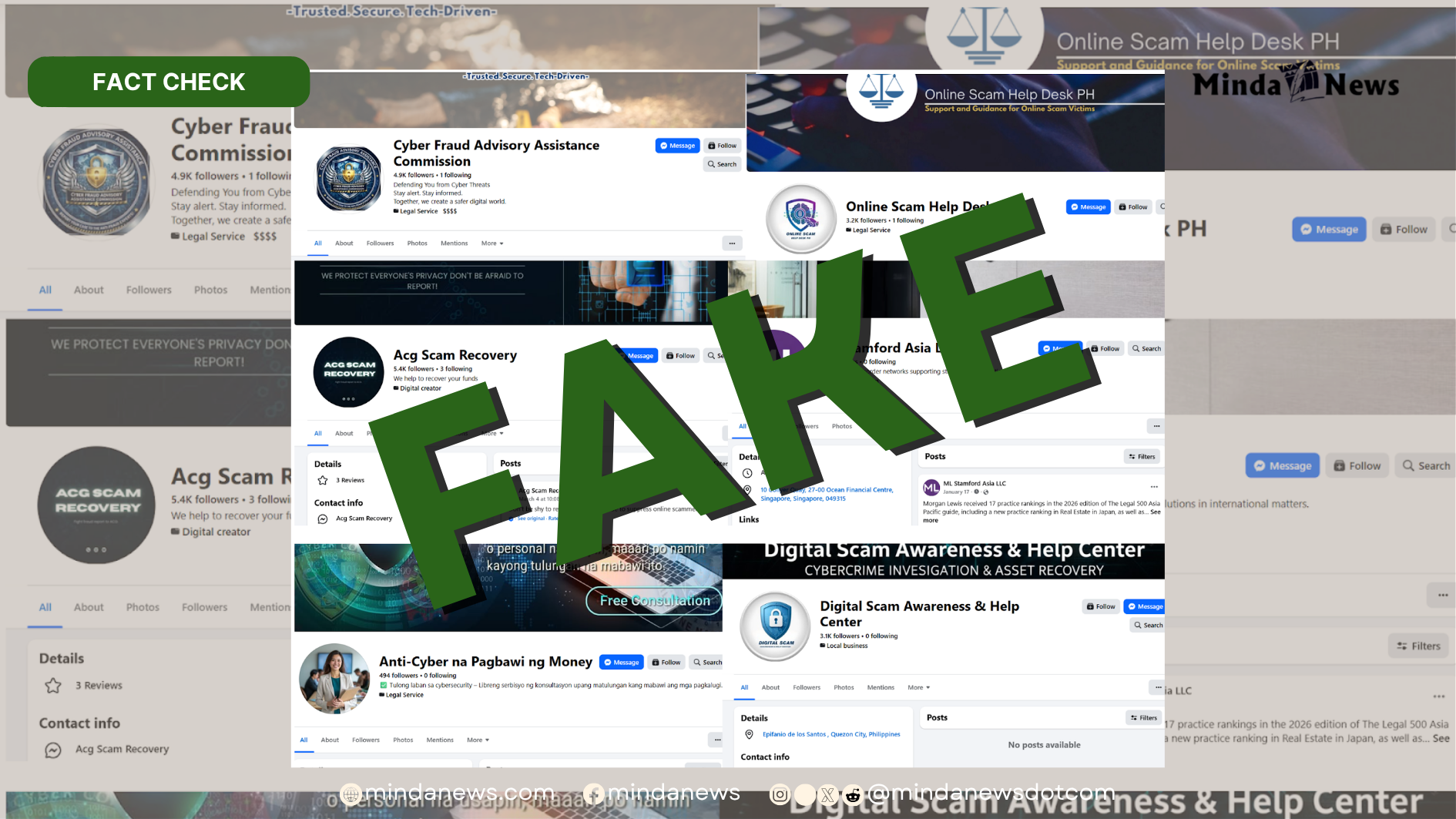
The news outlet has identified multiple Facebook pages falsely presenting themselves as anti-cybercrime groups or scam recovery services. These pages, which appear legitimate at first glance, are actually sophisticated phishing operations known as “recovery room scams” – a scheme that targets those who have already fallen victim to online fraud.
“These scammers are essentially re-victimizing people who are already vulnerable and desperate to recover their losses,” explained a cybersecurity expert familiar with the growing trend. “They exploit the emotional distress of victims, offering false hope while setting them up for additional financial harm.”
The pages monitored by MindaNews display several telltale signs of fraudulent activity. Many have undergone multiple name changes since their creation, a practice that violates Meta’s community guidelines regarding page transparency. For example, “Cyber Fraud Advisory Assistance Commission” was originally created as “Gadgets & Kitchen Tech” in July 2025 before being renamed in November of the same year.
More suspicious still, MindaNews discovered that three of the fraudulent pages—”Cyber Fraud Advisory Assistance Commission,” “Online Scam Help Desk PH,” and “Digital Scam Awareness and Help Center”—were all created on the same day: July 31, 2025. The Page Transparency tabs revealed that these pages are managed by administrators from several different countries, raising additional red flags.
Despite Meta’s community guidelines against fraud and phishing, these schemes continue to flourish, exposing weaknesses in both algorithmic and human moderation systems, particularly in vulnerable Philippine communities. Many of these fraudulent pages even pay to promote their services through Meta’s Sponsored Posts feature, giving their scams wider visibility.
When MindaNews reporters reached out to one of the fraudulent pages, they were connected with a supposed pro bono lawyer who identified herself only as “Joy Esguera.” The individual requested sensitive personal information, including identification documents, signature samples, and details about previous financial losses, while refusing to provide legitimate credentials or information about the organization she claimed to represent.
Both the Cybercrime Investigation and Coordinating Center (CICC) and the Securities and Exchange Commission (SEC) in the Philippines have issued warnings about these schemes. The CICC, which enforces the Cybercrime Prevention Act of 2012, released an advisory on June 25, 2025, while the SEC followed with its own warning about “recovery scams” in October of the same year.
The United States Federal Trade Commission has also recognized this pattern of fraud, referring to them as “recovery room scams” in its consumer guidance materials.
According to cybersecurity analysts, these scammers typically follow a predictable pattern: they impersonate legitimate legal firms or government agencies on social media, often stealing the identities of real organizations. They solicit information about how victims were originally scammed and how much money they lost, then claim to have specialized software or connections that can recover the stolen funds—for a fee or in exchange for sensitive personal information.
In the Philippines, these activities violate Republic Act No. 10175 (Cybercrime Prevention Act of 2012), which covers offenses such as identity theft and phishing. Convictions under this law can result in imprisonment of 6 to 12 years, fines of at least ₱200,000, or both, depending on the specific offense.
Experts advise that individuals who have fallen victim to online scams should report incidents directly to official government channels like the CICC or the National Bureau of Investigation’s Cybercrime Division, rather than engaging with social media pages offering recovery services.
“If you’ve been scammed once, the best protection against being victimized again is extreme caution,” noted a CICC representative. “Legitimate recovery processes never require upfront payments or excessive personal information shared through social media.”
Fact Checker
Verify the accuracy of this article using The Disinformation Commission analysis and real-time sources.

13 Comments
This is a worrying trend of fraudsters exploiting vulnerable victims even further. It’s crucial that authorities crack down on these fake anti-cybercrime pages to protect people from being re-victimized.
Absolutely, victims of online fraud are already going through a traumatic experience. They shouldn’t have to worry about these recovery scams on top of that.
This is a despicable practice. Victims of online fraud are desperate to recover their losses, and these scammers are exploiting that vulnerability. More needs to be done to shut down these fraudulent pages.
This is a frustratingly common tactic used by cybercriminals. Victims of online fraud are in a vulnerable state, and these fraudulent recovery pages are preying on their desperation. More must be done to protect consumers.
Couldn’t agree more. These scams are a cruel and unethical way to take advantage of people who are already going through a difficult time. Regulators need to step up their efforts to shut them down.
It’s disturbing to see how these scammers are re-victimizing people who have already suffered significant losses. This cycle of exploitation needs to be broken through stronger regulations and enforcement.
It’s heartbreaking to see how these scammers are exploiting the emotional distress of fraud victims. These fake anti-cybercrime pages are causing even more harm to an already vulnerable population.
Shame on these scammers for preying on people who are already suffering losses. The frequent name changes to evade detection is a clear sign of their malicious intent.
You’re right, the lack of transparency around these pages is a huge red flag. Regulators need to enforce strict guidelines to protect vulnerable consumers.
This is a concerning development in the world of online fraud. The fact that these scammers are specifically targeting victims of previous scams is particularly egregious. More needs to be done to protect consumers from these predatory practices.
Absolutely. Authorities should work to quickly identify and shut down these fraudulent pages to prevent further exploitation of vulnerable individuals.
Cybercriminals are constantly finding new ways to target victims, even after they’ve been defrauded once before. Rigorous enforcement and public awareness campaigns are crucial to curb this emerging trend of recovery room scams.
Agreed, educating the public on how to spot these fraudulent pages is key. People need to be extra vigilant when seeking help to recover from online fraud.