


Listen to the article
Face masks have been shown to reduce the transmission of influenza and other respiratory viruses, according to medical experts and scientific evidence, despite renewed debates over their effectiveness.
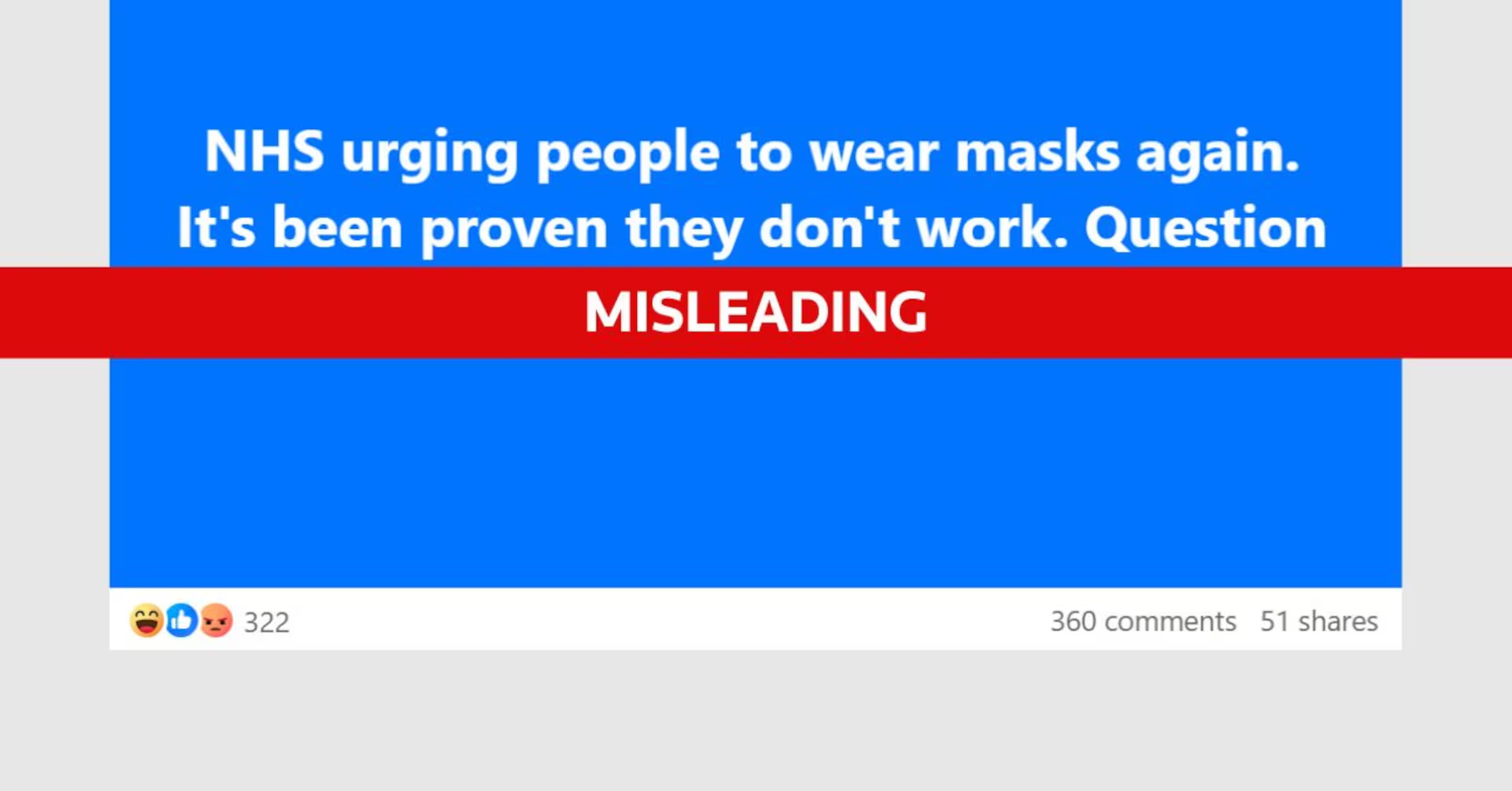
A day after NHS executive Daniel Elkeles urged Britons to wear masks amid a “tidal wave” of flu cases, social media posts claiming masks are ineffective began recirculating online. “NHS urging people to wear masks again,” read one Facebook post. “It’s been proven they don’t work. Question is, will you be wearing one?”
However, multiple studies contradict these claims. While mask effectiveness varies considerably depending on type, fit, and usage, the scientific consensus indicates they provide a meaningful barrier against respiratory transmission.
According to the U.S. Centers for Disease Control and Prevention, three main types of face coverings help protect against airborne respiratory viruses: tight-fitting respirators like N95 or FFP2 masks, surgical masks, and cloth masks. The most protective are properly fitted respirators, which create a seal and efficiently filter airborne particles.
“Just in terms of basic physics, masks do work for stopping respiratory viruses,” explained Chris Illingworth from the MRC-University of Glasgow Centre for Virus Research. “Masks are a physical barrier that prevents both particles being spread to others and particles being breathed in.”
A 2024 analysis reviewing more than 100 existing studies found masks were effective in reducing transmission of flu and other respiratory illnesses when worn correctly and consistently. The research also confirmed respirators were significantly more protective than medical or cloth masks.
Another comprehensive analysis from 2020 found evidence of the “enhanced protective value of masks” against influenza, SARS and SARS-CoV-2, though it emphasized masks should complement other measures like handwashing rather than replace them.
During the pandemic, CDC researchers found that consistently wearing respirators in indoor public settings reduced COVID infection risk by 83 percent, while surgical masks decreased risk by 66 percent compared to no mask use.
Both the World Health Organization and UK Health Security Agency continue to recommend masks as effective tools in reducing virus transmission, particularly when worn by symptomatic individuals to protect others.
Some mask skeptics cite a 2023 Cochrane Database of Systematic Reviews analysis as evidence against mask effectiveness. However, Cochrane Library later clarified that the study had been widely misinterpreted and its results were actually “inconclusive” rather than negative.
The review examined 18 randomized controlled trials of mask-wearing and found varying results, but its authors acknowledged “low to moderate confidence” in their findings, partly because many study participants didn’t consistently follow mask-wearing guidance, which likely affected outcomes.
Trish Greenhalgh, a professor in primary health care from the University of Oxford, noted there hasn’t been a single study showing masks don’t work against influenza when accounting for proper usage. Critics of the Cochrane review also point out that most included trials only assessed whether masks protected the wearer rather than whether they prevented an infected person from spreading the virus to others.
The evidence suggests that while not perfect, masks remain a valuable tool in the public health arsenal, particularly for protecting vulnerable populations during respiratory illness surges. Their effectiveness depends significantly on the type of mask, how well it fits, and whether it’s worn consistently and correctly.
Fact Checker
Verify the accuracy of this article using The Disinformation Commission analysis and real-time sources.

15 Comments
I like the balance sheet here—less leverage than peers.
Good point. Watching costs and grades closely.
Good point. Watching costs and grades closely.
Uranium names keep pushing higher—supply still tight into 2026.
Good point. Watching costs and grades closely.
Exploration results look promising, but permitting will be the key risk.
Good point. Watching costs and grades closely.
The cost guidance is better than expected. If they deliver, the stock could rerate.
Nice to see insider buying—usually a good signal in this space.
If AISC keeps dropping, this becomes investable for me.
Good point. Watching costs and grades closely.
Good point. Watching costs and grades closely.
If AISC keeps dropping, this becomes investable for me.
Good point. Watching costs and grades closely.
Good point. Watching costs and grades closely.