


Listen to the article
Immigration Protests in Minnesota: Dedication or Payment?
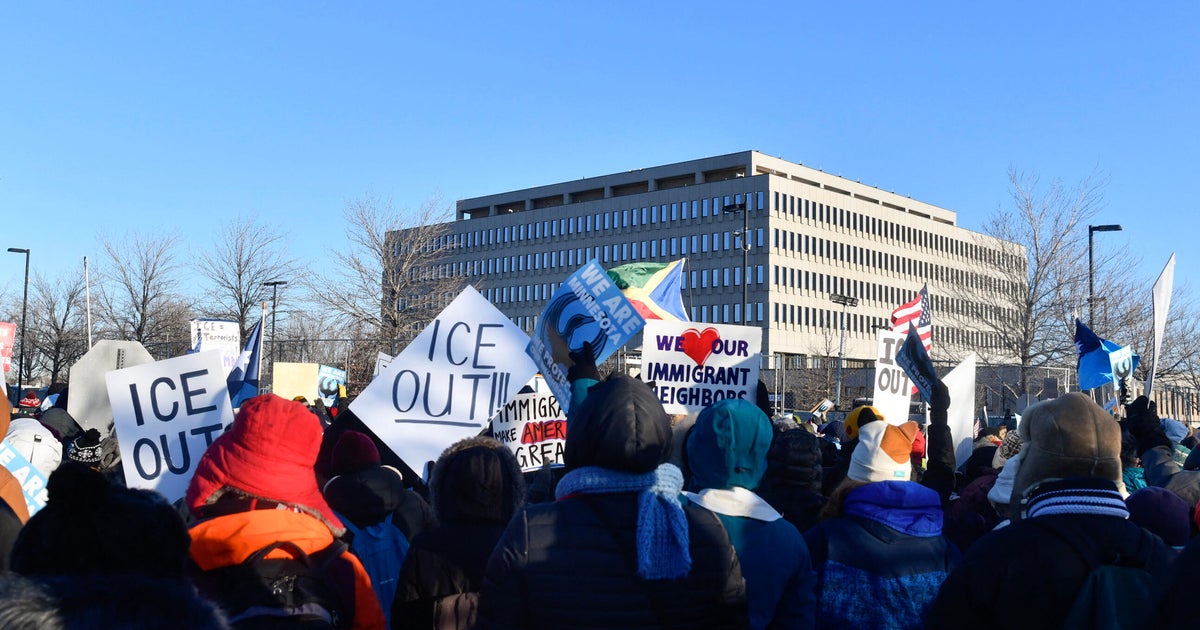
The ongoing Immigration and Customs Enforcement (ICE) operations in Minnesota have triggered persistent protests outside the Bishop Henry Whipple Building in Minneapolis. For months, demonstrators have gathered in varying numbers—sometimes tens of thousands, other times just a few dozen—to voice opposition to ICE’s detention practices at the facility where immigrants and some citizens who interfere with operations are held.
Regardless of weather conditions or day of the week, protesters maintain a consistent presence, their dedication so unwavering that it has sparked accusations of financial compensation. President Trump directly addressed this speculation last month, claiming, “It’s really insurrectionists and agitators, and they’re paid.”
When WCCO reporters visited the protest site to investigate these claims, demonstrators dismissed the allegations with a mixture of humor and frustration. Protester Josiah Devine Johnson laughed before firmly stating, “No, we’re not paid.” Fellow demonstrator Julian Latourelle quipped, “I wish someone was paying me. And if there is someone paying people, get in touch with me. I could use the money.”
Instead of financial incentives, protesters cited principles as their motivation. “Justice, ethics, humanity, decency,” Johnson explained, while Pamela Scott emphasized constitutional concerns: “I’m trying to protect the First Amendment and the Fourth Amendment and all the amendments that are supposed to guarantee us rights in this country.”
The protest scene includes mutual aid stations like one operated by Julie Prokes, who has maintained a daily presence for nearly two weeks. His table offers food and supplies to anyone in need—protesters, families waiting for detained individuals, and those recently released from custody. Prokes explained that his operation began with a personal Costco purchase and has since been sustained through community donations.
The paid protester narrative isn’t unique to Minnesota’s immigration demonstrations. It has emerged repeatedly during periods of social unrest, including the 2015 Baltimore protests and the 2020 George Floyd demonstrations. PolitiFact senior correspondent Amy Sherman, who investigated these claims with staff writer Maria Briceño, found no substantiating evidence.
“For protesters to be paid there would have to be some sort of master leader, or master organization, telling tens of thousands of people what to do and how to sign up and how to get paid. And we’re not seeing that,” Sherman explained.
The fact-checking team debunked several pieces of “evidence” circulating online, including an alleged paid protester contract in Minnesota that was recycled from previous unrelated protests. They also identified an AI-generated TikTok video purporting to show a conservative YouTuber interviewing a paid protester in Minneapolis.
While there are companies that hire people for demonstrations—such as Crowds on Demand, which assembles groups for advertising campaigns and public relations events—CEO Adam Swart has explicitly stated his company isn’t involved in Minneapolis and doesn’t engage in unlawful protest activities.
Dr. Danielle Brown, a Michigan State University professor who studies media portrayal of activism, places the paid protester accusations in a broader context: “It just falls in line with a pattern of delegitimizing protests that are trying to really shake up what people in power want to be the norm.”
Brown acknowledges the existence of professional community organizers who facilitate protests but characterizes them as exceptions within what she sees as a genuine grassroots movement in Minneapolis. “No organization is capable of unifying a group of people like arresting your neighbor or shooting your neighbor in the street. That doesn’t need payment to get people together,” she noted.
For some observers, the concept of unpaid protesting—given the time commitment, potential dangers, and harsh weather conditions—seems implausible. Brown attributes this perception to limited civic engagement, explaining that for many Americans, political participation rarely extends beyond presidential voting.
“The kind of political participation that protests are is above and beyond voting,” she said, adding that Minneapolis residents have become particularly engaged through direct exposure to social issues. “It’s facing so many tragedies, seeing them, having them in your neighborhood, in your streets, in public spaces…. that is a triggering event that really ignites civic engagement at the voting level, but also at the protest level.”
Despite the lack of verified evidence for paid protesters, the allegations persist. Former FBI Director Kash Patel recently claimed on a podcast that the agency has identified “groups and individuals” funding demonstrations in Minnesota, though no supporting evidence has been made public.
Fact Checker
Verify the accuracy of this article using The Disinformation Commission analysis and real-time sources.

12 Comments
It’s good to see journalists fact-checking claims about paid protesters. Verifying the motivations and funding behind demonstrations is important for understanding the real dynamics at play.
I agree, transparency around protest funding and organization is crucial. Dismissive claims of paid agitators can distract from the real issues and concerns being voiced.
Fact-checking is essential to counter unsubstantiated claims, especially when they come from high-profile political figures. Journalists play a vital role in upholding truth and accountability.
Absolutely. Rigorous investigation and verification of claims, from all sides, should be the foundation of quality journalism.
Examining the facts around protest funding and organization is important, but the underlying issues and community concerns should remain the focus. Fact-checking helps maintain that perspective.
Well said. Rigorous journalism that centers the voices and experiences of protesters is crucial for a balanced understanding of complex social issues.
Persistent protests over ICE operations suggest a deep level of community engagement and opposition, not just paid actors. It will be interesting to see how this situation develops.
You make a fair point. Consistent, long-term protesting is a stronger indicator of genuine grassroots sentiment than one-off paid demonstrations.
While paid protests do sometimes occur, the protesters’ own statements about not being compensated seem credible. It’s important not to dismiss legitimate grassroots activism.
Good point. Dismissing all protesters as paid actors can unfairly undermine genuine civic engagement and the right to peaceful assembly.
The protester’s quip about wishing they were being paid highlights the absurdity of the paid agitator claim. It’s a common tactic to delegitimize dissent.
Yes, that’s a clever response that points out the disconnect between the rhetoric and the reality on the ground.