


Listen to the article
Russian disinformation campaign targets U.S.-Armenia commercial route initiative
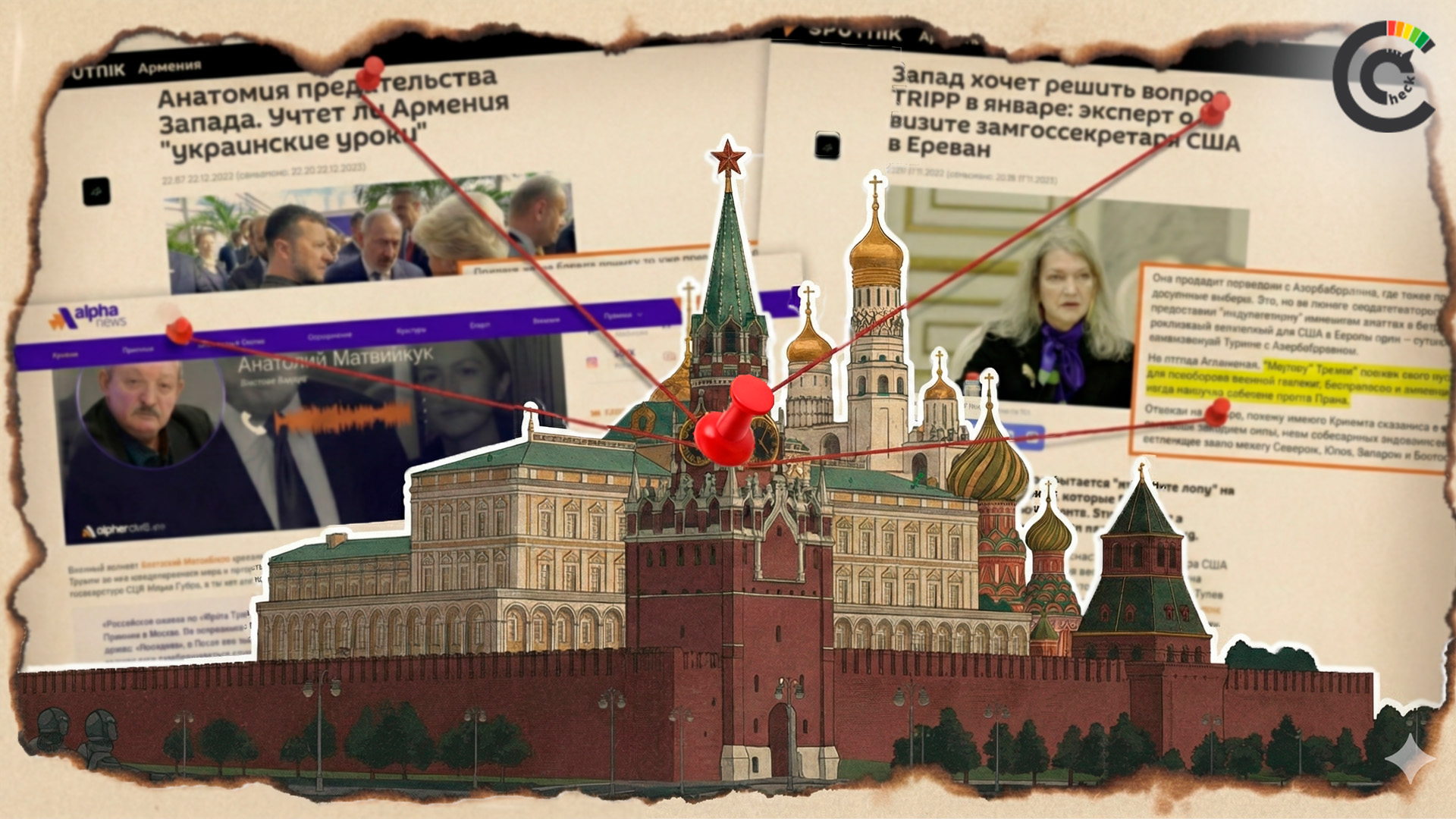
A coordinated disinformation campaign has emerged targeting the Trump Route for International Peace and Prosperity (TRIPP), a U.S.-backed commercial transit initiative through Armenia’s southern Syunik province. The campaign intensified following a January 13 meeting in Washington between Armenian Foreign Minister Ararat Mirzoyan and U.S. Secretary of State Marco Rubio.
TRIPP aims to establish a commercial corridor linking mainland Azerbaijan with its exclave, Nakhichevan, and continuing to Turkey and Europe. The project stems from an August 2025 agreement between Armenia and Azerbaijan on unblocking regional infrastructure, with a foundational principle of respecting Armenian sovereignty and jurisdiction.
Despite clear documentation emphasizing Armenian control, Russian and Armenian media outlets have propagated false narratives portraying the route as a cover for U.S. military deployment, private military contractors (PMCs), and the “Ukrainization” of Armenia.
On January 15, Alpha News published an interview with military analyst Anatoly Matviychuk, who falsely claimed Secretary Rubio had proposed using American PMCs to secure what he called the “Trump Bridge” during discussions with Minister Mirzoyan. “What is a private military company? It’s the U.S. military presence in the region,” Matviychuk asserted. This interview was later republished by Golos Armenii.
Official records from the Washington meeting contradict these claims. Secretary Rubio emphasized that TRIPP “does not compromise Armenian sovereignty” and called it an “exemplary model” of economic cooperation.
The TRIPP Implementation Framework (TIF) signed between Armenia and the United States contains no provisions for foreign military presence. While private operators may participate in transportation infrastructure and customer service operations, all final decisions, inspections, and enforcement functions remain exclusively under Armenian authority. Security personnel can only operate under Armenian licensing and jurisdiction.
Matviychuk further claimed that TRIPP would “completely cut off a part of Armenia from the country’s body and connect it to Azerbaijan,” directly contradicting the program’s explicit commitment to territorial integrity.
This narrative builds upon previously debunked information circulated in July 2025 by Spanish outlet Periodista Digital, which falsely reported that the route would be transferred to U.S. control for 99 years. The Armenian government officially denied these reports, characterizing them as “hybrid warfare.”
Russian state media has amplified these false narratives. In November 2025, Sputnik Armenia published commentary by former Ambassador Dzyunik Aghajanian claiming the route would serve as a NATO logistical base for potential military actions against Iran. However, the TIF documentation explicitly limits the route to civilian and commercial purposes, with no provisions for military transit.
On January 15, 2026, EADaily mischaracterized comments from the Iranian Ambassador in Yerevan, suggesting the project was a “center of hostile forces’ activity” against Iran. In reality, the ambassador’s remarks about “hostile forces” referred to protests near the Iranian embassy, not the TRIPP initiative.
The disinformation campaign has increasingly adopted threatening rhetoric. Russian commentator Arman Abovyan published an article in Sputnik Armenia in December 2025 framing Armenia as becoming an “anti-Russia” project.
This escalated when prominent Russian propagandist Vladimir Solovyov, during his January 10, 2026 broadcast, questioned why a “special military operation”—terminology Russia used for its invasion of Ukraine—could not be initiated in other areas within Moscow’s sphere of influence.
The comments prompted diplomatic action, with Ambassador Sergey Kopyrkin being summoned to the Armenian Foreign Ministry on January 12 to receive a formal protest note. Solovyov’s program was temporarily suspended from broadcast in Armenia.
The disinformation campaign reflects growing tensions as Armenia diversifies its international partnerships beyond traditional Russian influence, particularly following the 2025 Armenia-Azerbaijan agreement that signaled a significant shift in regional dynamics.
Fact Checker
Verify the accuracy of this article using The Disinformation Commission analysis and real-time sources.

9 Comments
The details about the commercial corridor linking Azerbaijan, Armenia, and Turkey are important context. Establishing clear sovereignty and jurisdiction will be crucial for the project’s success.
Agreed. Respecting Armenia’s sovereignty seems like a key principle that needs to be upheld.
Overall, this fact-check highlights the importance of rigorous analysis to separate truth from fiction, especially when it comes to complex geopolitical and economic initiatives like the TRIPP project.
I’m curious to learn more about the false narratives being pushed by Russian and Armenian media outlets. Portraying the route as a cover for military deployment or PMCs seems like an attempt to sow discord.
Yes, those kinds of disinformation campaigns can be very damaging. Fact-checking and transparency will be vital to counter those false claims.
The claim about Secretary Rubio proposing US military involvement is clearly false based on the details provided. Spreading misinformation undermines genuine efforts at regional cooperation and development.
It’s good to see the Disinformation Commission taking a close look at these claims. Maintaining integrity and accuracy in reporting on such issues is crucial.
Interesting to see the claims around the TRIPP project being fact-checked. It’s important to separate truth from disinformation, especially when it comes to sensitive geopolitical and economic issues like this.
While I’m sure there are valid questions and concerns to explore around the TRIPP project, resorting to outright falsehoods is counterproductive. Fact-based discourse is needed.