


Listen to the article
Police records reveal a concerning pattern of deadly violence in Lexington, Kentucky, as the city struggles with rising homicide rates that have alarmed both residents and officials alike.
Last year, Lexington recorded 44 homicides, marking one of the deadliest years in the city’s history. The troubling statistics continue a pattern that began in 2020, when homicides surged to unprecedented levels amid the COVID-19 pandemic and social unrest.
According to data from the Lexington Police Department, the city had been averaging approximately 20-25 homicides annually before 2020. That year saw a dramatic increase to 34 homicides, followed by a record-breaking 37 in 2021, and another increase to 44 in 2022.
While official figures for 2023 are still being finalized, preliminary data suggests the city may have seen a slight decrease compared to the previous year, though numbers remain significantly above pre-2020 levels.
“What we’re witnessing isn’t unique to Lexington,” explains Dr. Thomas Reynolds, a criminologist at the University of Kentucky. “Many mid-sized American cities have experienced similar spikes in violent crime since 2020. Multiple factors contribute to this trend, including pandemic-related stresses, economic uncertainty, and increased gun availability.”
The demographic profile of homicide victims in Lexington reveals distinct patterns. Police records show that approximately 70% of victims are young men between the ages of 18 and 35, with African American men disproportionately represented among victims. Law enforcement officials note that many homicides appear to be linked to personal disputes, gang activity, or drug-related conflicts.
Lexington’s 1st District, covering parts of the city’s north and east sides, has recorded the highest number of homicides over the past three years. Community advocates in these neighborhoods point to systemic issues including poverty, limited economic opportunities, and inadequate social services as contributing factors.
“We can’t address violence without addressing its root causes,” says Marquita Johnson, director of Community Healing, a local nonprofit focused on violence prevention. “When young people don’t see legitimate pathways to success, they’re more vulnerable to street life and its dangers.”
The Lexington Police Department has implemented several initiatives to combat the rising homicide rate. These include expanded patrols in high-risk areas, a specialized violent crime unit, and enhanced technology for investigating shootings. The department has also strengthened its community policing efforts, aiming to build trust and improve information sharing with residents.
City officials have complemented these law enforcement strategies with community-based approaches. The ONE Lexington program, launched in 2021, coordinates violence prevention efforts across multiple agencies and organizations. The program focuses on intervention with at-risk youth, support for families affected by violence, and neighborhood revitalization projects.
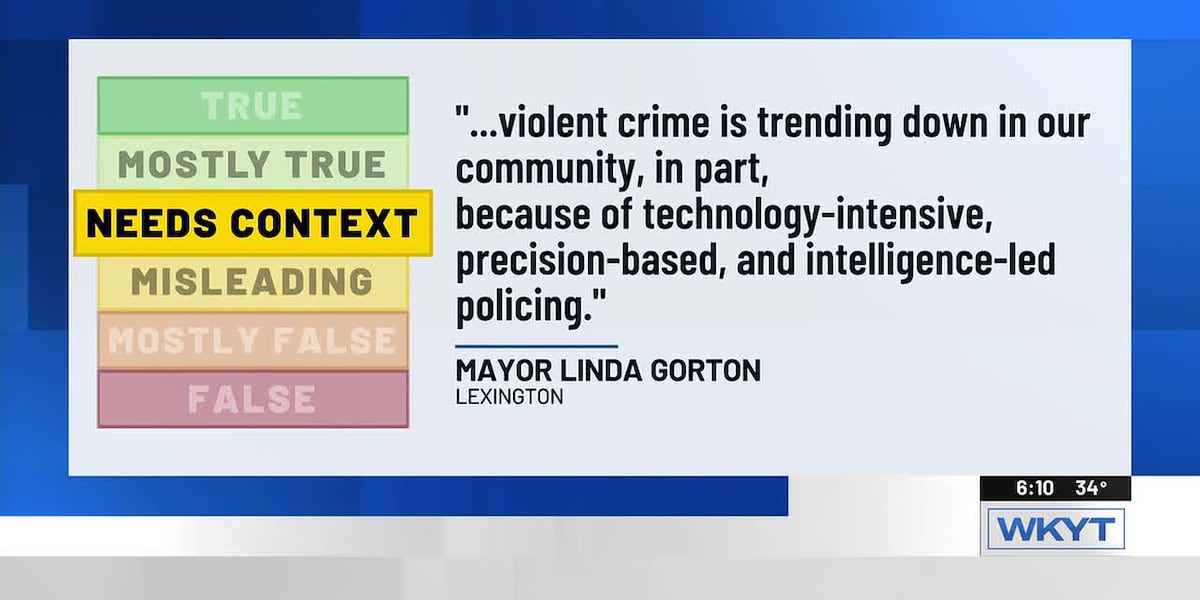
Mayor Linda Gorton has made reducing violent crime a priority of her administration. “Every homicide represents a profound tragedy for our community,” Gorton said at a recent public safety forum. “We’re committed to a comprehensive approach that combines effective policing with addressing the social and economic factors that contribute to violence.”
Despite these efforts, some community activists argue that more resources are needed. “We need sustainable, long-term investment in underserved neighborhoods,” says Rev. James Williams of the Lexington Coalition for Peace. “One-time grants and temporary programs won’t solve generational problems.”
The rise in homicides has significant implications for Lexington’s economy and reputation. The city, known for its horse industry, bourbon tourism, and university presence, has worked hard to market itself as a safe, livable community. Business leaders express concern that continued violence could deter visitors, students, and potential residents.
As Lexington grapples with these challenges, officials emphasize that public safety requires a community-wide response. Police Chief Lawrence White regularly urges citizens to report suspicious activity and cooperate with investigations. “Many of our homicides remain unsolved because witnesses are reluctant to come forward,” Chief White noted at a recent press briefing. “We need the community’s help to bring justice to victims and their families.”
The coming year will be crucial in determining whether Lexington’s recent homicide trends represent a temporary spike or a new normal that the city must address through long-term structural changes.
Fact Checker
Verify the accuracy of this article using The Disinformation Commission analysis and real-time sources.

5 Comments
While the homicide statistics for Lexington are disturbing, it’s important to keep this in perspective. Many mid-sized American cities have seen similar increases in violent crime since 2020. The pandemic and social unrest likely played a significant role.
That’s a fair point. The broader national context is important to consider here. Hopefully, the authorities can work to identify effective solutions that address the specific local challenges Lexington is facing.
This homicide data for Lexington is quite concerning. The sharp rise in recent years is alarming and warrants further investigation into the underlying causes. I’m curious to learn more about the specific factors driving this troubling trend.
I agree, the statistics are very worrying. Understanding the complex social and economic factors at play will be crucial to addressing the root issues and reversing this dangerous pattern.
The rise in Lexington’s homicide rate is very concerning. However, the preliminary data suggesting a slight decrease in 2023 is somewhat encouraging. I hope this is the start of a sustained downward trend, but vigilance will be crucial going forward.