


Listen to the article
The White House refused to rule out the possibility of a military draft this week as tensions escalate between the United States, Israel, and Iran following recent airstrikes against Iranian targets.
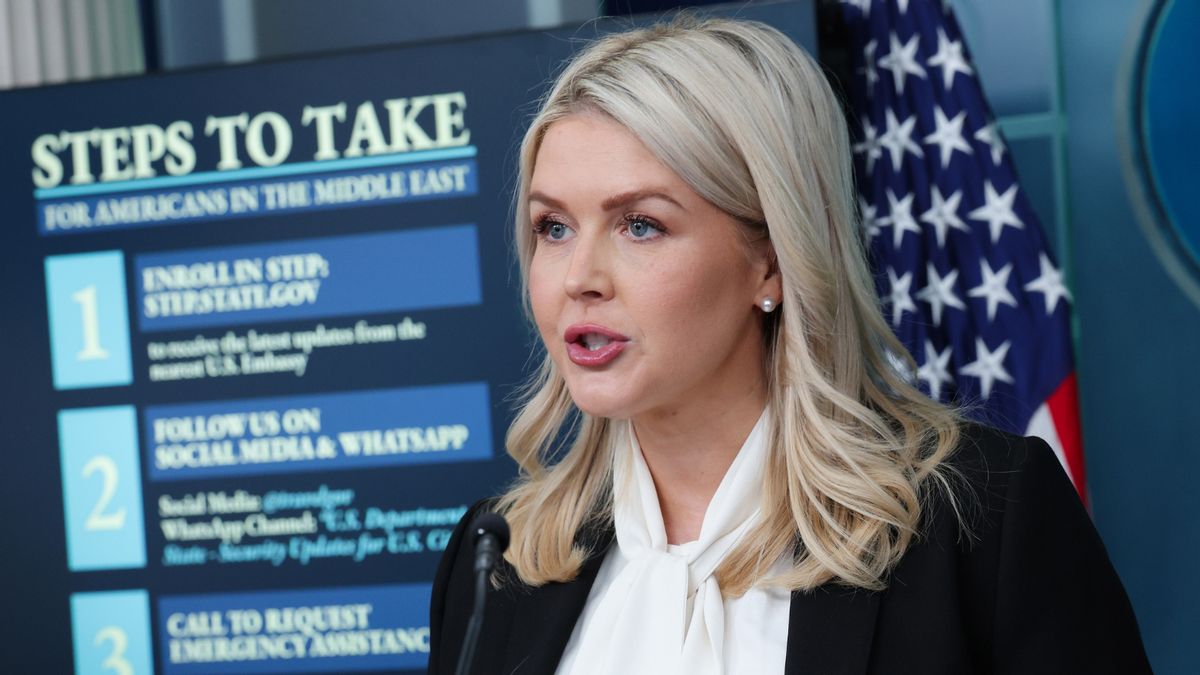
During a Sunday interview with Fox News host Maria Bartiromo, White House Press Secretary Karoline Leavitt responded ambiguously when asked about growing concerns among American families regarding potential ground deployment and the draft.
“It is not part of the current plan right now but the president again wisely keeps his options on the table,” Leavitt said when Bartiromo specifically mentioned mothers worried their children might be drafted into military service.
The exchange occurred as the U.S. and Israel continue joint airstrikes on Iran under what the administration has dubbed “Operation Epic Fury.” The military action represents a significant escalation in Middle East tensions and has sparked widespread discussion about the potential for broader American military involvement.
Military analysts note that a draft would require activating the Selective Service System, which maintains registration information for men aged 18-25. Any implementation would mark the first military draft since the Vietnam War era, representing a dramatic shift in U.S. military policy that has relied on an all-volunteer force for decades.
President Trump has publicly acknowledged considering sending ground troops to Iran but emphasized he would need a “very good reason” to authorize such deployment. According to NBC News reporting, Trump has shown “serious interest” in ground operations during private discussions with military advisors, though no formal decisions have been announced.
“President Trump wisely does not remove options off of the table. I know a lot of politicians like to do that quickly but the president as commander-in-chief wants to continue to assess the success of this military operation,” Leavitt explained during the interview.
The press secretary emphasized the administration’s focus on protecting American personnel in the region, noting that Iran “has killed and maimed thousands of American soldiers” over decades of hostilities. She highlighted the president’s commitment to preventing attacks on U.S. bases and troops in the Middle East.
The ambiguity of Leavitt’s response has generated concern across social media platforms, with many interpreting her statement as confirmation that draft plans are under consideration. When contacted for clarification on whether Leavitt’s comments referred specifically to the draft or merely to ground troop deployment, the White House had not provided additional comment at press time.
Military experts caution that implementing a draft would face significant logistical, political, and social hurdles. The Selective Service System, while maintaining registration information, would require substantial preparation to activate for a full-scale draft operation.
The current conflict follows years of tension between Iran and both the United States and Israel. According to reports from Bloomberg and The Guardian, the situation continues to evolve rapidly as Iran has threatened retaliation for the ongoing airstrikes.
As the military campaign progresses, analysts will closely monitor administration statements for further indications about troop deployment plans and any potential changes to the current all-volunteer military structure.
The administration has consistently characterized the airstrikes as defensive measures against Iranian threats to U.S. interests in the region, with Leavitt emphasizing that protecting American troops remains the president’s highest priority as commander-in-chief.
Fact Checker
Verify the accuracy of this article using The Disinformation Commission analysis and real-time sources.

10 Comments
The administration’s comments on the military draft are concerning. A draft would be an extreme measure with major impacts on American families. I hope the White House is exploring every diplomatic avenue to resolve this crisis without resorting to such drastic steps.
Agreed, a draft should be an absolute last resort. Diplomatic solutions must be the priority to avoid further conflict and disruption to citizens.
While I’m concerned about the prospect of a military draft, I trust the administration is closely monitoring the situation and will make decisions based on thorough analysis of the risks and potential consequences. Maintaining strategic flexibility is prudent, but I hope diplomatic efforts can defuse the crisis.
Absolutely. Difficult decisions ahead, but the priority should be de-escalating tensions through diplomatic channels if possible.
This is a sensitive and complex geopolitical situation. I appreciate the administration’s cautious approach, but a military draft would be an extreme measure that would have significant impacts on American families. Hopefully diplomacy can de-escalate tensions before such drastic steps are considered.
Well said. A draft would be highly disruptive – let’s hope cooler heads prevail and a peaceful resolution can be found.
Interesting developments in the Middle East. While a military draft would be a major escalation, I’m glad the White House is keeping options open to protect national security interests. Curious to see how this situation unfolds diplomatically and militarily.
Agreed, tensions are certainly high. The administration will need to carefully weigh all possibilities to avoid further conflict while safeguarding US and allied interests.
Tensions in the Middle East are certainly worrying, but the prospect of a military draft is very alarming. I hope the administration is carefully weighing all options and focusing on diplomatic resolutions to de-escalate the situation before considering such a disruptive measure.
Well said. Diplomacy and de-escalation should be the top priorities here to avoid the immense personal and societal costs of a draft.