


Listen to the article
Social media claims about UN labeling Trump as “racist” lack context, investigation reveals
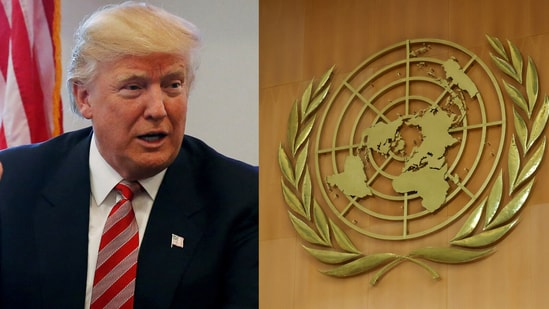
Social media posts claiming the United Nations has labeled President Donald Trump as “racist” have garnered millions of views in recent weeks, particularly from accounts critical of the former president. While containing elements of truth, these viral claims significantly misrepresent the actual statements made by the international organization.
The controversy stems from a recent report by the UN Committee on the Elimination of Racial Discrimination (CERD), which did indeed criticize Trump and other Republican leaders for what it described as “racist hate speech.” However, at no point did the United Nations itself directly label Trump as “a racist,” as many social media posts have suggested.
The CERD report specifically raised concerns about rhetoric from high-level political figures, including Trump, stating that portraying immigration detainees “as criminals or as a burden, by politicians and influential public figures at the highest level, particularly the president, may incite racial discrimination and hate crimes.”
The committee, comprising 18 independent experts including American representative Gay McDougall (a Biden appointee), also expressed concern over what it described as the “systematic use of racial profiling and arbitrary identity checks” by U.S. immigration enforcement agencies. According to the report, these practices have led to discrimination against “refugees, asylum seekers and migrants” of “Hispanic/Latino, African or Asian origin.”
CERD’s primary function is to monitor compliance with the International Convention on the Elimination of All Forms of Racial Discrimination, to which the United States is a signatory. The panel regularly reviews member states’ adherence to convention principles and issues recommendations for improvement.
The White House responded forcefully to the report, with spokesperson Olivia Wales dismissing the UN committee’s findings as showing “extreme bias” and claiming that “no one takes them seriously.”
“President Trump is delivering on his promise to make our country safe again: the murder rate has plummeted to a 125-year low, with last year marking the biggest one-year drop in recorded history, crime categories are dropping across the board, and we have the most secure border in history,” Wales stated in an email to Axios.
She added: “No one cares what the biased United Nations’ so-called ‘experts’ think, because Americans are living in a safer, stronger country than ever before.”
This exchange highlights growing tensions between the Trump administration and international organizations. The United States has previously withdrawn from certain UN bodies during Trump’s first term, including the Human Rights Council, citing what it characterized as bias against American interests and allies.
The situation also underscores the challenges of information verification in today’s social media landscape. The original CERD report—a nuanced document addressing systemic concerns about racial discrimination—has been reduced to simplified, often misleading headlines and social posts designed to generate emotional reactions rather than informed understanding.
Immigration policy remains a cornerstone of Trump’s political platform as he seeks another term in office. His administration has championed stricter border controls and deportation efforts, policies that have drawn both strong support from his base and fierce criticism from opponents and human rights organizations.
The CERD report represents one voice in an ongoing international dialogue about immigration, human rights, and racial equity—issues that continue to divide American voters as the presidential election approaches.
Fact Checker
Verify the accuracy of this article using The Disinformation Commission analysis and real-time sources.

8 Comments
This highlights the need for balanced, well-researched journalism on sensitive political topics. Viral social media claims often lack the necessary context and nuance. It’s good to see a more detailed exploration of the UN report and its findings.
The UN report seems to raise valid points about the potential impact of inflammatory rhetoric, but the social media claims appear to go beyond what the report actually said. It’s important to scrutinize these kinds of sensational allegations and stick to the facts.
Interesting to see the UN committee’s perspective on the potential impacts of inflammatory political rhetoric. However, the viral social media claims seem to go beyond the report’s actual findings. Nuance and careful examination of the facts are essential in these complex debates.
This highlights the need for careful, fact-based reporting on sensitive political issues. Viral social media claims can easily distort the reality of what was actually said. It’s good to see a deeper dive into the specifics of the UN report and its findings.
The UN’s concerns about divisive rhetoric from political leaders are understandable. However, directly labeling someone as ‘racist’ is a very serious accusation that should be made cautiously and with clear justification. Nuance and context are key in these complex debates.
The UN report’s concerns about the effects of divisive rhetoric from political leaders are understandable. But the social media claims seem to misrepresent the report’s content and findings. Fact-checking and contextual analysis are important to avoid further polarization.
While the UN report raises important concerns about divisive rhetoric, the social media claims appear to exaggerate or misrepresent its actual content. Fact-checking and contextual analysis are crucial to avoid further polarization on these sensitive issues.
Interesting to see the UN committee’s concerns about political rhetoric and its potential to incite discrimination. While it’s important to call out hateful speech, the report seems to stop short of directly labeling Trump as ‘racist’. Nuance and context are crucial in these sensitive discussions.