


Listen to the article
Misinformation Spreads as US-Israel-Iran Conflict Continues
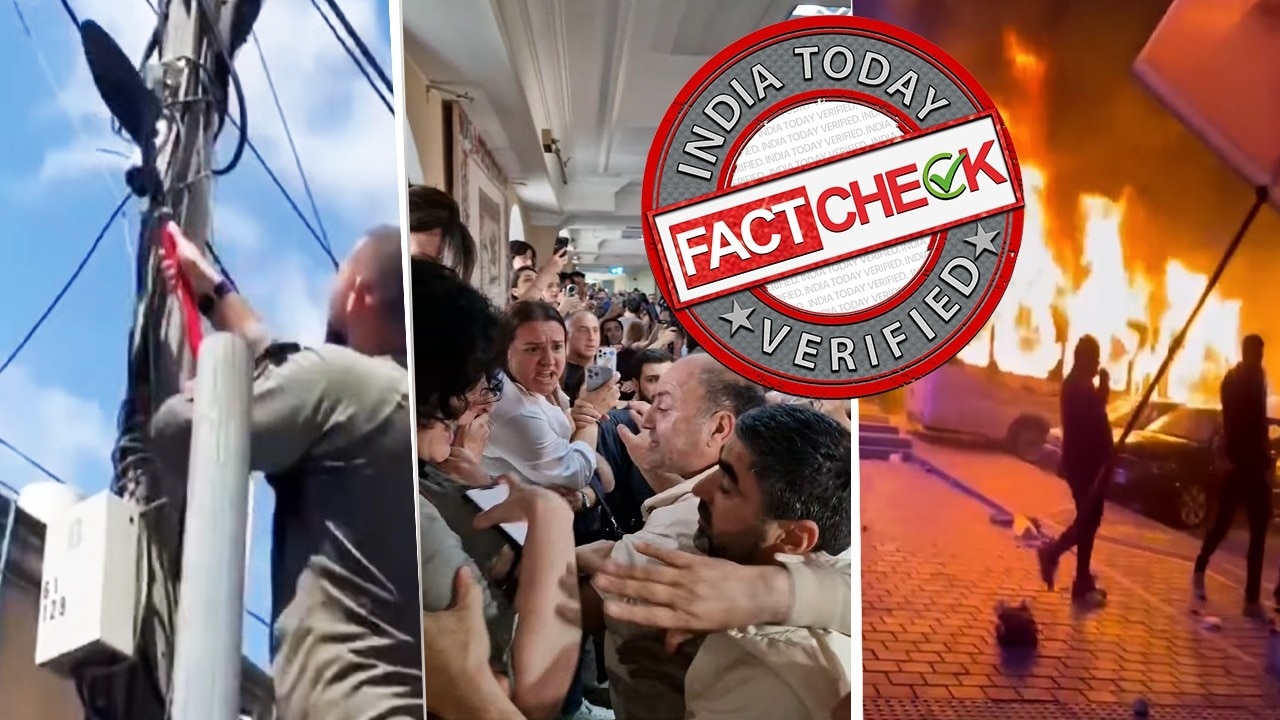
As the US-Israel-Iran conflict enters its second week, social media platforms continue to be flooded with misleading videos claiming to show destruction from recent military actions. Three viral videos in particular have gained significant traction online, despite being unrelated to the current hostilities.
The spread of such content highlights the ongoing challenge of misinformation during international conflicts, with old footage being repurposed to fit current narratives and potentially inflame tensions further.
In the first instance, a widely shared video purports to show Israeli authorities removing CCTV cameras to “hide the extent of destruction and casualties in occupied territories” following Iranian strikes. The footage shows uniformed officers dismantling surveillance equipment from buildings and utility poles.
However, a reverse image search reveals this video was originally posted by Israel’s Western Galilee Police on their official Instagram account in October 2025—months before the current conflict began. According to the Hebrew caption accompanying the original post, the cameras belonged to criminal organizations operating in the Western Galilee region and were being removed as part of standard law enforcement operations against illegal surveillance networks.
A second viral video depicts a chaotic scene of people fighting in an enclosed space, with several women being forcibly removed from the area. Social media posts sharing this footage claimed it showed “nine women being raped in an Israeli bunker” during recent blackouts in Tel Aviv.
Investigation reveals this footage actually originates from Tbilisi, Georgia, recorded during court proceedings in June 2025. The video was initially posted by Georgian news outlet Publika and documented a confrontation between supporters of defendant Mate Devidze and court bailiffs in a courthouse corridor. According to Radio Tavisupleba, a Georgian news source, Devidze had been sentenced to four and a half years in prison for assaulting a police officer during a November 2024 protest.
Security officials and fact-checkers note there have been no credible reports of such attacks occurring in Israeli shelters during the current conflict, making the associated claims particularly harmful.
The third video in circulation shows several vehicles ablaze on a street amid sounds of people shouting. Those sharing the clip alleged it showed the aftermath of an Iranian missile strike on Tel Aviv, with captions explicitly stating “Tel Aviv right now.”
Digital forensic analysis traced the footage to posts by Iranian news analyst Vahid Online from January of this year. The video actually depicts anti-government protests in Tehran’s Kaj Square in the Saadat Abad district, where demonstrators set vehicles on fire during widespread unrest. These January protests represented Iran’s largest anti-government demonstrations since the 1979 Revolution, triggered by economic crisis and currency collapse rather than military action.
Media literacy experts point out that conflict zones often become targets for misinformation campaigns, with old footage repurposed to support particular narratives. The rapid spread of such content can complicate diplomatic efforts and public understanding of actual developments.
Social media platforms have increased their fact-checking efforts during the conflict, but the volume of misleading content continues to present challenges. Intelligence officials warn that both state and non-state actors may amplify misleading content to achieve strategic objectives.
The ongoing US-Israel-Iran conflict has already resulted in significant casualties and infrastructure damage across multiple countries, making accurate reporting particularly crucial for regional stability and international response efforts.
Authorities urge social media users to verify content through multiple credible sources before sharing, particularly during active conflicts when the information environment is especially vulnerable to manipulation.
Fact Checker
Verify the accuracy of this article using The Disinformation Commission analysis and real-time sources.

7 Comments
Fact-checking is crucial in today’s information landscape, where old footage can be easily repurposed to fit current narratives. This article highlights the importance of verifying sources and context before sharing or believing viral claims. Well done on the thorough investigation.
Interesting fact check on the claims around CCTV cameras in Gaza. It’s important to verify the accuracy of viral videos, especially during volatile geopolitical situations. Appreciate the detailed analysis and context provided here.
The spread of misinformation during conflicts is a real challenge. This article provides a valuable lesson in the importance of verifying claims and not jumping to conclusions based on limited information. Appreciate the effort to set the record straight on this issue.
Good to see a thorough debunking of these misleading claims. It’s crucial that we carefully scrutinize the sources and context of viral content, rather than just accepting sensational narratives at face value. Fact-checking is essential for maintaining an informed public discourse.
This highlights the ongoing challenge of combating misinformation, especially during times of heightened tensions. Repurposing old footage to fit current narratives can be very misleading. Kudos to the authors for digging deeper into the origins of this viral video.
This fact check is a timely reminder of the need for media literacy and critical thinking when consuming news and social media content, especially around complex geopolitical topics. Kudos to the team for their diligent research and analysis.
It’s concerning to see how misinformation can spread rapidly, especially during times of heightened tensions. This fact check provides a valuable service in cutting through the noise and setting the record straight. Appreciate the level of detail and research put into this piece.