


Listen to the article
After 25 years of intense negotiations, the future of the Mercosur trade agreement now hangs in the balance. In January, the European Parliament voted to refer the deal to the European Court of Justice to determine if it aligns with EU rules, potentially delaying ratification for an additional two years.
This decision represents a significant setback for supporters of the agreement, which aims to establish a free trade zone between the European Union and the Mercosur bloc comprising Argentina, Brazil, Paraguay, and Uruguay. Within the EU, France, Poland, Austria, Ireland, and Hungary have emerged as the most vocal opponents.
At the heart of the controversy are concerns about environmental impact, fair competition, and the quality of imported products. French MEP Manon Aubry, co-leader of the Left in the European Parliament, described it as “the worst free trade agreement ever negotiated by the European Union,” warning of the potential influx of products treated with dangerous pesticides.
The EU maintains some of the world’s strictest regulations on pesticides and food safety. Critics argue that the trade deal would create a problematic cycle: the EU exports banned pesticides to South America, only to import food grown with those same chemicals.
“We export pesticides that are banned in the EU, only for them to return to our plates via imported food,” Aubry stated. This sentiment was echoed by Ewa Zajączkowska-Hernik, a Polish MEP from the far-right Europe of Sovereign Nations Group, who claimed the deal offers “no real protection mechanisms for farmers and consumers.”
Despite these concerns, the European Commission maintains that existing food safety regulations would remain fully in place under the Mercosur agreement. The Commission emphasized that genetically modified foods banned in the EU cannot be imported, and that all products must comply with European pesticide residue limits. The 1981 directive prohibiting meat imports from hormone-treated animals would also continue to apply.
The EU already conducts business with Mercosur nations under existing trade frameworks. In 2024, following a European Commission audit in Brazil that identified issues with beef traceability, Brazil suspended exports of female beef to the EU—demonstrating that regulatory mechanisms are in place and functioning.
Under the proposed deal, food safety inspections would operate at two levels: member states would conduct checks at EU borders, while the Commission would oversee production systems in exporting countries to ensure compliance with EU standards before products are shipped.
However, Karine Jacquemart, general director at consumer advocacy group Foodwatch, argues that even current checks are inadequately implemented. “Today, these rules are still not being properly enforced,” she said. “Border checks alone won’t stop the import of livestock treated with growth-promoting antibiotics—which are banned in the EU.”
In response to such concerns, France urged the EU to strengthen quality assurance measures for imported products. The Commission promised more rigorous health checks within Europe and enhanced veterinary and phytosanitary audits in third countries. French President Emmanuel Macron, despite his country’s opposition to the deal, praised these additional safeguards.
Belgian authorities present a different perspective. Aline Van den Broeck, spokesperson for Belgium’s federal food safety agency AFSCA, assured that health-related border inspections are being properly enforced. She described a four-step control system that includes intensified checks on shipments from countries or products with previous compliance issues.
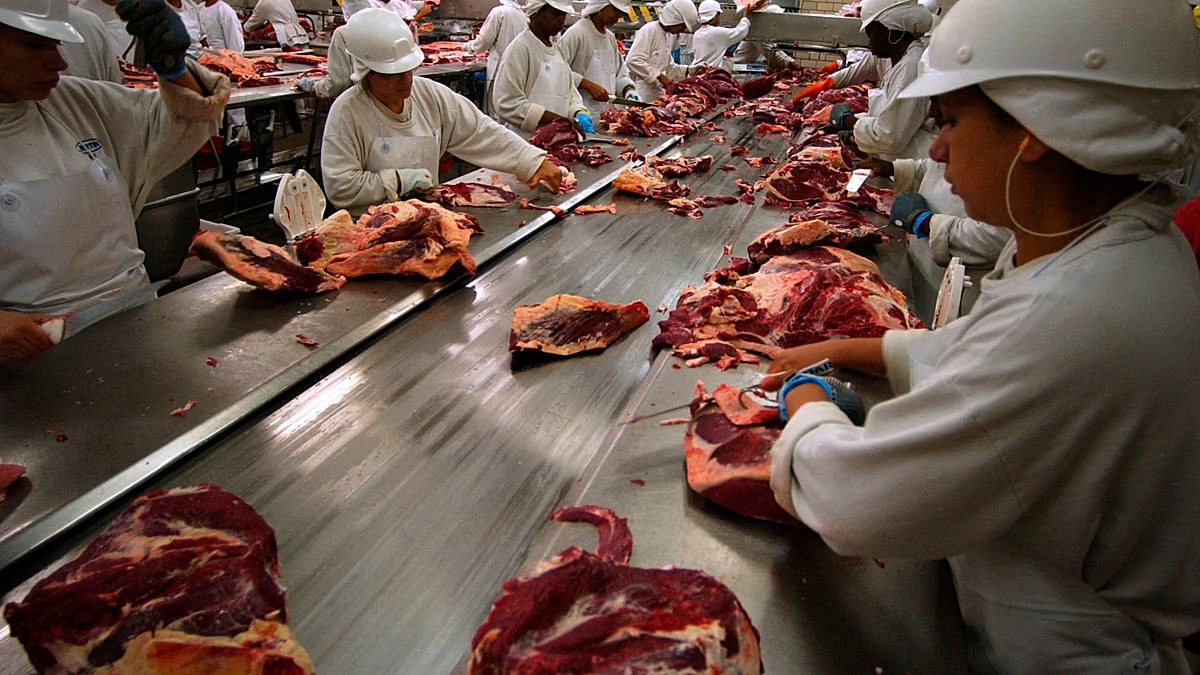
Brazil’s ambassador to the EU, Pedro Miguel da Costa e Silva, emphasized that all meat currently exported to the EU comes exclusively from establishments audited and authorized by both EU and Brazilian authorities. “Trade is already taking place regardless of the agreement,” he noted, adding that “the deal would not alter existing sanitary and phytosanitary standards.”
The European Consumer Organisation, while declining to address specific claims about “toxic” imports, stressed the importance of ensuring that imported food complies with EU food safety and animal welfare regulations, and that sustainability efforts aren’t compromised.
As the European Court of Justice deliberates, the future of this landmark trade agreement—25 years in the making—remains uncertain, caught between economic opportunities and concerns about environmental standards, food safety, and agricultural competition.
Fact Checker
Verify the accuracy of this article using The Disinformation Commission analysis and real-time sources.

9 Comments
I’m curious to see how this plays out. The Mercosur countries may argue that the trade deal could incentivize them to improve their own environmental and safety regulations. But the EU will have to weigh those potential benefits against the immediate risks.
That’s a good observation. The EU will need to carefully assess whether the potential longer-term gains outweigh the near-term concerns around this agreement.
It’s a complex issue with valid concerns on both sides. The potential environmental impact and food safety standards are crucial considerations as the EU weighs the merits of this Mercosur trade deal.
I agree, the EU will need to carefully balance economic benefits with environmental and consumer protection. Transparency and thorough risk assessment will be key.
The EU’s strict pesticide and food safety regulations have helped set a high bar globally. Allowing imports that don’t meet these standards could undermine public trust and consumer confidence.
That’s a fair point. The EU should prioritize safeguarding its food quality and safety standards, even as it seeks to expand trade partnerships.
As an EU citizen, I’m concerned about the potential influx of products that don’t meet our strict safety and quality standards. The health and well-being of consumers should be the top priority here.
I share your concerns. The EU must stand firm on upholding its regulatory framework and not compromise on food safety, even in the pursuit of expanded trade.
This is a delicate balancing act for the EU. They’ll need to carefully weigh the economic benefits against the environmental and consumer protection risks. Transparency and rigorous due diligence will be crucial.