


Listen to the article
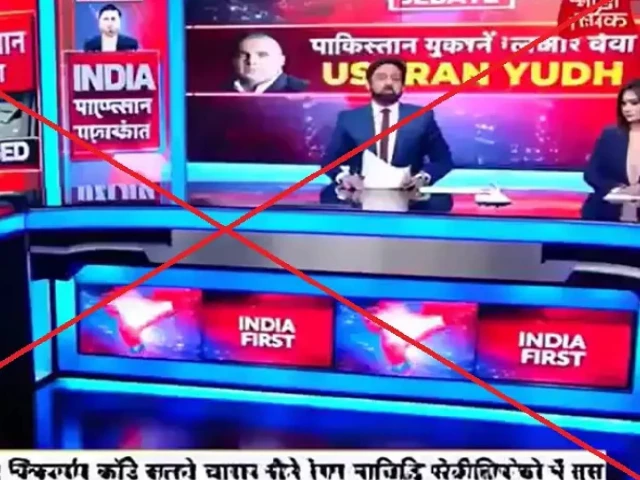
In a dramatic revelation, a viral video purportedly showing an Indian news anchor’s outburst over Pakistan’s diplomatic role has been exposed as a sophisticated fake. The doctored clip, which garnered hundreds of thousands of views across social media platforms, highlights growing concerns about AI-generated disinformation in sensitive geopolitical contexts.
The fabricated video depicted an Indian news anchor allegedly losing his temper while discussing Pakistan’s mediation efforts in a ceasefire between Iran and the United States. According to the false narrative accompanying the video, Pakistan had successfully brokered a two-week ceasefire on April 8, 2026, following escalating hostilities triggered by US-Israeli strikes in February.
Digital forensic analysis revealed multiple visual inconsistencies throughout the footage. At the 10-second mark, a white paper supposedly thrown by the host abruptly changes to black while airborne. Similarly, at 17 seconds, a chair allegedly thrown during the outburst morphs inexplicably into what appears to be a plastic sheet – clear evidence of digital manipulation.
Further examination showed that on-screen text visible throughout the video consisted of random letters and incoherent phrases rather than meaningful content, another hallmark of AI-generated material. Technical analysis using AI-detection tools confirmed suspicions, with platforms like Undetectable and Truth Scan identifying the audio as 95-96 percent AI-generated.
The video gained significant traction after being shared by multiple influential accounts, including some with apparent pro-military leanings. One user posted the video with the caption: “Indian media have gone mad… fighting with each other and crying hard over the news that Pakistan stopped the Iran–US war.” This post alone accumulated over 500,000 views.
More concerning was the amplification by verified journalists and officials. Murtaza Solangi, identified as a presidential spokesperson, shared the fabricated clip, as did journalists Waqar Satti and Zahid Gishkori. Internationally respected journalist Mehdi Hasan also reposted the video, though he questioned its authenticity.
The Pakistani media outlet Aaj News further legitimized the deception by publishing a screenshot from the video in an article titled: “Ceasefire achieved through Pakistan’s efforts; Indian and Israeli media mourn.”
This incident demonstrates the evolving sophistication of AI-generated disinformation, particularly in regions with complex diplomatic relationships. The video’s spread across multiple platforms and its endorsement by credible figures underscore how easily fabricated content can infiltrate mainstream discourse, especially when it aligns with existing narratives or biases.
Media analysts point to this case as evidence of the growing need for digital literacy and verification protocols among journalists, public figures, and social media users. The incident occurred amid genuine regional tensions, making the public particularly susceptible to believable disinformation.
The fabricated scenario – Pakistan successfully mediating between major global powers – played into regional pride and existing rivalries, likely contributing to the content’s viral spread before fact-checkers could intervene.
This case study in digital manipulation was ultimately debunked by iVerify Pakistan, a joint project of CEJ-IBA and the United Nations Development Programme (UNDP), highlighting the critical role independent fact-checking organizations play in combating synthetic media.
As AI tools become more accessible and their outputs more convincing, experts warn this trend of sophisticated fake news targeting geopolitical tensions is likely to accelerate, creating new challenges for media literacy and international diplomacy in an increasingly digitized information landscape.
Fact Checker
Verify the accuracy of this article using The Disinformation Commission analysis and real-time sources.

12 Comments
This is a concerning development, as doctored videos can have real-world consequences, especially in sensitive geopolitical contexts. Thorough digital forensic analysis is crucial to expose such fabrications.
Absolutely. With the rapid advancements in AI and deepfake technology, we need to be even more vigilant about verifying the authenticity of media content.
This case is a sobering reminder that we must be cautious and discerning when consuming media, particularly on social platforms. Fact-checking and verifying the source and authenticity of information is crucial.
Doctored videos can have serious implications, especially in sensitive political contexts. This incident serves as a wake-up call for the need to strengthen digital forensic capabilities and media verification processes.
It’s alarming how easily misinformation can spread in today’s digital landscape. Fact-checking and critical thinking are essential skills to combat the rise of AI-generated propaganda.
Doctored videos that appear genuine can have far-reaching consequences, especially in sensitive geopolitical contexts. This incident underscores the need for robust fact-checking and digital forensic capabilities to combat the rise of synthetic media.
While the advancement of AI technology is impressive, its potential for misuse is concerning. Vigilance and critical thinking are key to navigating the ever-evolving landscape of online content and misinformation.
The ability to create such convincing fake videos is both fascinating and worrying. It underscores the importance of developing effective counter-measures to identify and mitigate the spread of digital disinformation.
Interesting how AI-generated disinformation can be so sophisticated these days. It’s a good reminder to always fact-check viral videos and not blindly believe what we see online.
This case highlights the importance of media literacy and the need for robust fact-checking mechanisms to combat the growing threat of synthetic media. We must stay informed and skeptical of online content.
The ability to create such convincing fake videos is both fascinating and concerning. This case serves as a wake-up call for the need to strengthen our defenses against the growing threat of AI-generated disinformation.
The proliferation of AI-generated disinformation is a worrying trend that requires a multifaceted approach to address. Enhancing media literacy, improving verification methods, and investing in counter-measures are all essential steps.