


Listen to the article
Trump’s Spiritual Adviser Donation Claims: Separating Fact from Fiction
Reports claiming that Paula White-Cain, spiritual adviser to President Donald Trump, asked Americans to donate 10% of their income directly to Israel have been circulating widely on social media in recent weeks. An investigation into these claims reveals significant mischaracterizations of White-Cain’s actual statements.
In a March 29, 2026, video posted to the Paula White Ministries YouTube channel, White-Cain did request financial support from viewers, but the context and intended recipient of these funds have been misrepresented in subsequent social media posts.
During the video, White-Cain asked viewers to “receive God’s tithe and his offering,” defining this as “the first tenth of your gross income.” However, she explicitly requested these donations be made to her ministry, not directly to the nation of Israel as claimed in viral posts.
“As you do, you support Paula White Ministries,” she stated in the video, before explaining how her organization uses donated funds for various charitable efforts.
White-Cain did reference Israel in her remarks, noting that past donations had “helped build a moshav—a village—in Israel from the horrific attacks of October 7.” This refers to the 2023 Hamas attacks on settlements near the Gaza Strip, including Ein HaBesor, a cooperative agricultural settlement that White-Cain’s ministry has supported through various initiatives.
According to the ministry’s website, their efforts in Ein HaBesor have included providing school equipment, washing machines, and a “high-end security drone.” The ministry partnered with CityServe, a U.S.-based nonprofit organization, for these humanitarian efforts.
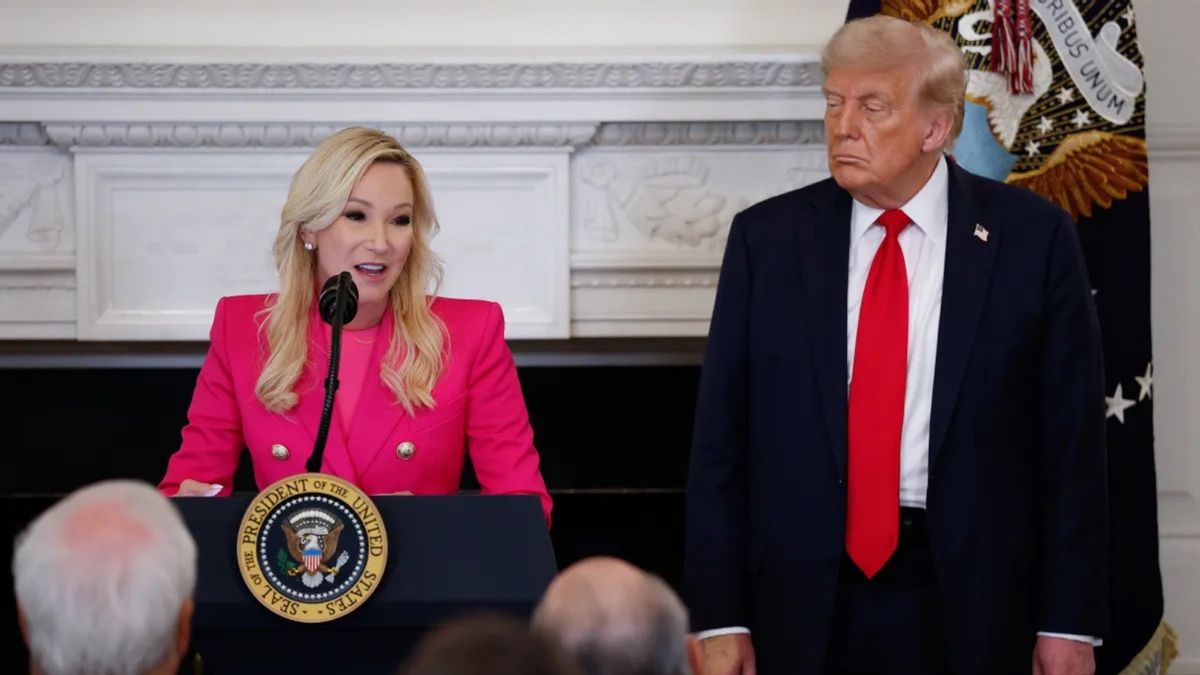
White-Cain has maintained a prominent position in Trump’s inner circle since his return to office. In February 2025, the president appointed her to lead his newly-created White House Faith Office. A controversial figure within the charismatic Christian movement, White-Cain has been described as “internationally recognized for her unwavering support of Israel” on her ministry’s website.
The mischaracterization of White-Cain’s comments sparked outrage online, with critics questioning why Americans should donate substantial portions of their income to a foreign nation during domestic economic challenges. One widely-shared Facebook post condemned the supposed request as insensitive when “millions of Americans are struggling to pay for basic groceries and rent.”
Televangelists soliciting donations is nothing new in American religious broadcasting. These ministries often operate by requesting tithes—traditionally defined as 10% of a follower’s income—to support their organizational activities, which may include both domestic and international humanitarian efforts.
The controversy highlights the ease with which statements can be taken out of context in today’s fast-moving social media environment. Several publications released articles with headlines mirroring the incorrect claims that quickly spread across social platforms.
White-Cain’s ministry has documented its work in Israel extensively. The organization’s website details a visit by Todd Lamphere, their global outreach pastor, to Ein HaBesor for the dedication of pickleball and tennis courts funded by ministry donations. The moshav (described by Britannica as a type of cooperative agricultural settlement positioned between private settlements and communal kibbutz living) was among those that successfully defended itself during the October 7 Hamas attacks.
While White-Cain has clearly directed ministry resources toward supportive projects in Israel, the claim that she requested Americans to donate 10% of their income directly to the Israeli government is demonstrably false. Rather, she asked for donations to her ministry, which allocates funds to various charitable projects both domestically and internationally, including humanitarian efforts in Israel.
As this case demonstrates, verifying claims before sharing them remains essential in preventing the spread of misinformation, particularly regarding politically connected religious figures whose statements often receive heightened scrutiny.
Fact Checker
Verify the accuracy of this article using The Disinformation Commission analysis and real-time sources.

10 Comments
This highlights the need to be cautious about viral claims on social media, even when they involve prominent public figures. Fact-checking is crucial to understand the real story.
Absolutely. It’s easy for misinformation to spread quickly online, so it’s good to see credible outlets investigating the details and setting the record straight.
Interesting fact check on the claims about Trump’s faith adviser asking for donations to Israel. It’s important to get the details right, as the real context seems quite different from what was reported on social media.
You’re right, the adviser was actually requesting donations to her own ministry, not directly to Israel. Important to separate fact from fiction in these kinds of stories.
This situation highlights the importance of critical thinking and fact-checking, rather than just blindly sharing or believing viral claims on social media. Kudos to the fact-checkers for their diligent work.
Agreed. It’s all too easy for misinformation to spread these days, so it’s refreshing to see a detailed, balanced analysis of the facts behind this particular claim.
While the adviser’s request for donations to her own ministry is certainly noteworthy, I’m more interested in understanding the broader context of her relationship with President Trump and her role as a spiritual adviser.
That’s a good point. The article focuses narrowly on this specific claim, but there may be larger questions around the adviser’s influence and access to the president that are worth exploring further.
I’m curious to learn more about the charitable efforts that this ministry engages in, beyond just the donation request. The article mentions they use the funds for various charitable work.
Yes, that’s a good point. It would be helpful to know more specifics on how the donated funds are actually utilized by the ministry to support charitable causes.