


Listen to the article
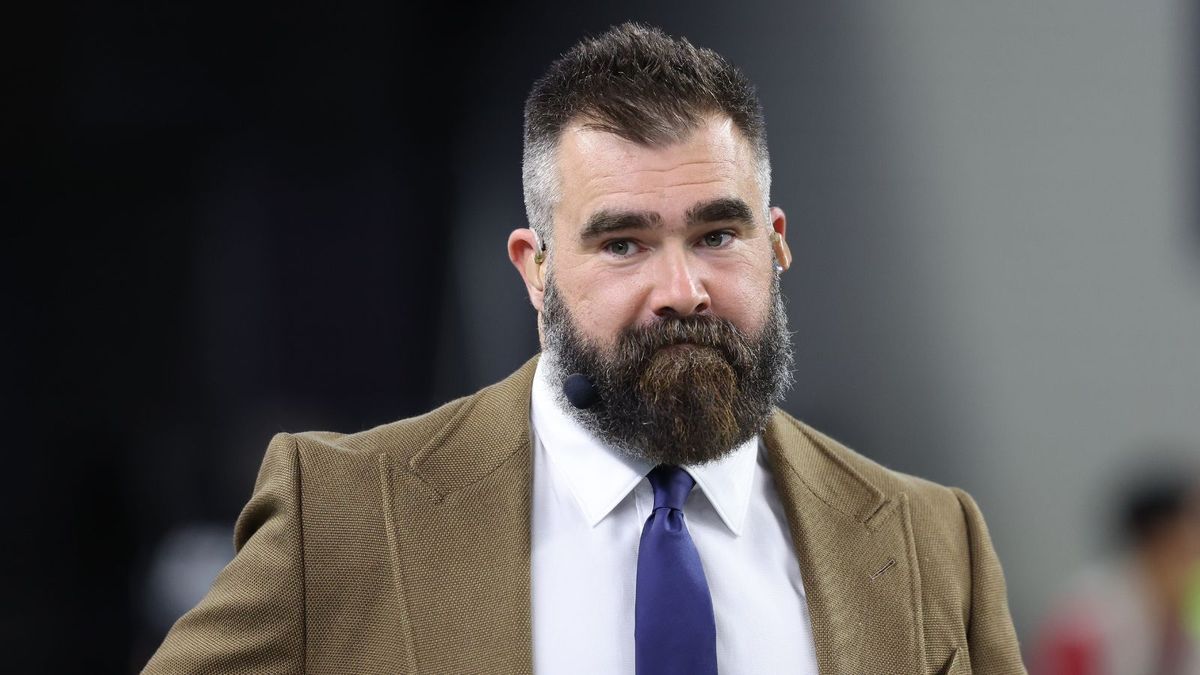
In a startling case of misinformation, claims that former Philadelphia Eagles center Jason Kelce established a scholarship fund honoring Renee Good have been exposed as entirely fabricated. The story, which circulated across social media in January 2026, falsely stated that Kelce had contributed $300,000 to create the “Renee Good Hope Scholarship Fund.”
The fabricated narrative centered on Renee Good, a 37-year-old Minneapolis resident who was fatally shot on January 7 by U.S. Immigration and Customs Enforcement officer Jonathan Ross. According to the false claims, Kelce was so moved by Good’s death that he established a scholarship fund to support her 6-year-old son’s education from elementary school through college.
An investigation revealed that the rumor appears to have originated from Facebook pages with questionable credibility. The “Chiefs Strategy Central” Facebook page, managed by five individuals based in Vietnam according to the page’s transparency information, was among the primary sources spreading the misinformation. The posts typically linked to advertisement-heavy WordPress blogs, suggesting a profit motive behind the fabricated story.
No legitimate news organizations reported on Kelce establishing any such scholarship. When contacted for comment, representatives for Kelce through the Wondery podcast company, which manages his “New Heights with Jason & Travis Kelce” podcast, had not responded at the time of reporting.
Digital forensic analysis of images accompanying the posts revealed clear signs of artificial intelligence manipulation. The photos purportedly showing Kelce hugging Good’s son and Kelce crying were flagged by Google Gemini’s SynthID Detector tool, which identified digital watermarks indicating they were created using AI tools.
The text accompanying these fabricated images also exhibited telltale signs of AI generation, featuring overly dramatic language and sentimentality typical of automatically generated content. One passage read: “There were no cameras chasing charity. No speeches asking for praise. Just a quiet, powerful act of humanity — proving that even after violence and heartbreak, compassion can still speak louder than silence.”
This fabrication falls into a category sometimes referred to as “glurge” — stories presented as true and uplifting but which are actually manufactured and overly sentimental. Such content is designed to trigger emotional responses and drive engagement, regardless of factual accuracy.
What makes this case particularly concerning is that Google’s AI search tools initially misidentified the rumor as factual, citing the very Facebook posts spreading the misinformation as authoritative sources. This highlights the ongoing challenges technology companies face in combating the spread of AI-generated falsehoods.
The Kelce scholarship hoax is not an isolated incident. Similar false claims recently circulated about Philadelphia Eagles quarterback Jalen Hurts establishing a scholarship in Good’s memory. These fabrications appear to be part of a broader trend of creating emotionally resonant but entirely fictional stories about celebrities and athletes performing acts of kindness.
This case illustrates the evolving landscape of online misinformation, where AI tools are increasingly used to create convincing but false narratives. The financial incentive is clear: such emotionally charged content drives clicks to ad-filled websites, generating revenue for their creators regardless of the story’s veracity.
As digital media consumers navigate this environment, the incident serves as a reminder of the importance of verifying information through multiple reliable sources before accepting claims at face value, particularly those that appear designed to provoke strong emotional responses.
Fact Checker
Verify the accuracy of this article using The Disinformation Commission analysis and real-time sources.

8 Comments
This case highlights the importance of verifying information, especially when it involves claims of charitable giving or honoring someone’s memory. Spreading misinformation, even with good intentions, can ultimately do more harm than good.
While it’s disappointing to see this type of misinformation, I’m glad the Disinformation Commission took the time to investigate and debunk the claims. Fact-checking is crucial in an era where false narratives can spread so quickly online.
This is a cautionary tale about the need for critical thinking and fact-checking, even when the story seems heartwarming. Exploiting real tragedies for profit or attention is a concerning trend that must be challenged.
While the desire to memorialize Renee Good and support her son is understandable, creating a fictitious scholarship fund in Jason Kelce’s name is highly unethical. I hope the true story receives as much attention as the initial fabrication.
It’s disappointing to see how quickly false narratives can gain traction online, even when they lack any credible basis. Fact-checking and debunking misinformation is crucial to maintaining public trust and preventing the exploitation of sensitive issues.
I’m curious to learn more about the motivations behind the individuals who spread this false story. Was it purely for financial gain, or were there other underlying factors at play? Understanding the root causes of misinformation is key to addressing the problem.
This seems like a clear case of misinformation spreading for dubious purposes. Fabricating stories about charitable acts is quite concerning, especially when they exploit real tragedies. I’m glad the facts were uncovered and the truth revealed.
This is a disappointing example of how misinformation can exploit real tragedies for financial or attention-seeking purposes. I’m glad the truth has been revealed, but it’s concerning to see how quickly such fabrications can gain traction online.