


Listen to the article
Nigeria’s Defense Minister Misrepresented in AI-Generated Viral Video
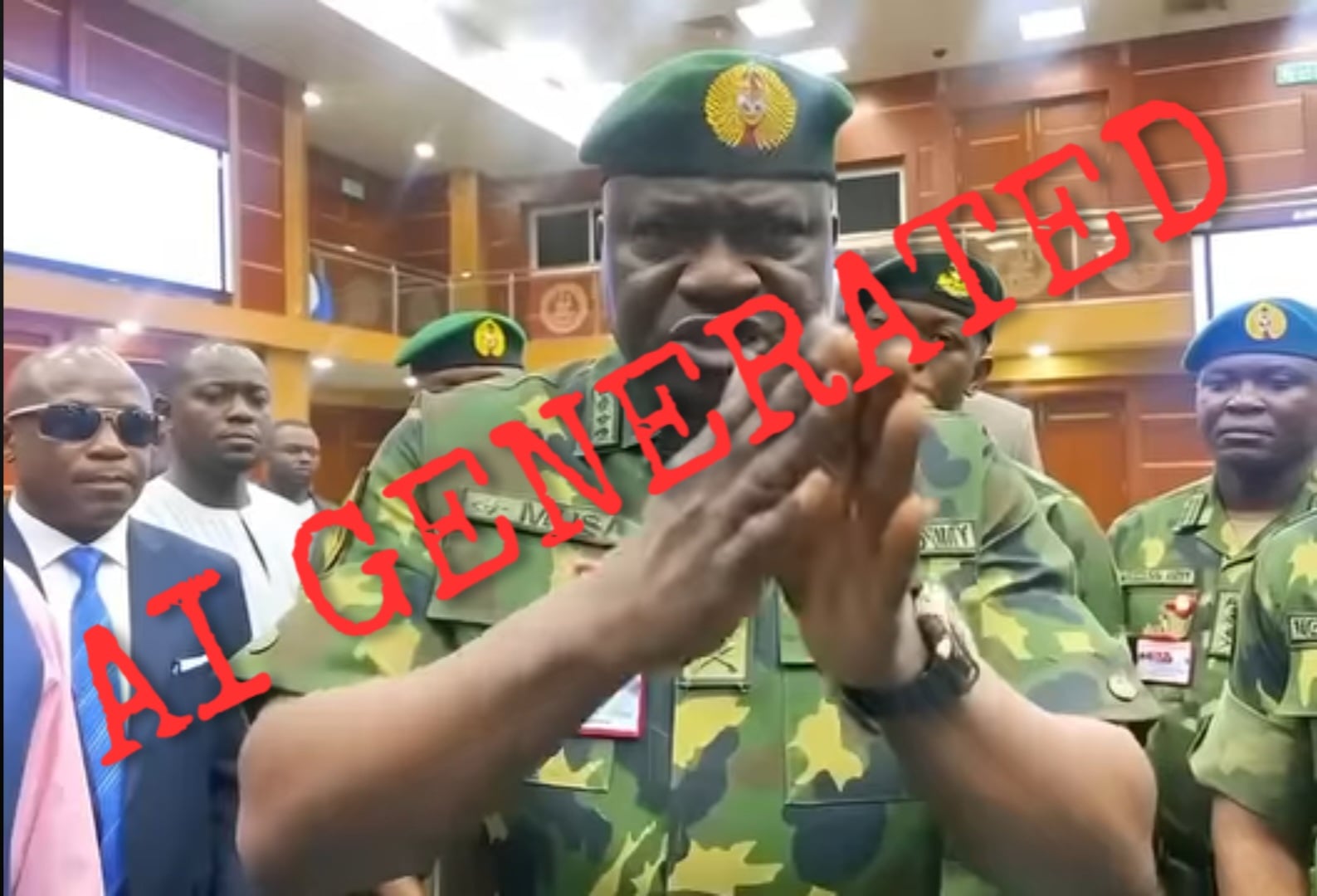
A deceptive video circulating on social media platforms falsely depicts Nigeria’s Defense Minister Christopher Musa threatening to withdraw military personnel from states that negotiate with bandits. The video, which has gained significant traction online, shows an AI-generated likeness of Musa warning that governors who engage in negotiations with bandit groups would be treated as accomplices.
The manipulated clip has spread rapidly across Facebook communities, with one post by user Raphael Mbaiorga in the group “Adamawa state politics 2027 open mind” accumulating 193 shares, 2,400 likes, and 110 comments. Similar versions have appeared on multiple Facebook pages, contributing to its viral spread.
Upon careful examination, the video shows clear signs of artificial intelligence manipulation. Despite the figure bearing resemblance to Minister Musa, technical analysis confirms the defense minister was not the individual speaking. Tellingly, the original poster included “AI-generated” among the hashtags accompanying the video, though many viewers appear to have overlooked this crucial detail.
The fabricated statement has not appeared on any credible news outlets or official government channels, further confirming its inauthenticity.
The timing of this AI-fabricated content comes amid heated national debate regarding the approach to banditry in Nigeria’s northern regions. Several state governments have pursued negotiations with armed groups, a strategy that has proven controversial among security experts and citizens alike.
In January, the Katsina state government defended its decision to facilitate the release of 70 suspected bandits, characterizing the move as necessary for establishing “community-driven peace agreements” with what they termed “repentant bandits” across several local government areas.
Minister Musa did address this issue in a legitimate interview with BBC Hausa earlier this year. In that verified conversation, he expressed opposition to negotiating with bandits, arguing such approaches undermine military operations. He specifically noted that bandits “do not fear God” and would likely violate any agreements reached through negotiation.
However, at no point in the authentic interview did Minister Musa threaten to withdraw soldiers from states engaging in such negotiations, contrary to the claims in the AI-generated video.
The emergence of this sophisticated fake comes amid growing concerns about the proliferation of AI-generated disinformation in Nigeria’s political landscape. Security analysts warn that such fabrications could potentially inflame tensions in regions already struggling with insecurity and complex political dynamics.
The Nigerian military continues to battle banditry across multiple states, particularly in the country’s northwestern and north-central regions, where armed groups have conducted kidnappings, village raids, and highway ambushes over recent years.
The Ministry of Defense has not yet issued an official statement regarding the falsified video, though government sources indicate they are monitoring the spread of such misinformation that misrepresents official security policies.
Media literacy experts recommend that Nigerians verify information through multiple credible sources before sharing content, especially regarding sensitive security matters where misinformation could have serious consequences for public safety and government-community relations.
Fact Checker
Verify the accuracy of this article using The Disinformation Commission analysis and real-time sources.

9 Comments
Interesting fact check on the alleged threat by the Defense Minister. It’s concerning to see AI-generated disinformation spreading so rapidly online. Fact-checking and verifying claims is crucial to combat the spread of misleading information.
The spread of this fabricated video is a disturbing trend. It’s a sobering reminder that we must be extremely cautious about the information we encounter online, even if it appears to come from official sources. Fact-checking is more important than ever in the digital age.
This fact check highlights the importance of verifying claims, especially those that seem politically charged or sensational. It’s concerning to see how easily AI-generated content can be used to mislead the public. We must all be more critical consumers of information online.
While the use of AI in news reporting and content creation can have benefits, this example shows the risks if not properly regulated and monitored. Fact-checkers play a crucial role in maintaining the integrity of information shared online. Their work is essential for a well-informed public.
This is a concerning example of how AI can be used to spread disinformation. While the technology has many beneficial applications, it’s clear that proper safeguards and oversight are needed to prevent its misuse. Kudos to the fact-checkers for uncovering the truth.
The rapid spread of this AI-generated video is a worrying trend. It’s a stark reminder of the need for robust fact-checking and media literacy efforts to combat the growing problem of online misinformation. We must remain vigilant and seek out reliable sources.
The Defense Minister’s alleged threat to withdraw troops from states negotiating with bandits is a serious allegation. I’m glad the fact-checking process revealed this to be an AI-generated fabrication. It’s a good reminder to always cross-check information before sharing.
This highlights the challenges of combating misinformation in the digital age. While technology can be a powerful tool, it can also be misused to create deceptive content. Rigorous verification and public awareness are key to addressing this issue.
You’re right, the use of AI to generate fake statements is particularly worrying. It’s crucial that people remain vigilant and rely on authoritative and verified sources of information.