


Listen to the article
The viral claims about an alleged attack involving Taylor Swift and Travis Kelce outside a Los Angeles venue have been thoroughly debunked, revealing how quickly misinformation can spread on social media platforms.
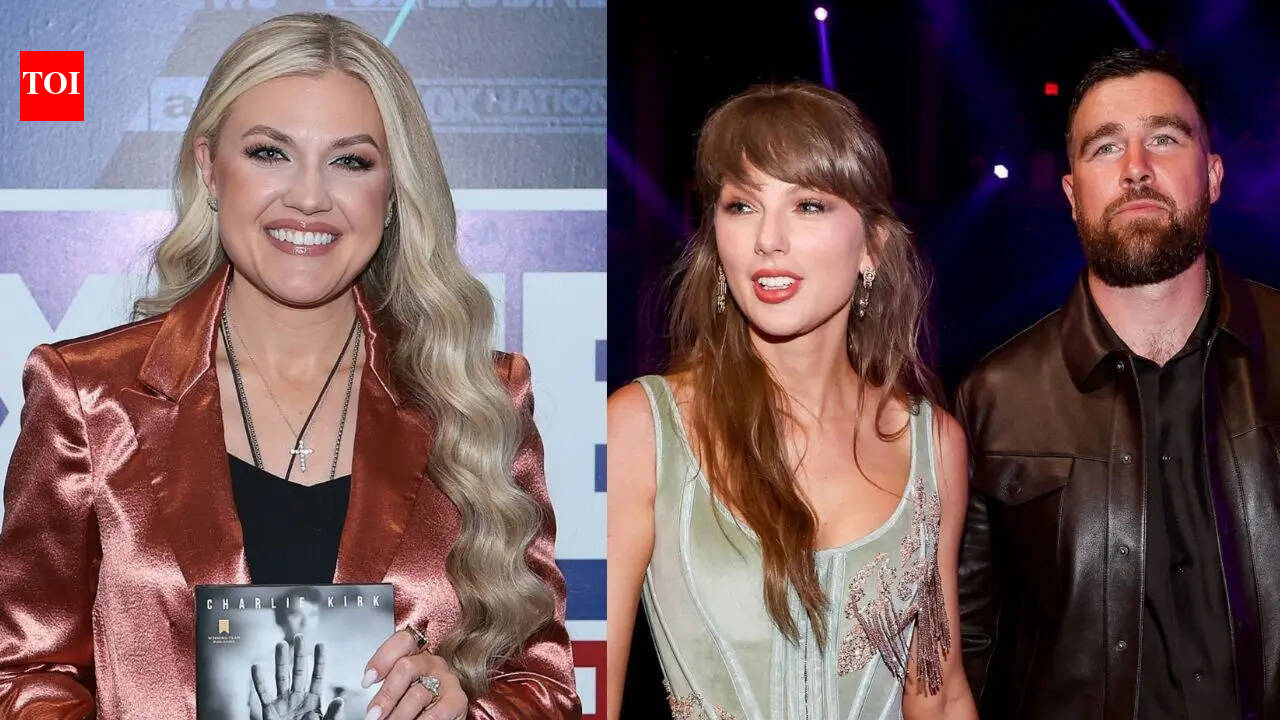
Last week, following Swift’s appearance at the iHeartRadio Music Awards, a series of posts circulated online claiming that an individual had “attacked” the car carrying the music superstar and her NFL player boyfriend. The situation escalated when a particularly inflammatory tweet suggested the person would “do anything besides grieve her assassinated husband,” introducing baseless speculation about someone named Erika Kirk.
Investigation into the incident shows a far more mundane reality. Brazilian influencer Liziane Gutierrez approached Swift’s vehicle outside The Bird Street Club in an attempt to hand the singer a Brazilian jersey. Video footage of the moment appeared chaotic but showed no evidence of any aggressive behavior that could be characterized as an attack.
“I’m not crazy like people are saying,” Gutierrez later explained to media outlets. “I’m doing a project with RedeTV in Brazil where I take on missions. The first mission was to give the Brazil jersey to Taylor Swift or Justin Bieber. I did my best even though her security guard was extremely rude.”
The influencer further defended her actions, noting the relatively small crowd present. “They are cute, but there were only five people or fewer waiting for her outside. Why didn’t she stop to talk or just say hi?” she questioned.
Social media’s tendency to amplify and distort events was on full display as the incident transformed from an awkward fan encounter into something much darker through unsubstantiated claims. The completely unfounded mention of Erika Kirk—who has no verified connection to the event—demonstrates how quickly falsehoods can be inserted into developing narratives online.
The incident stands in stark contrast to Swift’s otherwise triumphant evening at the awards ceremony. The pop icon collected multiple honors and delivered an emotional acceptance speech about her latest album. “The album was really inspired by the energy that I felt, like looking into crowds and seeing you guys and connecting with you every single night,” Swift told the audience. In a rare public acknowledgment of her relationship, she added that the album “probably also feels very happy and confident and free because that’s the way that I get to feel every single day of my life, because of my fiancé, who’s here too.”
Media experts point to this incident as a textbook example of how celebrity news can be manipulated and sensationalized in the digital age. Dr. Rachel Henderson, who studies social media misinformation at Columbia University, notes that high-profile figures like Swift are particularly vulnerable to such distortions.
“When you combine a global superstar, a relatively minor incident, and social media’s algorithmic preference for outrage, you create perfect conditions for misinformation,” Henderson explained in a recent interview. “The public’s emotional investment in celebrities like Swift makes critical evaluation of claims less likely.”
The Swift-Kelce incident highlights broader concerns about information literacy in an era where visual content can be decontextualized and repurposed to support virtually any narrative. Media watchdogs recommend that consumers verify information through multiple credible sources before accepting or sharing dramatic claims, particularly those involving public figures.
As the dust settles on this fabricated controversy, what remains is not evidence of an attack or malicious intent, but rather another cautionary tale about the power of social media to transform mundane moments into manufactured scandals—often with real reputational consequences for those caught in the crossfire.
Fact Checker
Verify the accuracy of this article using The Disinformation Commission analysis and real-time sources.

9 Comments
I’m glad the details of this incident were able to be cleared up. It’s concerning how easily false narratives can take hold online, but it’s reassuring to see responsible reporting set the record straight.
This just goes to show how important it is to rely on verified information rather than unsubstantiated rumors or speculation. I appreciate the thorough investigation that was done to get to the bottom of this story.
Debunking misinformation is crucial, especially when it involves public figures. I’m glad the real facts were able to come to light and dispel the misleading claims that were circulating.
It’s concerning to see how quickly a false narrative can gain traction online. I’m glad the Disinformation Commission took the time to thoroughly investigate and provide the correct information.
Interesting to see how quickly misinformation can spread on social media these days. It’s good that the facts were able to be sorted out and the real situation was clarified.
This is a good reminder to always be skeptical of viral claims and to verify information from credible sources before jumping to conclusions. Fact-checking is so important in the age of social media.
Misinformation is a real problem in the digital age. I’m glad the Disinformation Commission was able to provide a clear and factual account of this incident, rather than letting the false narrative persist.
Social media can be a powerful tool, but it also amplifies the spread of misinformation. This case highlights the need for more media literacy and critical thinking when it comes to online content.
This is a good example of why it’s important to rely on reputable sources and fact-check claims, rather than blindly believing what we see on social media. Kudos to the journalists for setting the record straight.