


Listen to the article
The Davao City Government has officially denied claims circulating on social media that it purchased oil from Brunei, refuting viral posts that had gained significant traction among supporters of former President Rodrigo Duterte.
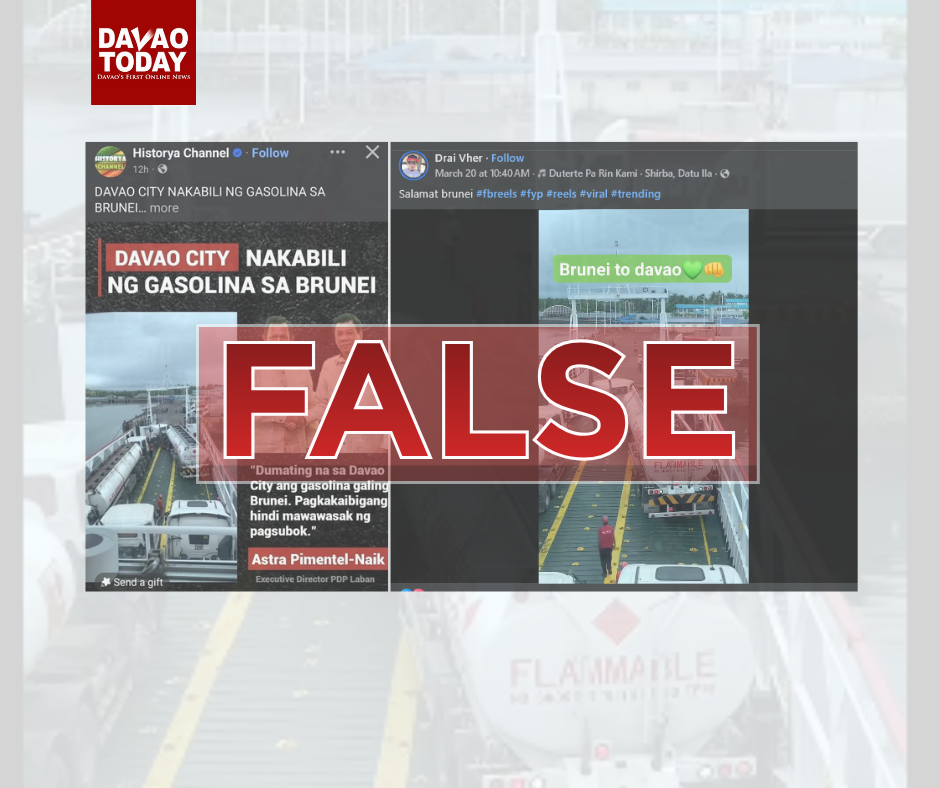
Two Facebook accounts were responsible for spreading the false information. Historya Channel, which describes itself as a page for current events and history, published a post on March 21 claiming the city had imported oil from Brunei. The post purportedly quoted an unnamed official from PDP-Laban, the political party associated with former President Duterte, and referenced a viral video clip allegedly showing an oil shipment arriving from Brunei.
The second source of the misinformation came from content creator Drai Vher, who on March 20 posted a 15-second video showing oil tanker trucks disembarking from a ferry. This video was subsequently shared more than 14,000 times, while Historya Channel’s post garnered approximately 17,000 shares.
“We have no information regarding the alleged oil supply from Brunei arriving in Davao City. The city government has not held any discussions with Brunei on this matter,” stated Davao City Information Officer Harvey James Lanticse in a statement to reporters on Saturday.
The false claims appeared designed to bolster narratives about the Duterte family’s leadership capabilities during the current oil crisis, which has been exacerbated by tensions between the United States, Israel, and Iran. The posts suggested that Davao City, under Mayor Sebastian Duterte, had taken proactive steps to address potential oil shortages by securing direct imports from Brunei.
Following Lanticse’s official denial, several pro-Duterte social media influencers, including Kitty Duterte, Kiko Barzaga Fans, and John Fortich, deleted their posts that had amplified the false claims. However, Historya Channel, while acknowledging Lanticse’s statement in a March 22 post, did not remove its original erroneous announcement about the Brunei oil imports.
The spread of this misinformation prompted Davao civil society leaders and concerned citizens to condemn the Facebook pages for disseminating false information. Many posted comments calling out the accounts for engaging in disinformation during a period of economic uncertainty.
The incident highlights ongoing concerns about the rapid spread of unverified information on social media platforms, particularly during times of crisis or economic instability. It also underscores the challenges faced by local governments in countering false narratives that can quickly gain momentum online.
The Philippines, like many Asian nations, relies heavily on oil imports from West Asia for transportation and energy production. The ongoing conflict in the region, now in its third week, has raised concerns among industry and economic analysts about potential oil shortages that could lead to increased costs for goods and services across the Philippine economy.
The fabricated story about Davao City’s oil imports demonstrates how geopolitical tensions and economic anxieties can create fertile ground for misinformation. As global oil markets remain volatile due to the conflict, Filipino consumers continue to face uncertainty regarding future fuel prices and availability, making accurate information all the more crucial for both public officials and citizens.
Fact Checker
Verify the accuracy of this article using The Disinformation Commission analysis and real-time sources.

7 Comments
This report highlights the importance of fact-checking information, especially when it comes to sensitive topics like energy supply. It’s good to see the local government quickly refute the claims and set the record straight.
The rapid spread of this misinformation is concerning, but the swift response from the local government is reassuring. Maintaining transparency and accountability in matters of public interest, like energy supply, is crucial for good governance.
While it’s concerning to see misinformation spreading so rapidly on social media, I’m glad the authorities were able to clarify the situation. Transparent and accountable governance is crucial, especially around critical infrastructure like oil and fuel.
While social media can be a powerful tool for sharing information, it also carries the risk of amplifying false narratives. I’m glad to see the authorities taking steps to combat misinformation and provide accurate, reliable data to the public.
Reliable information is essential, especially when it comes to sensitive topics like energy supplies and geopolitics. I’m glad the local government took swift action to address these unfounded claims and provide clarity to the public.
It’s disappointing to see false narratives gain traction so easily online. Fact-checking and debunking misinformation is an ongoing challenge, but it’s crucial to maintain public trust, especially on issues related to energy and the economy.
This report highlights the need for vigilance against the spread of misinformation, particularly around issues that can have significant economic and political implications. Transparency and fact-checking are key to maintaining public trust.