


Listen to the article
Tucker Carlson Claims CIA Monitoring His Iranian Communications, Suggests Potential Legal Action
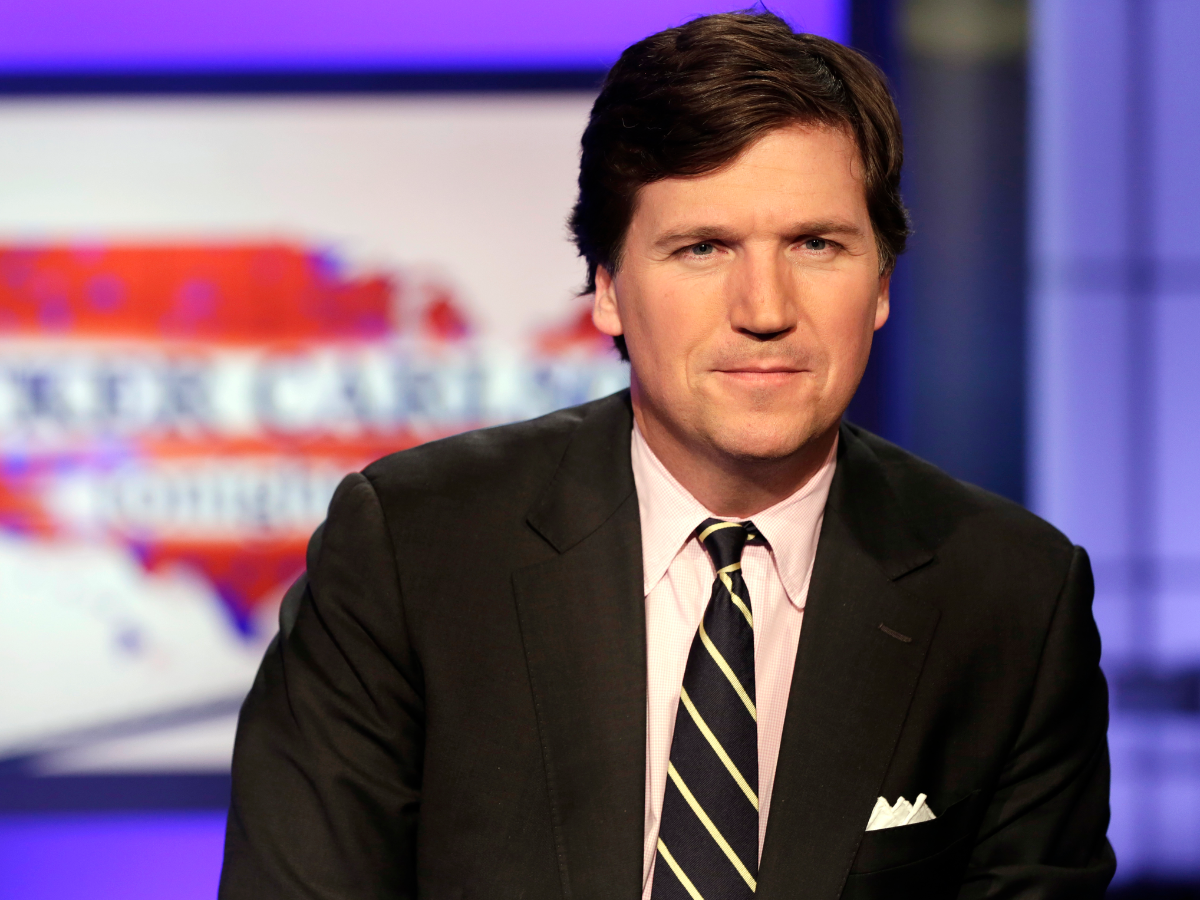
Conservative media personality Tucker Carlson has ignited a political firestorm with claims that the Central Intelligence Agency is preparing a criminal referral against him to the Department of Justice. According to Carlson, the alleged referral concerns text communications he had with Iranian officials prior to U.S.-Israeli military operations targeting Iran.
Carlson suggested the potential charges could fall under the Foreign Agent Registration Act (FARA), though he indicated he does not expect prosecution. The provocative claims come amid heightened tensions between the United States and Iran, with Carlson positioning himself as a controversial intermediary.
“The CIA intercepted texts between myself and Iranian authorities,” Carlson alleged in a recent commentary. He framed the supposed surveillance as government overreach, a narrative that resonates with his conservative audience.
Legal experts note that while FARA requires individuals acting on behalf of foreign entities in the United States to disclose their activities, successful prosecutions under the act are relatively rare, particularly for high-profile public figures operating openly. Violations can result in fines or imprisonment, though the law is more commonly referenced in cases involving lobbying or covert influence operations.
As of early 2026, no charges have been filed against Carlson, and he has not been arrested. The claims remain unverified, with fact-checkers emphasizing the absence of official legal action against the commentator.
Carlson has built his career as a polarizing figure in American political media. After hosting “Tucker Carlson Tonight” on Fox News from 2016 to 2023, he departed the network to establish the independent Tucker Carlson Network, where he continues to produce content aligned with right-wing perspectives.
Throughout his career, Carlson has cultivated significant influence in conservative circles, often promoting controversial viewpoints on immigration, race relations, and foreign policy. His defenses of authoritarian leaders, including Russian President Vladimir Putin, have drawn particular criticism from political opponents and media watchdogs.
The current controversy highlights the complex intersection of media independence, government surveillance, and international diplomacy. Carlson’s supporters view the situation as evidence of government targeting of conservative voices, while critics question the veracity of his claims and his communications with officials from a nation considered adversarial to U.S. interests.
The son of former journalist and diplomat Dick Carlson, Tucker Carlson comes from a privileged background with connections to the Swanson food fortune through his stepmother. His education includes time at the Collège du Léman in Switzerland before attending Trinity College in Connecticut, though reports indicate he left with a low GPA.
Financial estimates place Carlson’s net worth between $30 million and $50 million, with some sources suggesting figures as high as $420 million when accounting for property holdings, investments, and his media enterprises. He reportedly owns residences in Florida and Maine, along with a diverse investment portfolio.
The controversy surrounding Carlson’s alleged communications with Iranian officials comes at a time of heightened scrutiny regarding foreign influence in American politics and media. FARA, initially passed in 1938 to counter Nazi propaganda, has seen renewed attention in recent years amid concerns about foreign interference in domestic affairs.
As the situation develops, the case raises significant questions about the boundaries between journalism, diplomacy, and potential legal obligations under foreign agent registration requirements. It also underscores the increasingly partisan nature of media coverage and political discourse in the United States, where allegations often become flashpoints in broader ideological battles.
Neither the CIA nor the Department of Justice has publicly commented on Carlson’s assertions, leaving many questions unanswered as political observers and media analysts continue to debate the implications of his claims.
Fact Checker
Verify the accuracy of this article using The Disinformation Commission analysis and real-time sources.

9 Comments
The mining and commodities sectors are always closely tied to geopolitics and national security concerns. This saga involving Carlson, Iran, and potential FARA violations has interesting implications for the energy and natural resources industries. Curious to see how it all plays out.
Absolutely, the national security and legal aspects could have ripple effects on energy and commodities markets, particularly if Carlson’s communications with Iran are further scrutinized. This is a complex issue worth watching closely.
This story has significant implications for the mining, energy, and commodities sectors given the national security and geopolitical dimensions. The potential for FARA violations and government surveillance of a prominent media figure is concerning and worth tracking closely.
Agreed, the interplay between national security, foreign policy, and the media is a complex and delicate balance. Careful analysis of the facts and potential impacts on the resources industries will be important as this story unfolds.
While Carlson’s claims are provocative, the underlying issues of government surveillance, FARA, and national security are highly relevant to the mining, energy, and commodities sectors. This controversy highlights the geopolitical factors that can influence these industries, and the need for transparency and due process.
Interesting development in the ongoing tensions between the US and Iran. Carlson’s claims of CIA surveillance and potential FARA violations raise concerns about government overreach and the limits of executive power. This story highlights the complex web of foreign policy and domestic politics.
Agreed, the details here are murky and it will be important to see if any concrete evidence emerges to support Carlson’s allegations. Transparency and due process are critical, regardless of one’s political leanings.
This controversy highlights the delicate balance between national security interests and press freedoms. While Carlson’s claims are provocative, the potential for government overreach in monitoring journalists is concerning. The mining and energy sectors will be keen to see how this story develops.
The allegations of CIA surveillance and a potential FARA violation referral against Carlson are certainly dramatic. However, the details remain murky, and it will be important to see what evidence, if any, supports these claims. Transparency is crucial, especially when it comes to national security and the media.