


Listen to the article
Philippine President Ferdinand Marcos Jr. is in good health, according to Malacañang officials who have firmly denied social media rumors claiming the president has stage 4 colon cancer.
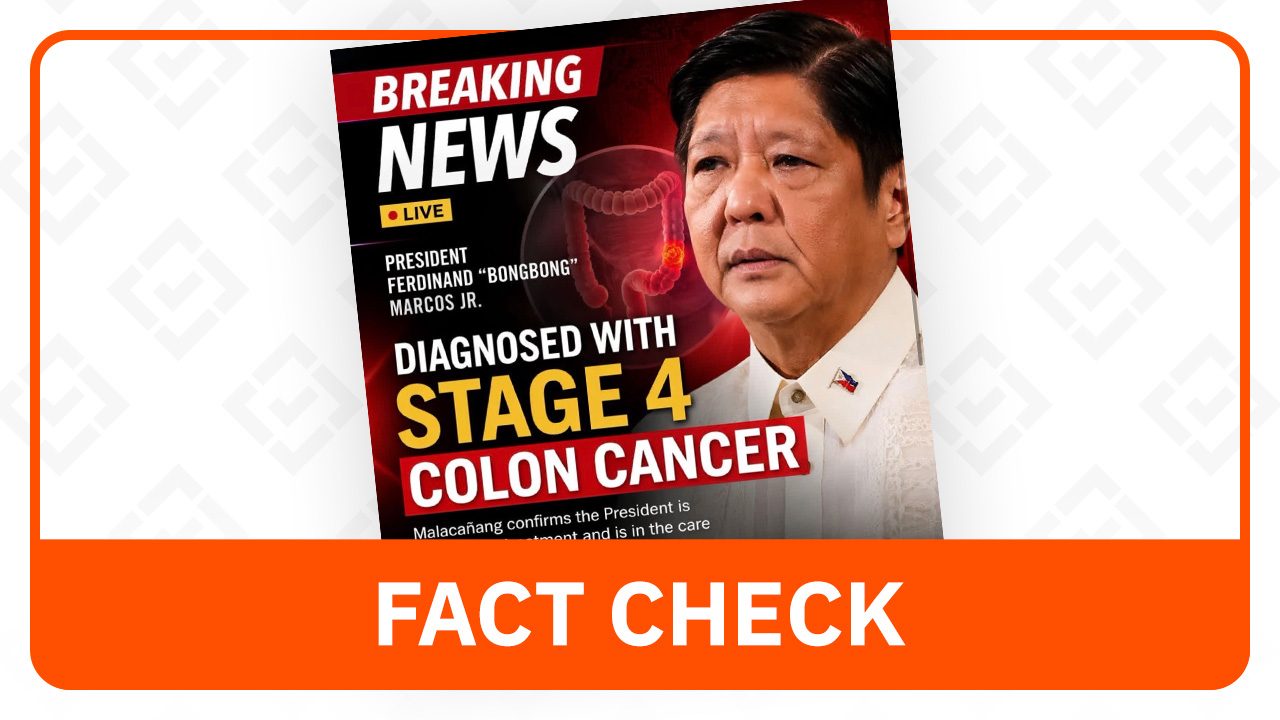
The false claim circulated widely on Facebook beginning April 5, gathering over 5,000 reactions, 2,600 comments, and 2,900 shares. The misleading post, which mimicked a breaking news graphic by using logos from GMA Integrated News, ABS-CBN News, and TV5, was shared by a page called “Sara Duterte for President” with over 6,700 followers.
“Diagnosed with stage 4 colon cancer,” read the fabricated graphic, alongside text claiming “Malacañang confirms the president is undergoing treatment and is in the care of a team of medical specialists.”
On April 8, President Marcos personally addressed the rumors, reassuring the public about his health. “I am thankful to those who are concerned about me,” Marcos stated. “I’ve been back to my regular routine for the last… going on three months now.” The President urged citizens not to take the social media posts seriously, adding, “You know how social media is? It’s full of jokes.”
This is not the first time Marcos has faced health-related rumors. In January, the President was hospitalized and diagnosed with diverticulitis, a common digestive condition that causes inflammation in the digestive tract. Since then, he has resumed his normal duties and schedule.
Presidential Communications Office (PCO) Secretary Dave Gomez characterized the false health claims as part of a coordinated disinformation campaign designed to destabilize the government. “The timing is suspect. Why the sudden surge at this time? Why resort to outright lies? Why the desperation? Regardless, the motive is clear: distract and destabilize our government,” Gomez said.
The PCO Secretary emphasized that Marcos remains focused on addressing the ongoing energy crisis affecting the Philippines, which has been exacerbated by international conflicts, including tensions between the US, Israel, and Iran. “We are in a state of energy emergency. The President will not be distracted by this noise. The President remains laser-focused on one mission: solving our energy emergency and delivering real, tangible help to every Filipino family,” Gomez added.
None of the major Philippine media outlets whose logos were appropriated in the false post—GMA Integrated News, ABS-CBN News, and TV5—have published any stories confirming the alleged diagnosis.
In response to the proliferation of misinformation, Malacañang announced plans to launch a dedicated website where citizens can report false information they encounter online. Palace Press Officer Claire Castro emphasized the government’s commitment to addressing the issue during an April 9 press briefing: “The PCO will create a website or a platform where you can report the purveyors of fake news. We will not tolerate it, and all of them should be prosecuted.”
The “Sara Duterte for President” page that shared the false claim has a history of posting content critical of President Marcos and opponents of the Duterte family, according to fact-checkers. Former Vice President Sara Duterte is the daughter of former President Rodrigo Duterte, who preceded Marcos in office.
This incident highlights the ongoing challenge of combating misinformation in the Philippines, where social media platforms have become significant sources of news and information for many citizens. Fact-checking organizations like Rappler have previously debunked similar claims about President Marcos’s health.
Fact Checker
Verify the accuracy of this article using The Disinformation Commission analysis and real-time sources.

10 Comments
This incident highlights the need for more media literacy education to help the public identify credible sources and fact-check claims. Relying on official statements is important.
Yes, empowering citizens to critically evaluate online content is key to preventing the harm caused by fake news.
It’s good to see the President’s health is in order and the rumors proven false. Spreading misinformation on social media can do more harm than good.
Agreed, we should be cautious about unverified claims circulating online, especially related to public figures’ health.
Interesting that the false report tried to mimic credible news sources. It’s a reminder to always fact-check claims, especially regarding important matters like the President’s wellbeing.
Absolutely, we need to be vigilant about distinguishing real news from fabricated content online.
I’m glad the President was able to directly address the rumors and reassure the public. Transparency from elected officials on health matters is important for maintaining trust.
Yes, the President’s statement helps dispel the unfounded speculation. Verifying facts is crucial, especially for sensitive issues.
It’s concerning to see how quickly misinformation can spread on social media. We need better ways to counter the proliferation of fake news.
I agree, regulating social media platforms to limit the spread of disinformation should be a priority.