


Listen to the article
Pro-junta Telegram Channel Caught Spreading Misinformation About KNU Casualties
A pro-junta Telegram channel has been exposed for fabricating statements allegedly made by a Karen National Union (KNU) spokesperson, falsely claiming that civilians disguised as KNU fighters were killed during military airstrikes on the organization’s headquarters.
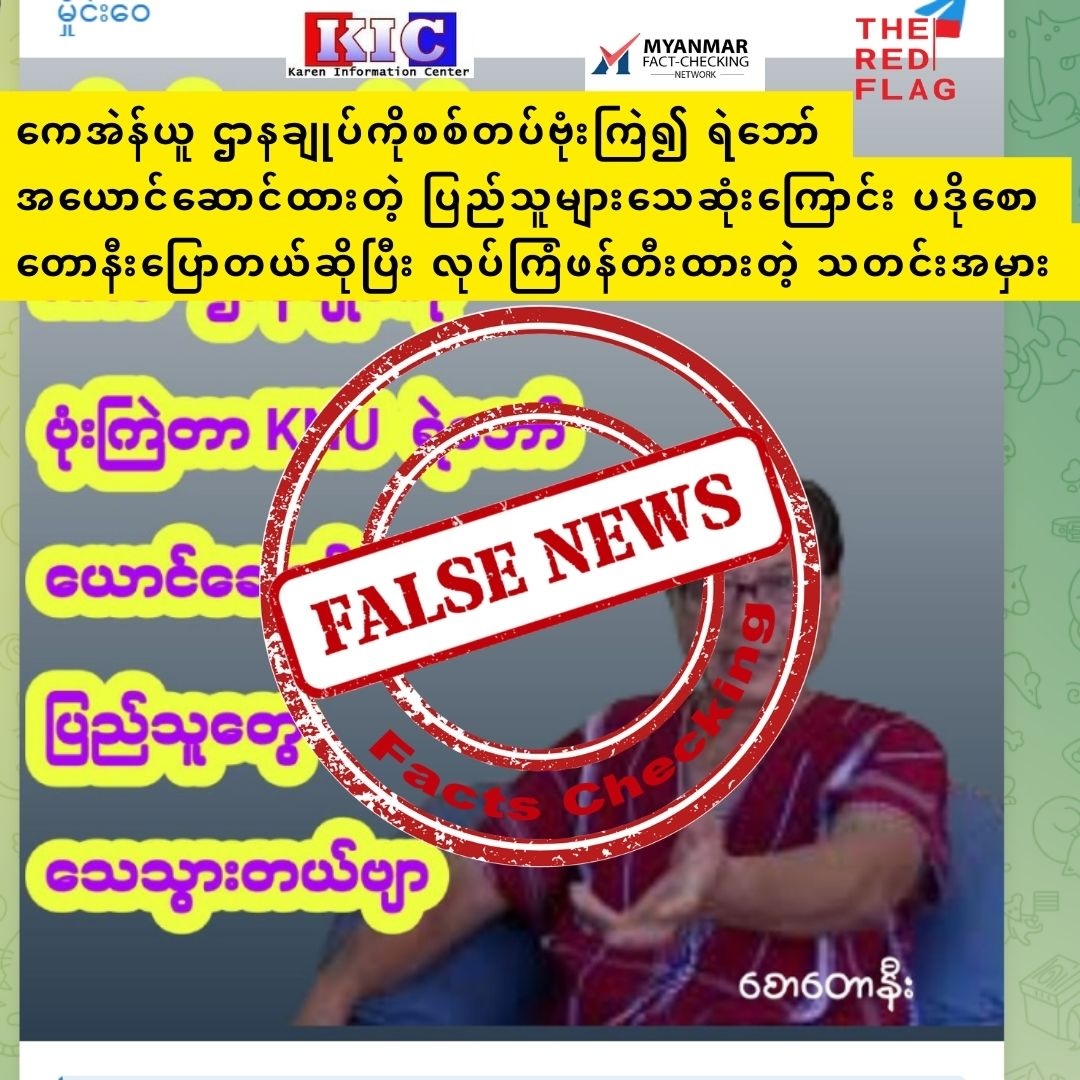
On March 13, the prominent pro-military Telegram channel “Hmine Wai” published a post attributing a quote to KNU spokesperson Padoh Saw Taw Nee that read: “The junta bombed the KNU headquarters, and people posing as our comrades were killed.” The post included Padoh Saw Taw Nee’s photo to lend credibility to the fabricated statement.
The false information spread quickly, accumulating over 20,000 views and 600 reactions within a week. However, an investigation by the Karen Information Center (KIC), a member of the Myanmar Fact-Checking Network (MFCN), has conclusively determined the claim to be false.
KIC’s fact-checking process included comprehensive analysis of independent media reports covering military operations in KNU territory between October 2024 and March 2026. Their investigation revealed a pattern of exaggeration and fabrication by pro-junta information channels.
Multiple airstrikes and drone attacks have indeed targeted KNU headquarters territory during this period. Myanmar Now reported the earliest kamikaze drone attack caused property damage but no casualties. A subsequent drone strike on January 31, 2025, documented by KIC, resulted in damage to a building and minor injuries to one civilian.
The most significant incident occurred on August 10, when a Y-12 military aircraft bombing injured a young man. Despite the limited casualties, pro-military social media channels falsely claimed that more than 70 people had been killed, including the commander-in-chief of the Karen National Liberation Army (KNLA), which serves as the armed wing of the KNU.
The most recent military action against KNU territory took place on March 13, when KNU forces reportedly shot down a drone, preventing any ground damage, according to Khit Thit Media.
To verify whether Padoh Saw Taw Nee had ever made the statement attributed to him, KIC employed advanced search techniques using relevant keywords, including his name and terms related to airstrikes on KNU headquarters. No credible sources were found that corroborated the alleged statement.
The fabrication appears to be part of a deliberate disinformation campaign designed to push a false narrative suggesting the KNU forces civilians to pose as fighters. This narrative attempts to delegitimize the ethnic armed organization, which has been in conflict with Myanmar’s military junta.
The pattern of misinformation reflects broader challenges in Myanmar’s information landscape, where military-affiliated channels regularly disseminate false information to shape public perception of the conflict between ethnic armed organizations and the military regime.
This incident highlights the critical importance of fact-checking in Myanmar’s current media environment. Independent verification shows that across all documented military strikes on KNU territory, only two people sustained injuries—one of them a civilian—with no confirmed fatalities, contradicting the claims made by pro-junta channels.
Media experts emphasize that such fabrications underscore the need for vigilance when consuming information about the ongoing conflicts in Myanmar. The MFCN and its member organizations continue to provide fact-checking services to combat the spread of misinformation in the country’s complex political landscape.
Social media users are encouraged to verify information through reliable fact-checking organizations before sharing potentially false content that could further inflame tensions in the region.
Fact Checker
Verify the accuracy of this article using The Disinformation Commission analysis and real-time sources.

10 Comments
This is an important fact-check. It’s critical to verify claims, especially those that could incite further conflict. Fabricating statements about civilian casualties is highly concerning and undermines efforts for peace.
Agreed. Spreading misinformation, even inadvertently, can have serious consequences. Thorough investigation to establish the facts is the responsible course of action.
This report highlights the importance of scrutinizing claims, especially those with potential political motivations. Kudos to the fact-checkers for their thorough investigation and debunking of the false narrative.
I agree. Maintaining a skeptical yet impartial approach is crucial when assessing sensitive information, particularly during times of conflict and instability.
The discovery of this false claim is troubling, but the diligent fact-checking process is reassuring. Maintaining integrity of information is crucial, especially during volatile times.
Precisely. Fact-checking networks play a vital role in combating the spread of disinformation. Their work helps ensure the public has access to reliable, evidence-based information.
This case demonstrates the vital role of independent media and fact-checking networks in upholding the integrity of information. Their commitment to truth-seeking is commendable.
Absolutely. Fact-checking is a crucial safeguard against the spread of misinformation, which can have serious consequences, especially in volatile regions.
It’s disheartening to see such blatant attempts to mislead the public. However, I’m encouraged by the proactive efforts to expose the falsehoods. Rigorous verification is the best defense against propaganda.
The exposure of this fabricated statement is a sobering reminder of the need for vigilance against disinformation. Reliable, fact-based reporting is essential for informed public discourse.