


Listen to the article
Federal authorities have dismissed as false a viral story claiming that U.S. Immigration and Customs Enforcement (ICE) agents illegally arrested a civil rights attorney who secretly recorded her own detention, leading to the officers’ prosecution.
The fabricated incident, which purportedly occurred in early 2026, gained significant traction on social media platforms, particularly Facebook, where numerous users shared posts detailing the alleged confrontation between ICE agents and an attorney named Sandra May Watkins.
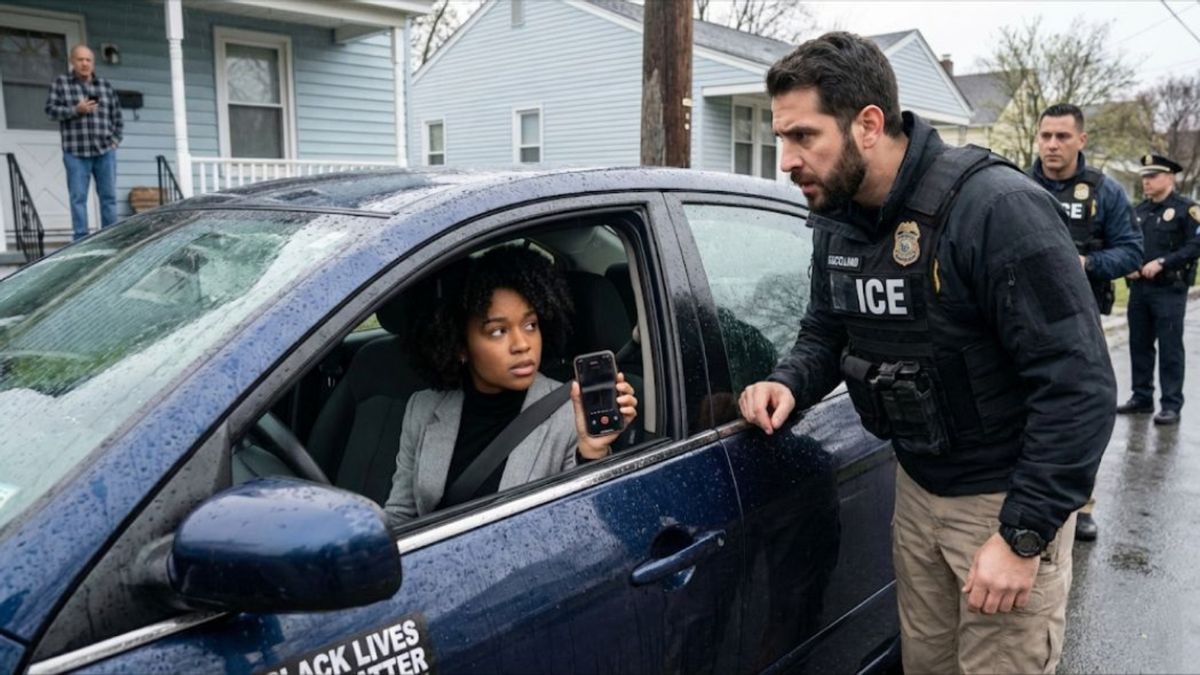
According to the fictional account, Watkins was apprehended in her driveway by ICE officers who allegedly conducted an illegal arrest. The narrative claimed that Watkins revealed she had been recording the interaction, providing evidence that supposedly led to the officers’ subsequent arrests and criminal convictions.
Fact-checking organization Snopes investigated the claim after receiving multiple inquiries from readers seeking verification. Their analysis determined the story contained numerous inconsistencies and hallmarks of artificial intelligence generation, ultimately rating the claim as false.
The fabricated narrative appears to have originated from a Facebook account called “Stories point,” which explicitly states on its page that it posts fictional content. Despite this disclaimer, the story spread rapidly across social media, often shared without context regarding its fictional nature.
Several elements within the story raised immediate red flags for investigators. Most notably, the account contained a significant discrepancy regarding the alleged victim’s identity, referring to her first as “Congresswoman Ela Harris” before identifying her as “Sandra May Watkins.” Congressional records confirm no representative named Ela Harris has served in the U.S. Congress.
Further investigation revealed no digital footprint for any prominent civil rights attorney named Sandra May Watkins. Professional attorneys of such standing typically maintain robust online profiles and institutional affiliations that would appear in basic searches.
The story also contained implausible claims about swift FBI intervention and rapid criminal convictions of federal agents, including one identified as “Robert Castellano.” Such high-profile prosecutions involving federal officers typically involve lengthy legal proceedings, public statements from legal representatives, and extensive media coverage – none of which materialized in this case.
Digital forensics experts who examined images accompanying the story found strong indicators of artificial intelligence generation. Multiple AI-detection tools, including Hive Moderation and ZeroGPT, flagged both the text and images as likely AI-created content. The images displayed telltale signs of synthetic generation, including unnaturally smooth, high-definition quality more characteristic of professional photography than surveillance footage or smartphone recordings.
In a particularly revealing inconsistency, various social media accounts sharing the story used different images purporting to show the same woman – in some versions with shoulder-length hair, in others with short hair, appearing as entirely different individuals.
The case highlights the growing challenge of misinformation spread through social networks, particularly as AI-generated content becomes increasingly sophisticated and difficult for casual observers to identify. Law enforcement agencies have previously warned about the potential for fabricated incidents to undermine public trust in legitimate operations.
ICE has not officially commented on the fabricated story, as is typical with clearly false claims that don’t warrant formal responses from federal agencies.
Digital literacy experts recommend that social media users verify information through multiple credible sources before sharing potentially inflammatory content, particularly when stories contain dramatic claims about confrontations with law enforcement that aren’t being reported by established news organizations.
Fact Checker
Verify the accuracy of this article using The Disinformation Commission analysis and real-time sources.

9 Comments
While these types of false claims are concerning, I’m encouraged to see responsible journalism working to identify and debunk them. Fact-checking is essential for upholding journalistic standards and preventing the proliferation of AI-generated disinformation.
It’s worrying how quickly misinformation can spread online these days. I’m glad the disinformation commission took the time to thoroughly investigate this claim and provide a clear, factual rebuttal. Vigilance against fake news is crucial.
This case highlights the importance of robust fact-checking processes to counter the spread of fabricated stories, especially those involving sensitive topics like immigration enforcement. Kudos to the disinformation commission for their diligence.
This is a concerning case of disinformation spreading on social media. I’m glad the fact-checkers were able to verify the story as false and prevent further spread of misinformation. It’s crucial we remain vigilant against AI-generated fake news narratives like this.
The rise of AI-generated misinformation is a growing challenge for media and the public. I appreciate the efforts of fact-checkers to stay on top of these false narratives and ensure accurate information reaches people. Maintaining trust in institutions is critical.
Fabricated stories about government agencies illegally arresting civil rights attorneys are highly problematic and can erode public trust. I appreciate the diligence of the fact-checking team in thoroughly investigating the claims and setting the record straight.
Agreed, maintaining integrity of information is critical, especially around sensitive issues like immigration enforcement. Fact-checking is an important safeguard against the spread of harmful misinformation.
While the details of this particular case are unsettling, I’m reassured to see diligent fact-checking work being done to expose and debunk misinformation. Maintaining the integrity of news and information is crucial for a well-informed public.
It’s disheartening to see AI-generated falsehoods gain traction online, but I’m glad the fact-checkers were able to quickly identify and refute this claim. Vigilance against the spread of misinformation is essential for preserving trust in our institutions.