


Listen to the article
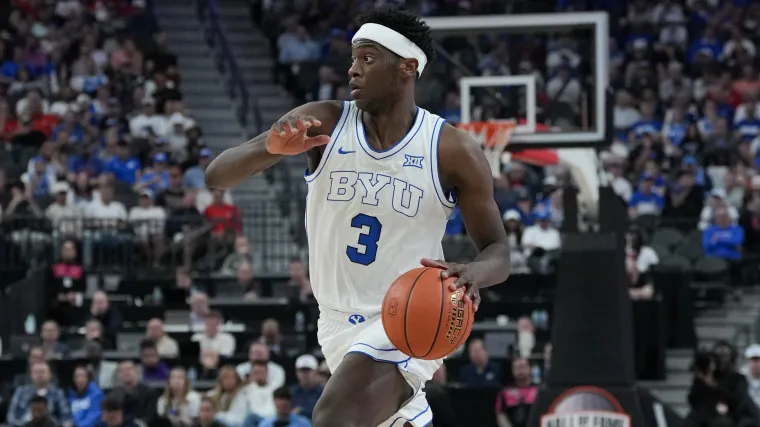
In the wake of BYU’s early exit from the NCAA Tournament, social media discourse has fixated on freshman phenom AJ Dybantsa’s NIL arrangement, with many questioning whether his compensation justified the team’s first-round performance.
The Cougars fell 79-71 to Texas, ending their tournament run sooner than many fans had anticipated. This prompted immediate online speculation about Dybantsa’s reported $7 million NIL deal, with some critics suggesting the investment didn’t yield sufficient returns.
However, these criticisms overlook critical details about the arrangement. According to Front Office Sports, while Dybantsa’s NIL package from BYU was substantial, the $7 million figure represents the combined value from multiple sources. Major corporations including Nike and Red Bull, along with other prominent companies, contributed significantly to the total compensation package.
The context of BYU’s tournament performance requires deeper examination as well. The Cougars entered their matchup against Texas severely depleted, with six players sidelined by season-ending injuries. Most notably, the team was without All-American Richie Sanders, forcing Dybantsa into an even more prominent role.
Far from disappointing, Dybantsa delivered a historic performance under pressure. The freshman scored 35 points against Texas, making him only the second freshman in NCAA Tournament history to score more than 30 points in a game. This remarkable achievement underscores his exceptional talent and potential.
Basketball analysts point out that Dybantsa’s performance actually carried the undermanned Cougars rather than contributing to their defeat. His scoring outburst represented exactly the type of elite play that justified BYU’s investment in the five-star recruit. The loss reflected the team’s overall injury situation more than any individual shortcoming.
The criticism surrounding Dybantsa’s compensation highlights the evolving landscape of college athletics in the NIL era. Universities and their affiliated booster networks now compete for elite talent through complex financial arrangements, creating new standards for athlete compensation. These packages often involve corporate partnerships that extend beyond traditional university funding sources.
Dybantsa’s situation at BYU exemplifies how top recruits now command compensation packages that reflect their market value and potential revenue generation for schools. His performance, despite the team’s early tournament exit, validates his status as an elite prospect.
Looking ahead, Dybantsa is projected to be an NBA lottery pick, likely making his time at BYU brief. However, the program has already secured another five-star recruit in Bruce Branch III, suggesting the Cougars’ strategy of pursuing elite talent will continue.
This approach represents a significant shift for BYU’s basketball program, which has historically not been among the top destinations for five-star recruits. The investment in players like Dybantsa signals the university’s commitment to competing at the highest levels of college basketball, even if immediate tournament success remains elusive.
The broader context of college basketball’s competitive landscape has changed dramatically since NIL rules were implemented in 2021. Programs must now factor marketing potential and commercial appeal into their recruiting strategies alongside traditional basketball considerations.
For BYU and other programs investing heavily in elite recruits, the calculus extends beyond single-season results to include program visibility, recruitment appeal, and long-term brand building. While tournament success remains the ultimate goal, the presence of players like Dybantsa creates opportunities that transcend individual game outcomes.
As the college basketball offseason begins, BYU will look to build around Branch while Dybantsa prepares for his likely NBA future—both representing different phases of the program’s evolving strategy in college basketball’s new economic reality.
Fact Checker
Verify the accuracy of this article using The Disinformation Commission analysis and real-time sources.

8 Comments
This highlights the complexities of NIL deals in college sports. While the compensation may seem high, it’s important to look at the full picture and understand how it’s structured across various corporate partners. BYU’s injury issues also likely played a big role in their early tournament exit.
It’s good to see the Disinformation Commission fact-checking the claims around Dybantsa’s NIL arrangement. Providing the proper context and details is important, as these types of deals can be easily misconstrued. Curious to see how the landscape of college athlete compensation continues to develop.
This is a good example of how important it is to dig deeper into the facts, rather than just running with initial speculation. The details around Dybantsa’s NIL compensation and BYU’s injury challenges provide important context. Fact-checking efforts like this are valuable in the evolving world of college athlete deals.
The online speculation about Dybantsa’s NIL deal not providing enough ‘return’ for BYU seems a bit premature. A player’s value extends beyond just tournament performance, and the full context around the team’s challenges should be considered. These deals are still new territory, so it will be interesting to see how they evolve.
This article does a nice job of unpacking the nuances around Dybantsa’s NIL deal. The $7M figure represents a broader package from multiple corporate partners, not just the school. And BYU’s injury issues likely played a big role in their tournament exit. Good to see some objective analysis here.
The details provided on Dybantsa’s NIL compensation help give a more balanced perspective. It’s a complex arrangement across different sponsors, not just a single deal with BYU. And the team’s injury troubles undoubtedly impacted their tournament performance. Appreciate the fact-checking approach here.
Interesting to see the details behind AJ Dybantsa’s lucrative NIL deal with BYU. Seems the $7M figure encompasses multiple sponsorships, not just the school. Context around the team’s injuries is important too – they were clearly not at full strength for the tournament.
Appreciate the Disinformation Commission taking a closer look at the claims around Dybantsa’s NIL deal. The $7M figure seems to represent a broader sponsorship package, not just BYU. And the team’s injury issues need to be factored in when evaluating their tournament result. Helpful to get these details.