


Listen to the article
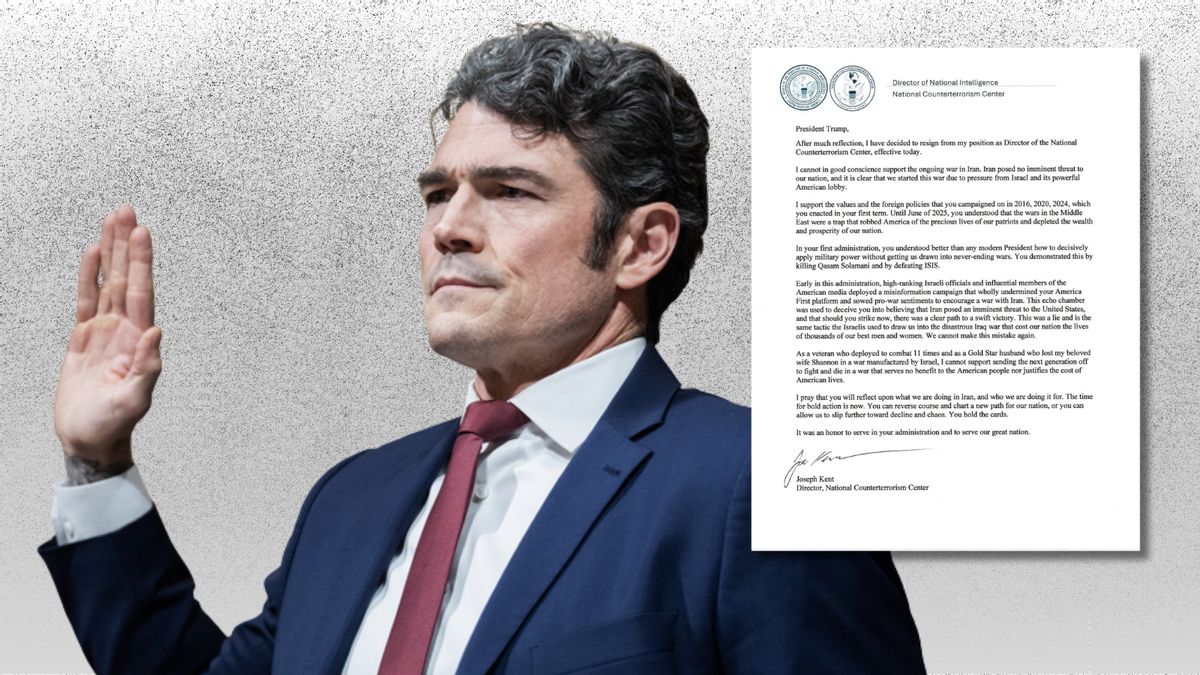
In a dramatic turn of events that has sent shockwaves through Washington’s political and security establishments, Joe Kent, the director of the U.S. National Counterterrorism Center, has resigned from his position over what he describes as an unjustified war against Iran.
Kent, a vocal supporter of President Donald Trump since 2020, announced his resignation through a letter posted to social media on March 17, 2026. The post has since garnered more than 94 million views, reflecting the significant impact of his decision.
In his resignation letter addressed directly to President Trump, Kent expressed that he could “not in good conscience support the ongoing war in Iran,” asserting that “Iran posed no imminent threat to our nation, and it is clear that we started this war due to pressure from Israel and its powerful American lobby.”
The timing of Kent’s resignation comes approximately nine months after what he describes as a turning point in June 2025, when he claims “high-ranking Israeli officials and influential members of the American media deployed a misinformation campaign” that undermined Trump’s “America First” platform and pushed the administration toward conflict with Iran.
Kent’s personal connection to the consequences of American military interventions abroad runs deep. As a veteran who deployed to combat 11 times, he experienced the human cost of war firsthand. His wife, Shannon Smith, was killed while serving in Syria in 2019, in what Kent characterizes in his letter as a “war manufactured by Israel.”
Following his wife’s death, Kent became increasingly vocal against U.S. military involvement in the Middle East. In 2022, he stated, “If I had my way, we would go back to the very start of the War on Terror and hold people accountable.”
The resignation letter draws parallels between current circumstances and the lead-up to previous conflicts, specifically claiming that the tactics used to push for war with Iran are “the same tactic the Israelis used to draw us into the disastrous Iraq war that cost our nation the lives of thousands of our best men and women.”
Kent’s departure is particularly notable given his previous alignment with Trump’s foreign policy approach. In his letter, he commends the president’s first term, writing that Trump “understood better than any modern President how to decisively apply military power without getting us drawn into never-ending wars,” citing the killing of Iranian General Qasem Soleimani and the campaign against ISIS as examples.
The National Counterterrorism Center, which Kent headed until his resignation, plays a crucial role in the U.S. intelligence community. Established after the September 11 attacks, the center is responsible for analyzing and integrating intelligence pertaining to terrorism and counterterrorism operations.
Kent concludes his letter with a direct appeal to the president, writing, “I pray that you will reflect upon what we are doing in Iran, and who we are doing it for. The time for bold action is now. You can reverse course and chart a new path for our nation, or you can allow us to slip further toward decline and chaos.”
The White House has not yet issued an official response to Kent’s resignation, nor commented on his specific allegations regarding Israeli influence on U.S. foreign policy decisions. The Department of Defense and State Department have similarly remained silent on the matter.
Kent’s resignation comes at a critical juncture in U.S.-Middle East relations and raises significant questions about the strategic objectives and domestic political considerations behind the conflict with Iran. As Washington grapples with this high-profile departure, the implications for U.S. foreign policy and military strategy in the region remain uncertain.
Fact Checker
Verify the accuracy of this article using The Disinformation Commission analysis and real-time sources.

14 Comments
Kent’s resignation is a bold move that highlights the complexities and tensions within the administration over the Iran conflict. His insider perspective will be closely scrutinized for insights into the factors driving this major policy decision.
This resignation certainly adds fuel to the ongoing debates over the merits of the Iran war. Kent’s specific concerns and evidence will be important in shaping the public discourse and accountability around this issue.
This is a concerning development. If Kent’s allegations are true, it would represent a serious breach of the public trust. I hope a thorough investigation can uncover the full truth behind the administration’s decision-making on Iran.
Kent’s resignation certainly raises the stakes. The administration will need to provide a substantive response to address the national security concerns he has raised.
The timing of Kent’s resignation, right after the alleged misinformation campaign, is quite suspicious. I hope the details of his letter can be verified to shed light on the factors behind this major policy rift.
Agreed. Kent’s credibility as a long-serving counterterrorism official adds weight to his claims, but the specific evidence of foreign influence will be crucial in evaluating his stance.
Interesting development. Kent’s resignation over the Iran war raises important questions about how foreign interests can influence US policy decisions. I’m curious to hear more details about the alleged misinformation campaign he references.
Yes, this seems like a significant split within the administration over the Iran conflict. Kent’s accusations of an Israeli-backed misinformation campaign warrant further investigation.
This is a bold move by Kent. As a senior counterterrorism official, his opposition to the Iran war carries a lot of weight. I wonder what specific intelligence or policy concerns led him to this decision.
Kent’s resignation certainly adds fuel to the debate over the merits of the Iran war. His insider perspective will likely be closely scrutinized by both supporters and critics of the administration’s actions.
It’s refreshing to see a senior official like Kent take a principled stand, even at the cost of his career. His firsthand insights into the decision-making process could shed important light on the Iran conflict.
Kent’s resignation adds an intriguing new dimension to the ongoing debates over US foreign policy. His perspective as an experienced counterterrorism expert will be closely scrutinized.
This is a significant development that deserves careful attention. Kent’s resignation raises serious concerns about potential foreign influence and the integrity of the decision-making process around the Iran war.
Agreed. Kent’s credibility and the specific evidence he cites will be crucial in evaluating the validity of his claims and the implications for US national security policy.