


Listen to the article
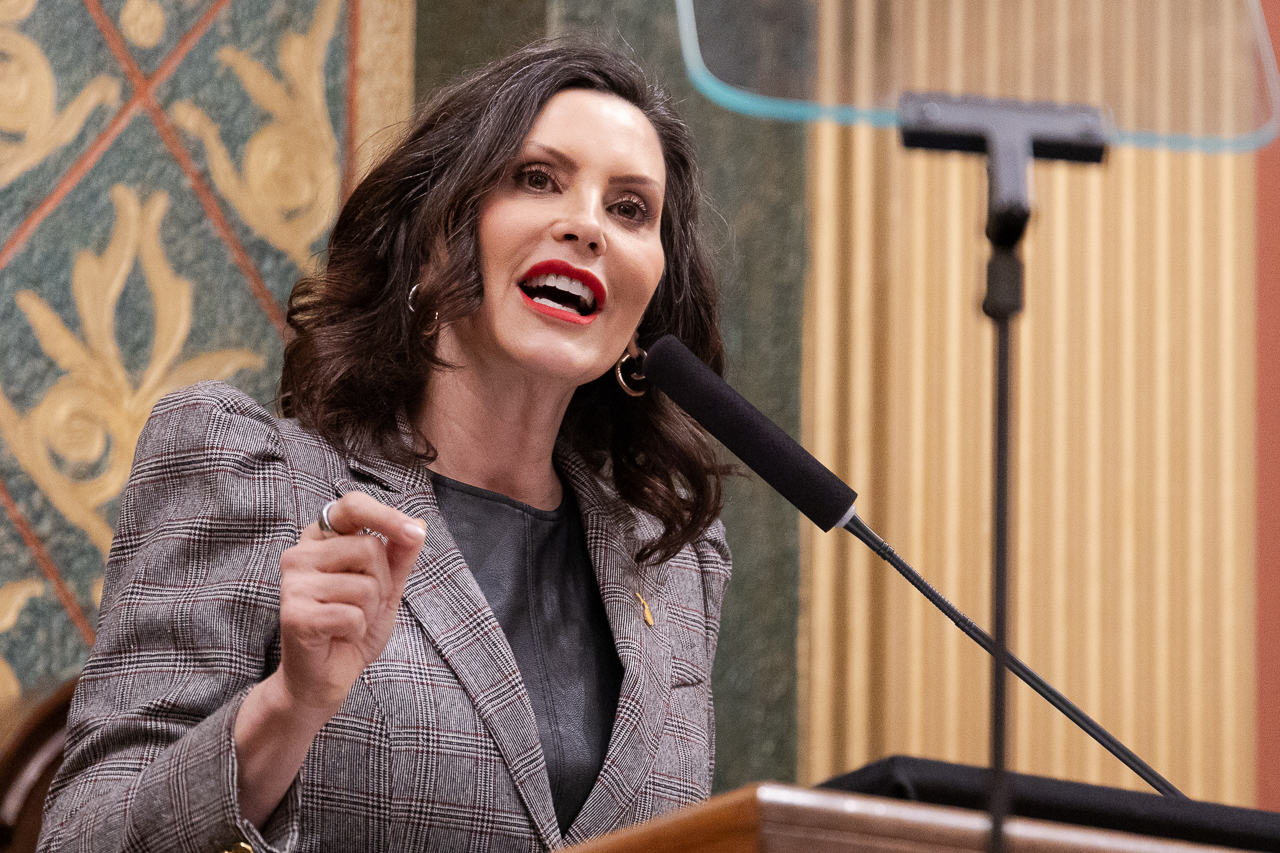
As Governor Gretchen Whitmer prepares to deliver her final State of the State address next week, her record of fulfilling campaign promises stands as a testament to her calculated approach to governance despite Michigan’s changing political landscape.
Whitmer’s signature campaign pledge to “fix the damn roads” finally materialized last fall when she signed a bipartisan funding agreement. The deal, which includes a 24% wholesale tax on marijuana, is expected to generate an additional $2 billion annually for road improvements. While this falls short of the estimated $3 billion experts say is needed, it represents a significant breakthrough after years of legislative gridlock.
The road funding success was among ten fully or partially fulfilled pledges from the 14 promises or calls to action Whitmer made in her 2025 address, according to an analysis by Bridge Michigan. Throughout her seven years in office, Whitmer has delivered on 42 of her 62 State of the State promises, demonstrating a strategic approach to setting achievable goals.
“This governor hasn’t promised more than was realistic to deliver with the Legislature she had to work with,” said Adrian Hemond, a Democratic strategist with Grassroots Midwest. This stands in contrast to former Democratic Governor Jennifer Granholm, who “did maybe promise a little bit more than was realistic,” according to Hemond.
Whitmer’s February 25 address will set the tone for her final year in office, navigating a divided Legislature during an election year when politics often overshadows policy. She has indicated she will “lay out my plan to build on our years of strong, bipartisan progress and strategic, fiscally responsible leadership.”
Among Whitmer’s 2025 successes was the recent signing of legislation restricting smartphone use in classrooms. The new law, taking effect at the start of the 2026-27 school year, requires all Michigan public schools to implement plans prohibiting smartphone use during instructional time, except for medical purposes or teacher-directed educational activities.
The governor also delivered on her pledge to increase child care funding. The budget signed in October included a $17 million boost to cover subsidized care for an additional 4,289 children, bringing the total to $543 million for nearly 49,000 kids statewide.
Whitmer’s call for record education spending materialized with a $10,050 per-pupil foundation allowance in the current budget. While this represents a historical high in nominal terms, education analysts note that when adjusted for inflation, Michigan is actually spending less per student than it was 20 years ago.
“That $10,000 gets eaten up not just by general inflation, but the inflation that is impacting wages, that’s impacting health care,” explained Craig Thiel, research director at the nonpartisan Citizens Research Council. “Schools still have to stare down double-digit percent increases in their healthcare expenses year-over-year.”
The governor also successfully secured $26 million in state funding to help bring a new fighter mission to Selfridge Air National Guard Base in Macomb County. More significantly, she and Republican House Speaker Matt Hall visited then-President Donald Trump at the White House in April 2025, successfully advocating for federal support for the base.
Not all initiatives succeeded, however. Whitmer’s proposal to tax vaping products at the same rate as tobacco products failed to gain traction, despite her argument that 32 other states had already implemented similar policies. She has renewed this push in her recent budget proposal, which includes new taxes on vapes, sports betting, and digital advertisements to generate additional Medicaid funding.
Another notable failure was the commitment to pass a timely state budget. Despite Whitmer’s call for “a balanced, bipartisan budget by the end of June,” lawmakers not only missed this target but failed to meet the constitutionally-mandated October 1 deadline for the first time in 16 years. A stopgap spending bill prevented a government shutdown until Whitmer signed the final budget on October 7.
Whitmer has evolved her approach to these addresses over time. In her first two years, she made 11 direct promises to Michiganders, but in the five years since, she has shifted to primarily calling on the Legislature to act—making just eight more direct commitments while issuing 36 legislative calls to action.
This evolution reflects the changing political dynamics Whitmer has navigated—beginning her tenure with Republican control of the Legislature, enjoying a Democratic “trifecta” in 2023-2024, before returning to divided government this year.
As Whitmer prepares for her final address, political observers expect her to focus on a “shorter list of smaller items” given her limited remaining time in office, while emphasizing her administration’s accomplishments in delivering on campaign promises despite Michigan’s challenging political landscape.
Fact Checker
Verify the accuracy of this article using The Disinformation Commission analysis and real-time sources.

12 Comments
The fact-based analysis of Governor Whitmer’s record on campaign promises is a helpful contribution to the ongoing political discourse. While the road funding deal is a significant achievement, I wonder how her other priorities have progressed and what lessons can be drawn for effective governance.
This is a timely review of Governor Whitmer’s track record as she prepares to deliver her final State of the State address. The 42 out of 62 promises fulfilled is an impressive accomplishment, especially given the political landscape. I’m interested to learn more about her strategic approach.
Governor Whitmer’s strategic approach to governance, as evidenced by her record on campaign promises, is an interesting case study. The road funding deal is a notable achievement, but I wonder how her broader agenda has fared and what lessons can be drawn for other state leaders.
Interesting to see how Governor Whitmer has balanced campaign promises with political realities. The road funding deal is a pragmatic accomplishment, even if it falls short of ideal. It speaks to her strategic approach to governance.
Agreed. Delivering on 42 of 62 State of the State promises shows a commitment to setting realistic goals and working across the aisle. Curious to see what other priorities she’ll focus on in her final year.
This review of Governor Whitmer’s record on campaign promises provides a useful data-driven perspective on her time in office. The road funding breakthrough is a tangible win, and it will be informative to see how she leverages her final year to address other priorities.
Assessing the fulfillment of campaign promises is a valuable exercise for holding elected officials accountable. Governor Whitmer’s strategic approach, as highlighted in the article, seems to have yielded concrete results on key issues like infrastructure. I’m curious to learn more about her broader policy agenda and how it has fared.
Balancing campaign promises with political realities is always a challenge for elected officials. Governor Whitmer appears to have taken a measured, pragmatic approach, which has yielded tangible results on key issues like road funding. It will be worth watching how she prioritizes her final year in office.
The article provides a helpful fact-based assessment of Governor Whitmer’s record on campaign promises. While the road funding deal is a significant accomplishment, I’m curious to learn more about the other fully or partially fulfilled pledges and how they’ve impacted Michigan residents.
This review of Governor Whitmer’s record on campaign promises provides a nuanced perspective on her tenure. The road funding breakthrough is a notable accomplishment, but I’m curious to learn more about the other fulfilled pledges and how they’ve impacted Michigan residents. Effective governance often requires balancing ideals with political realities.
The analysis of Whitmer’s record on campaign promises provides a useful fact-based perspective. While road funding is a major win, I’m curious to learn more about the other 9 fulfilled pledges and how they’ve impacted Michiganders.
Good point. The article summary only touches on the road funding, so more details on Whitmer’s broader agenda would help round out the assessment of her record.