


Listen to the article
Fact Check: Phishing Scam Targets Indonesians with Fake Social Assistance Scheme
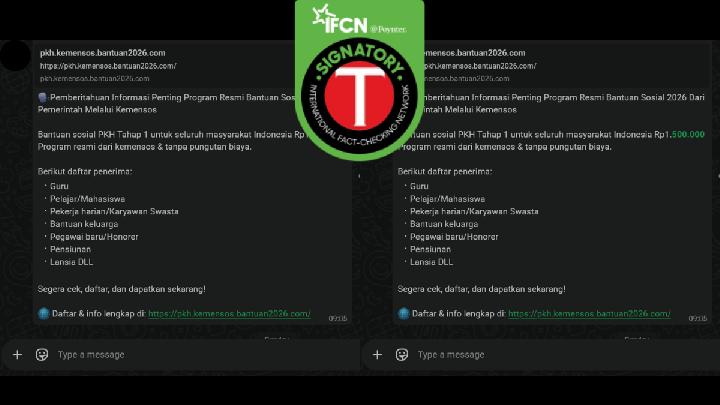
A sophisticated phishing scam is circulating across WhatsApp and Facebook in Indonesia, falsely offering Rp1.5 million in social assistance to citizens under the guise of the Family Hope Program (PKH). The fraudulent message, which includes a suspicious registration link, claims the Ministry of Social Affairs is distributing aid to teachers, students, laborers, contract workers, retirees, and the elderly.
An investigation by Tempo reveals the link provided in the message—https://pkh.kemensos.bantuan2026.com/—is not an official government channel and likely part of an elaborate phishing operation designed to collect personal information from unsuspecting citizens.
When attempting to access the website, investigators found it was non-operational. Further security analysis using the IPQuality Score tool rated the site as 89 percent unsafe, strongly indicating its fraudulent nature.
Domain registration records exposed additional red flags. The website was registered to a private individual in Central Java, not the Ministry of Social Affairs, and had been created merely a month ago—typical characteristics of opportunistic scam operations.
“These types of scams typically surge during economic hardship or ahead of government assistance announcements,” explained a cybersecurity expert who requested anonymity. “Scammers prey on vulnerable populations desperate for financial support.”
The proliferation of such scams comes amid Indonesia’s ongoing efforts to streamline social assistance programs. The government has been working to digitize welfare distribution systems, which has inadvertently created opportunities for fraudsters to exploit public confusion about official processes.
For citizens seeking legitimate social assistance, the Ministry of Social Affairs has established an official verification process that uses National Identification Numbers (NIK) from Identity Cards (KTP). The ministry emphasized that all authentic checks can only be performed through the official government portal at cekbansos.kemensos.go.id.
The legitimate verification process involves a simple procedure: entering your NIK, completing a captcha verification, and clicking “Search Data.” The system then displays the applicant’s name, decile group, and assignment status based on official government records.
For eligible recipients, the government distributes aid through established programs with set payment schedules. The Non-Cash Food Assistance (BPNT) provides Rp600,000 for the first phase (accumulated from Rp200,000 monthly allocations), while PKH funds are distributed quarterly with varying amounts based on recipient categories.
PKH beneficiaries include victims of human rights violations who receive Rp2,700,000, pregnant or postpartum women allocated Rp750,000, families with toddlers receiving Rp750,000, and senior citizens who get Rp600,000. People with severe disabilities qualify for Rp600,000, while students receive between Rp225,000 and Rp500,000 depending on their educational level.
This scam highlights the growing sophistication of digital fraud targeting social welfare programs. According to Indonesia’s National Cyber and Crypto Agency (BSSN), phishing attacks increased by 43 percent in 2025, with government impersonation schemes among the most common tactics.
“Citizens should exercise extreme caution with any unsolicited messages regarding government assistance,” advised a spokesperson from the Ministry of Social Affairs. “Official aid programs never require registration through unofficial websites or payment of any fees.”
The ministry urges anyone encountering suspicious assistance offers to report them immediately to local authorities or through the ministry’s official channels.
Those who believe they qualify for assistance but remain unregistered should apply through official government channels by contacting their local administration or using the verified Cek Bansos application.
Fact Checker
Verify the accuracy of this article using The Disinformation Commission analysis and real-time sources.

9 Comments
This phishing scam is a stark reminder of the importance of verifying the legitimacy of any unsolicited offers of financial assistance. The government’s diligence in investigating and exposing this fraud is commendable and will hopefully deter similar attempts in the future.
It’s unfortunate that scammers are taking advantage of vulnerable citizens during difficult times. The government’s efforts to investigate and expose this phishing operation are commendable. Continued vigilance and public education will be key to preventing similar scams in the future.
This is a concerning phishing scam targeting vulnerable Indonesians. It’s crucial for the public to be vigilant about unsolicited claims of social assistance, especially those with suspicious registration links. Verifying information through official government channels is essential to avoid falling victim to these elaborate fraud attempts.
This is a concerning development, but it’s good to see the authorities taking it seriously. Maintaining public trust in government assistance programs is crucial, and exposing these fraudulent schemes helps to achieve that. Ongoing efforts to educate the public will be essential.
I agree. Fostering transparency and accountability in these programs is key to ensuring they reach the intended beneficiaries. Continuous monitoring and quick responses to suspected scams are critical to safeguarding the integrity of social assistance initiatives.
This is a timely reminder to be cautious of any unsolicited offers of financial assistance, especially those with suspicious links. Verifying the legitimacy of such claims through official channels is the best way to avoid falling victim to these types of scams.
As someone who has experienced the devastating impact of financial fraud, I applaud the authorities for their swift action in addressing this issue. Protecting the public, especially the most vulnerable, from such predatory schemes should be a top priority.
It’s good to see the authorities investigating this matter and exposing the fraudulent nature of the website. Protecting citizens from financial exploitation should be a top priority. Increased public awareness and education on spotting scams like this can help prevent further victimization.
I agree. Raising awareness and teaching people how to identify potential scams is crucial. The government should also work to quickly shut down these fraudulent websites and hold the perpetrators accountable.