


Listen to the article
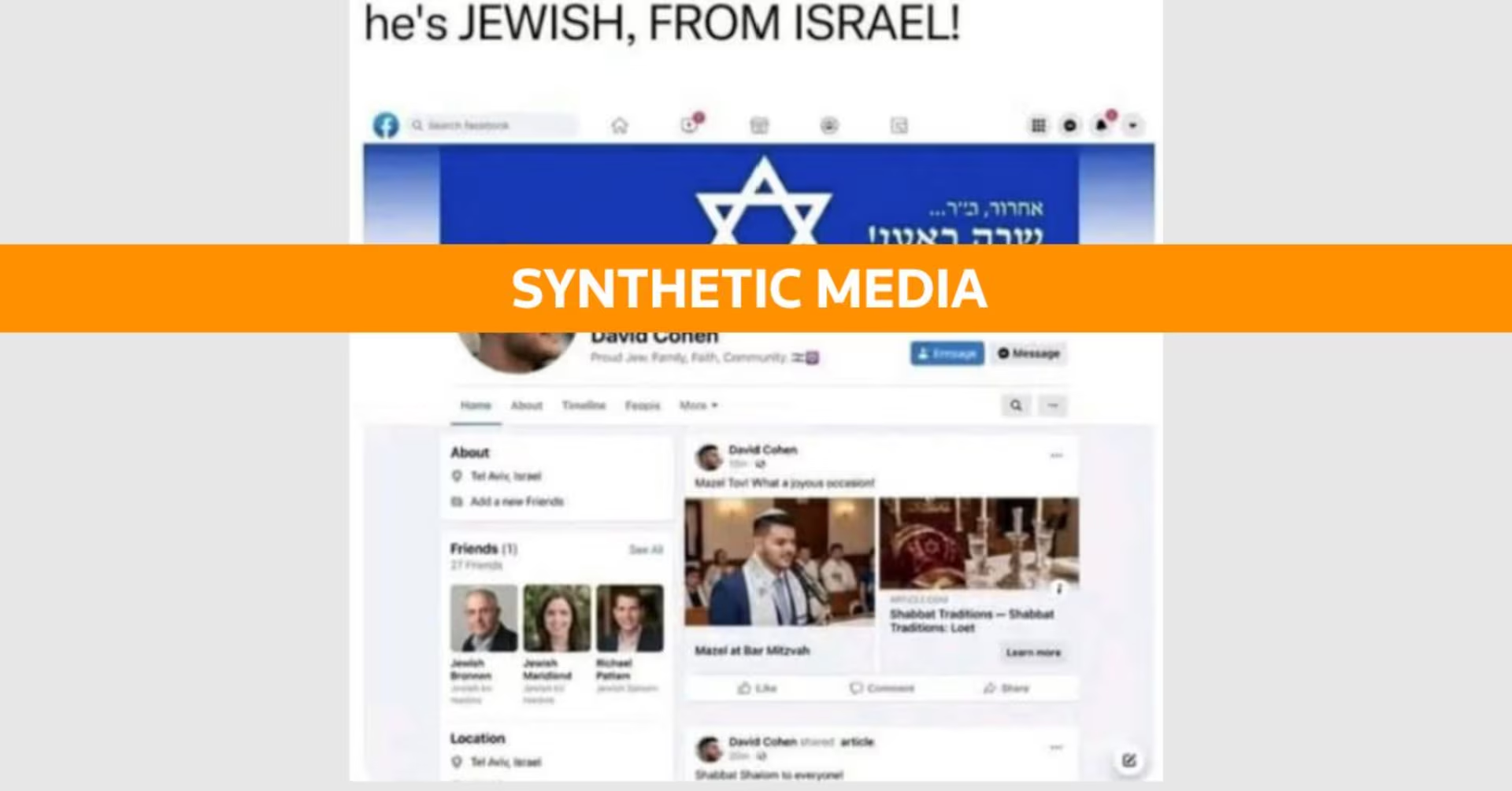
A Facebook profile circulating on social media that allegedly belongs to one of the Bondi Beach attackers has been confirmed as AI-generated, according to analysis from Google’s detection tools.
The fabricated profile, which has been shared widely across Facebook, purportedly shows a man named “David Cohen” with a profile picture bearing resemblance to one of the shooting suspects identified in Australian media. The falsified profile lists Tel Aviv, Israel as the person’s location, with accompanying posts claiming: “Leaked Facebook profile of the Bondi beach shooter before it got deleted. His real name is David Cohen and he’s JEWISH, FROM ISRAEL!”
However, when subjected to Google’s SynthID analysis tool, the image was revealed to be created using generative AI technology. This tool functions by detecting hidden watermarks embedded in images created or modified by Google’s AI models, providing a reliable method to identify synthetic media circulating online.
According to official statements from New South Wales Police, investigators believe the December 14 attack was carried out by a father-son duo. The father, 50-year-old Sajid Akram, was killed at the scene by authorities. His 24-year-old son, Naveed Akram, now faces 59 charges, including terrorism offenses and 15 counts of murder, according to court documents and police statements.
Background checks have revealed that Sajid Akram was originally from India and immigrated to Australia in 1998, information confirmed by Indian police officials. Australia’s Home Minister Tony Burke has stated that Naveed Akram is an Australian-born citizen.
Immigration records uncovered that the father and son had traveled to the southern Philippines before carrying out the attack on Bondi Beach. Philippine Bureau of Immigration officials noted that Sajid Akram traveled using an Indian passport as an Indian national with Australian residency, while his son used an Australian passport for international travel.
The attack, which targeted a Jewish Hanukkah celebration on Bondi Beach, resulted in fifteen fatalities, making it Australia’s deadliest mass shooting in decades. Authorities have indicated that evidence suggests the attack appears to have been inspired by Islamic State ideology.
When contacted for comment, New South Wales Police and the Australian Department of Home Affairs declined to provide additional information on the record. Meta, the parent company of Facebook where the falsified profile was shared, did not immediately respond to requests for comment about the circulation of the AI-generated content on their platform.
The spread of this AI-generated disinformation highlights the growing challenge of synthetic media in crisis situations. As technology becomes more sophisticated, false narratives can quickly gain traction online, particularly in the information vacuum that often follows traumatic events. The fabricated Jewish identity attributed to the attacker appears designed to inflame sectarian tensions, a common tactic in disinformation campaigns.
This incident underscores the importance of verification tools like Google’s SynthID in an era where artificial intelligence can be weaponized to create convincing false narratives. As investigations into the Bondi Beach attack continue, authorities face the dual challenge of pursuing justice while combating the spread of harmful misinformation.
The attack has sent shockwaves through Australian society, raising questions about security measures and prompting renewed discussions about countering violent extremism. For the tight-knit community of Bondi Beach, the tragedy represents not only a profound loss but also a test of resilience in the face of both physical violence and digital deception.
Fact Checker
Verify the accuracy of this article using The Disinformation Commission analysis and real-time sources.

12 Comments
This is a sobering reminder of the need for vigilance when it comes to online content. The use of AI-generated profiles to spread false narratives is a concerning trend that can have real-world consequences. Rigorous fact-checking is crucial.
It’s troubling to see how quickly misinformation can spread on social media, even around such a serious incident. The confirmation that the profile was AI-generated is an important reminder to be skeptical of unverified claims, especially on sensitive topics.
This is a concerning development, but I’m glad the authorities were proactive in verifying the details. The use of synthetic media to spread false narratives is a growing problem that needs to be addressed. Fact-checking is crucial in these situations.
The confirmation that the Facebook profile was AI-generated is important. It’s a good reminder to be cautious about unverified information, especially related to sensitive events. Fact-checking helps maintain public trust.
I’m glad the authorities were able to identify and debunk the fabricated Facebook profile. It’s crucial that we remain vigilant and verify information, especially when it comes to sensitive incidents like this. Fact-checking is essential to combat the spread of misinformation.
It’s disturbing to see how easily misinformation can spread online, especially around sensitive incidents like this attack. I’m glad the authorities were able to verify the true details and debunk the fabricated profile. Maintaining transparency is so important.
This is a concerning situation, but I’m glad the authorities were able to identify the real perpetrators. Using AI-generated profiles to spread false narratives is a worrying trend that needs to be addressed.
Agreed, the use of synthetic media to mislead the public is a serious issue that deserves attention. Fact-checking and transparency are essential to combat the spread of misinformation.
Interesting, good to see fact-checking on these types of social media rumors. It’s important to verify information, especially when it comes to sensitive topics like this attack. Fabricated profiles and false claims can spread misinformation quickly online.
Absolutely, verifying the authenticity of profiles and sources is crucial. Relying on official statements from authorities is the best way to get accurate information in these situations.
The identification of this AI-generated profile is a positive step in combating the spread of disinformation. It’s a complex issue, but fact-checking and relying on official sources are essential to ensuring the public has accurate information.
This is a good example of why it’s important to rely on official sources and fact-checking when it comes to information about events like this attack. The use of synthetic media to spread false narratives is a worrying trend that deserves attention.