


Listen to the article
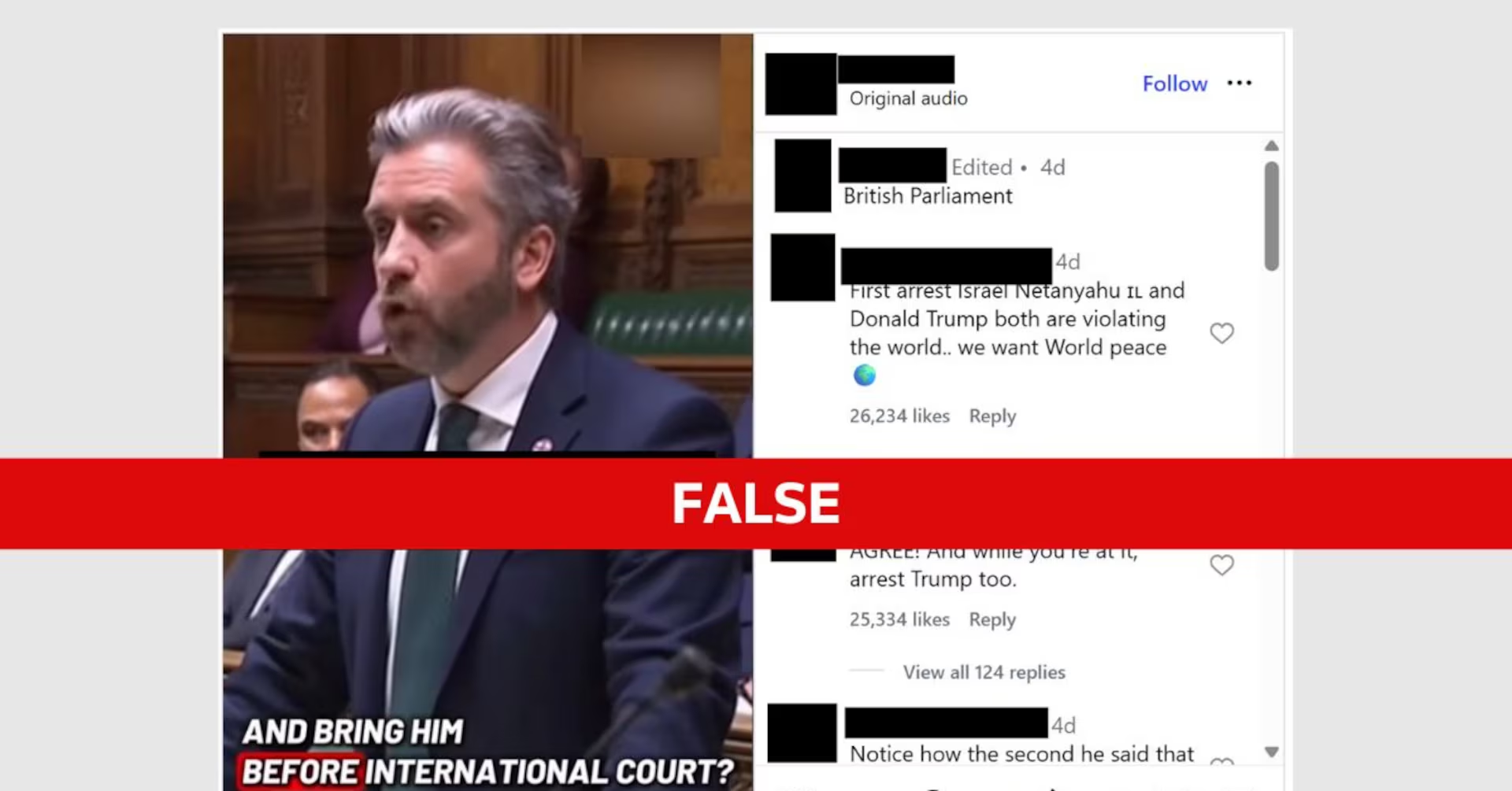
A viral video depicting a supposed British lawmaker questioning why the U.S. apprehended Venezuela’s president but not Israel’s prime minister has been exposed as an AI-generated fabrication, according to fact-checkers.
The widely shared clip, which garnered more than 320,000 likes on Instagram after being posted on January 4, showed a man at what appeared to be Britain’s House of Commons dispatch box, surrounded by the chamber’s distinctive green leather seats and wood paneling.
In the video, the purported parliamentarian questions an apparent double standard in U.S. foreign policy: “Why can the U.S. operate in Venezuela to capture its president and put him on trial in American courts, but not in Israel to capture Prime Minister Benjamin Netanyahu and bring him before international court?”
The video briefly cuts to show someone in the Speaker’s chair and wider views of the parliamentary chamber, creating the impression of authentic Commons footage. Many viewers assumed the clip represented an official parliamentary debate, with one Instagram post captioning it: “WHY MADURO ONLY, WHY CAN’T ARREST NETANYAHU?”
However, multiple elements reveal the video’s fraudulent nature. Most tellingly, the supposed lawmaker doesn’t match the appearance of any of Britain’s 650 serving members of parliament. Similarly, the individual shown in the Speaker’s chair bears no resemblance to Commons Speaker Sir Lindsay Hoyle or his three deputy speakers, all of whom are women.
The timing also contradicts parliamentary procedures. The House of Commons rarely convenes on weekends except in extraordinary circumstances, according to Parliament’s official website. Hansard, the official transcript of Britain’s parliamentary proceedings, contains no records of any sessions on January 3—when U.S. forces captured Maduro—or January 4, when the video first appeared online.
Digital forensic analysis traced the earliest version of the video to a TikTok account, @travelwkashmiri, which explicitly labels most of its content as AI-generated “for awareness and knowledge.” This original version displays OpenAI’s “Sora” watermark, clearly identifying it as an AI creation. In subsequent reposts, including the viral Instagram version, this watermark appears to have been deliberately blurred to conceal the video’s artificial origins.
The fabricated clip emerged during a period of heightened international tension. On January 3, U.S. forces had conducted an operation in Caracas, Venezuela, to capture President Nicolas Maduro and his wife Cilia Flores. Both have been charged with serious offenses including cocaine importation conspiracy and weapons violations, to which they have pleaded not guilty.
Meanwhile, the International Criminal Court has issued an arrest warrant for Israeli Prime Minister Benjamin Netanyahu for alleged war crimes and crimes against humanity related to the Gaza conflict. Israel has rejected the ICC’s jurisdiction and denied committing war crimes in Gaza.
When contacted about the video, OpenAI did not address this specific instance but noted that the company employs provenance tools like the Sora watermark to help distinguish AI-generated content from authentic material.
This incident highlights the growing sophistication of AI-generated media and its potential to create convincing political misinformation. As tools like Sora become more widely available, the ability to fabricate realistic footage of political figures in recognizable settings presents increasing challenges for information integrity in the digital age.
The rapid spread of this fake parliamentary exchange demonstrates how easily manufactured content can gain traction across social media platforms, particularly when it addresses contentious geopolitical issues and appears to come from authoritative sources.
Fact Checker
Verify the accuracy of this article using The Disinformation Commission analysis and real-time sources.

12 Comments
This case of an AI-generated video falsely depicting a parliamentary speech is a sobering reminder of the potential for abuse of this technology. I’m glad the fact-checkers were able to expose the deception and prevent the further spread of this misinformation. Vigilance and critical thinking are essential in the digital age.
Absolutely. The ability of AI to generate convincing yet false content poses a significant challenge to the integrity of our information landscape. Fact-checking and media literacy initiatives will be crucial in the years ahead to combat the rising threat of AI-driven misinformation.
This is a concerning case of AI-generated misinformation. It’s important to verify the authenticity of political footage before sharing. I appreciate the fact-checkers exposing this fabrication to prevent the spread of false narratives.
Absolutely. Fact-checking is crucial to maintaining public trust and ensuring factual information is circulated, especially on sensitive political issues.
It’s alarming to see how convincing AI-generated content can be. This incident underscores the importance of critical thinking and fact-checking, especially when it comes to political issues. We must be vigilant against the spread of misinformation.
Agreed. The proliferation of AI-generated content is a significant challenge that requires a multi-pronged approach to address. Developing robust verification methods and media literacy is crucial to combat this threat.
This case is a stark reminder of the potential dangers of AI-generated content. I’m glad the fact-checkers were able to expose the fabrication and prevent the further spread of this misleading video. Maintaining the integrity of information is essential for a well-informed public.
Absolutely. The ability of AI to generate highly convincing yet false content poses a serious threat to our information landscape. Vigilance and robust fact-checking mechanisms are necessary to uphold the truth.
The video’s fraudulent nature is quite obvious upon closer inspection. I’m glad the discrepancies were detected and the truth was brought to light. Spreading misinformation, even inadvertently, can have serious consequences.
You’re right. Verifying the authenticity of online content is becoming increasingly important in our digital age. This case highlights the need for vigilance against AI-generated deception.
The use of AI to create this fabricated video is truly concerning. It highlights the need for increased media literacy and critical thinking skills to identify and combat the spread of misinformation. Fact-checking is essential to preserving the integrity of our public discourse.
Well said. As AI technology continues to advance, the risk of AI-generated misinformation will only grow. Proactive measures to educate the public and strengthen verification processes are crucial to maintaining trust in our information sources.