


Listen to the article
In a bold series of moves that have raised eyebrows across Washington, President Donald Trump has wasted no time exercising his constitutional clemency powers during his first year back in office, granting high-profile pardons that have reignited debate over the boundaries of presidential authority.
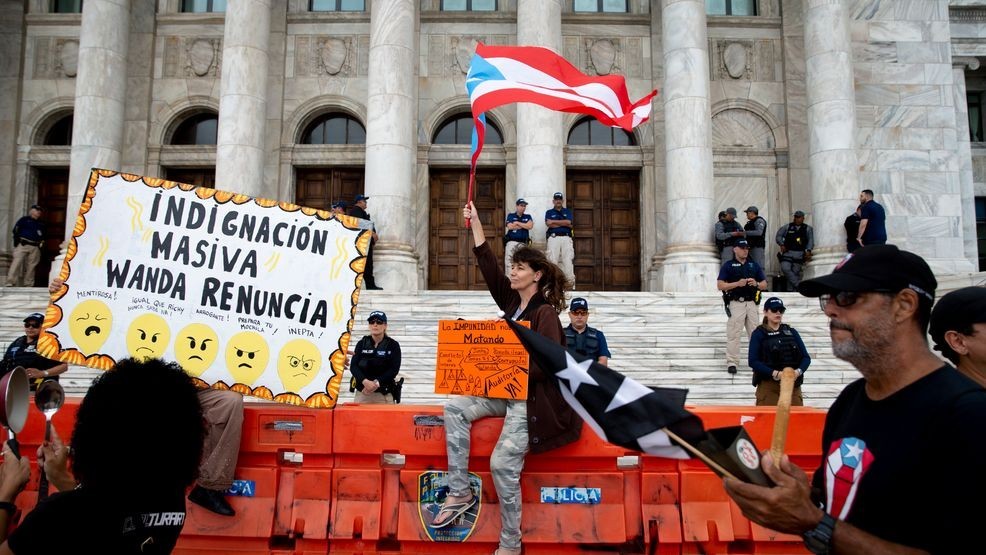
Last week’s announcement pardoning former Puerto Rico Governor Wanda Vázquez Garced sent shockwaves through political and legal circles. Vázquez had been facing serious federal charges from a 2022 indictment involving alleged campaign finance violations and corruption. The White House defended the controversial decision by characterizing the prosecution as “politically motivated,” according to sources familiar with the administration’s reasoning.
The pardon extends beyond Vázquez herself, also covering Julio Martín Herrera Velutini and Mark Rossini, co-defendants in the same federal case. Velutini, a wealthy international banker with ties to Puerto Rico’s financial sector, and Rossini, a former FBI agent, were implicated alongside the former governor in a case that prosecutors had positioned as a significant anti-corruption effort.
This clemency action has particular significance for Puerto Rico, where corruption allegations have long plagued local politics and contributed to economic instability. The island territory, still recovering from devastating hurricanes and fiscal challenges, has seen a series of governmental scandals that have eroded public trust in recent years.
While the Trump administration frames these pardons as correcting perceived political prosecutions, critics argue they undermine accountability mechanisms essential for democratic governance. Legal experts note that the president’s pardon power is virtually unlimited for federal crimes, though it cannot extend to state-level prosecutions.
The timing of these pardons distinguishes Trump’s approach from his predecessors. Traditionally, presidents have issued most pardons and commutations during the final months or even days of their administrations, when the political costs are minimal. A comprehensive Pew Research Center analysis confirmed this historical pattern, with clemency actions heavily concentrated toward the end of presidential terms.
“What we’re seeing is extraordinary primarily because of when it’s happening,” says Margaret Russell, constitutional law professor at Santa Clara University. “Presidents typically save their most controversial pardons for the end of their time in office, when they’ve exhausted their political capital or no longer need to worry about electoral consequences.”
Trump’s early and aggressive use of clemency echoes controversial presidential pardons from previous administrations that sparked national debate. Gerald Ford’s 1974 pardon of Richard Nixon following the Watergate scandal remains perhaps the most consequential example, triggering intense discussions about whether accountability was sacrificed for national healing.
Similarly, Bill Clinton’s 2001 pardon of fugitive financier Marc Rich in his final days in office generated fierce criticism and congressional investigations. Rich had been indicted on charges of tax evasion and illegal trading with Iran, and had fled to Switzerland to avoid prosecution. The timing and circumstances surrounding Clinton’s decision raised questions about influence and favoritism.
Constitutional scholars point out that the pardon power was designed as a check against potential injustices in the judicial system. However, when applied to politically connected individuals or those with ties to an administration, it inevitably raises questions about equal application of justice.
“The pardon power exists as a safety valve against miscarriages of justice,” explains Jonathan Turley, professor at George Washington University Law School. “But when it’s perceived as benefiting political allies, it creates tensions with our fundamental principle that no one is above the law.”
As President Trump continues to exercise his clemency powers early in his term, each decision further inflames the national discourse around whether these acts represent legitimate corrections of overzealous prosecutions or dangerous undermining of accountability. The debate reflects broader polarization around institutions, justice, and the scope of executive authority in American democracy.
With years remaining in his term, political analysts anticipate more controversial clemency actions ahead, potentially reshaping how future presidents approach this profound constitutional power.
Fact Checker
Verify the accuracy of this article using The Disinformation Commission analysis and real-time sources.

11 Comments
This pardon raises some interesting questions about the balance of power and the role of the presidency. While the administration claims the prosecution was politically motivated, it’s concerning to see high-profile figures avoid accountability, even if the details are complex.
I agree, it’s a tricky situation. The president has broad clemency powers, but they need to be exercised judiciously to maintain public trust in the system.
The mining and commodities sectors have long dealt with controversies around corruption, environmental impacts, and worker rights. This pardon touches on some of those sensitive issues. It will be important to see how it plays out and what the broader implications are.
Absolutely, the mining and energy industries are under increasing scrutiny on those fronts. This case highlights the need for robust oversight and accountability, regardless of political affiliation.
The pardon of a former governor facing corruption charges is a bold move that will surely stir debate. I’m interested to see how this impacts public trust in government institutions and the rule of law, especially when it comes to high-profile figures.
Well said. The use of presidential clemency in cases like this can set important precedents, for better or worse. The public deserves a clear and convincing justification.
This case touches on some of the thorny issues around white-collar crime, political influence, and the exercise of executive power. It will be important for all sides to engage in a thoughtful, fact-based discussion to understand the nuances and implications.
The mining and energy sectors are no strangers to scandals and allegations of wrongdoing. This pardon seems to touch on some of those longstanding issues. I hope the public can get a clear and objective understanding of the rationale behind it.
From the details provided, it seems this case involved complex allegations of financial crimes and political influence. I’m curious to learn more about the specific evidence and reasoning behind the pardon decision. Transparency on these matters is crucial.
Pardons are a complex presidential power, and this one seems to have stirred up a lot of controversy. I’m curious to see how it impacts broader debates around corruption, accountability, and the balance of powers in government.
Agreed. These types of high-profile decisions can have far-reaching consequences, both practical and symbolic. It will be important to monitor how this unfolds and what it means for the integrity of democratic institutions.