


Listen to the article
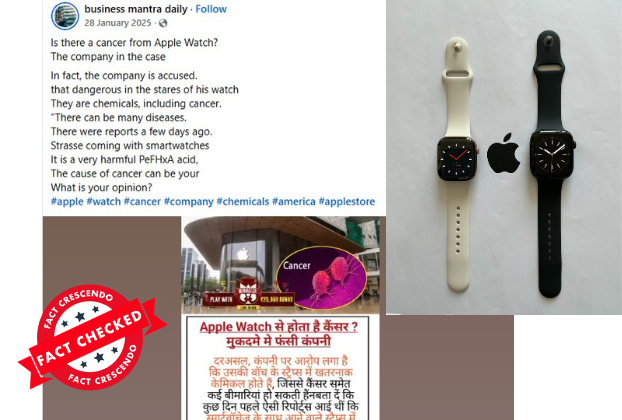
Scientists have detected chemicals known as “forever chemicals” in some Apple Watch bands, though claims linking the devices to cancer remain unsupported by evidence, according to recent research.
A peer-reviewed study published in December 2024 found that many fluoroelastomer watch bands, including Apple’s Sport, Nike, and Ocean models, contained perfluorohexanoic acid (PFHxA), a type of per- and polyfluoroalkyl substance (PFAS). The study detected PFHxA in 40% of tested bands, with some samples containing significantly higher concentrations than typically found in consumer products.
Researchers measured a median concentration of approximately 800 parts per billion (ppb) of PFHxA in affected bands, with one sample exceeding 16,000 ppb. For comparison, some U.S. states set drinking water guidelines for PFHxA at just 1-2 ppb, though experts caution that direct comparisons between skin exposure and ingestion are not straightforward.
Apple has acknowledged that its fluoroelastomer straps contain polymeric PFAS materials but maintains these differ from industrial PFAS compounds like PFOA and PFOS. The company states these materials are “chemically stable” and “safe during product use,” according to its environmental documentation. Apple has also indicated it is working toward phasing out PFAS in its products.
The health implications of these findings remain unclear. While PFAS as a chemical class have been associated with various health concerns including liver damage, immune system effects, hormone disruption, and increased rates of certain cancers, these links primarily relate to ingestion or environmental exposure. No scientific study has established a connection between wearing an Apple Watch and developing cancer.
“The presence of these chemicals in consumer products is concerning, but we need to be careful about drawing conclusions about health risks without evidence specific to this exposure pathway,” said Dr. Margaret Sullivan, an environmental health researcher not affiliated with the original study.
Some consumers have taken legal action. A lawsuit filed in January 2025 (Cavalier v. Apple) alleges certain Apple Watch bands contain “toxic” PFAS and that the company misled users. However, these remain unproven legal claims rather than scientific findings, and Apple has responded by reiterating that its bands undergo testing and are safe to wear.
Regulatory bodies have not issued warnings specific to Apple Watch bands. The electromagnetic radiation emitted by Apple Watches and similar devices uses low-power Bluetooth and Wi-Fi radios that produce non-ionizing radiation, which health agencies consistently report falls far below safety limits.
A University of Utah cancer expert noted in 2015 that fitness trackers are “almost certainly benign,” and that no evidence supports cancer risks from such devices. Similarly, the National Cancer Institute has stated that evidence regarding cell phones, which emit stronger signals, “does not cause brain or other kinds of cancer in humans.”
Laboratory studies suggest some PFAS can potentially transfer through skin contact, particularly during sweating or prolonged exposure. One experiment found that approximately 60% of PFAS in a topical cream could be absorbed through skin samples. However, these laboratory findings don’t necessarily reflect real-world exposure from wearing a watch band.
Media coverage of these findings has often sensationalized the results. Headlines claiming “Smartwatches found containing high levels of cancer-causing ‘forever chemicals'” conflate the mere presence of PFAS with proven carcinogenic effects—a connection not established by the research.
As the debate continues, experts recommend that concerned consumers consider alternative band materials while emphasizing that evidence does not currently support abandoning these devices for health reasons.
“The scientific consensus remains that the benefits of fitness tracking likely outweigh theoretical risks,” noted consumer technology analyst James Rivera. “But as with any consumer product, people should stay informed as research evolves.”
Fact Checker
Verify the accuracy of this article using The Disinformation Commission analysis and real-time sources.

14 Comments
This is an important issue that deserves more attention. PFAS chemicals have been linked to a range of health problems, and their presence in consumer products is concerning. While the cancer link may not be proven, the potential for other adverse effects is worrying. More research and regulation in this area is needed.
Absolutely. PFAS contamination is a growing environmental and public health crisis that can’t be ignored. Consumers should demand accountability from tech companies on the materials used in their products.
While the cancer claims may not be substantiated, the presence of PFAS in Apple Watch bands is still concerning. These chemicals have been linked to a range of health issues, and their use in consumer products is problematic. Apple should take this seriously and work to find safer alternatives.
Exactly. The environmental and health impacts of PFAS are well-documented, and consumers shouldn’t have to worry about exposure from their wearable devices. Apple needs to be more proactive in addressing this issue to maintain consumer trust.
This is a complex issue that requires a nuanced approach. The cancer claims may not be supported, but the PFAS contamination is still worrying. Apple should be transparent about their use of these chemicals and work to minimize exposure for their customers. Consumer safety should be the top priority.
Well said. Transparency and accountability from tech companies on the materials used in their products is crucial. Consumers have a right to know what they’re being exposed to, and Apple should take proactive steps to address this issue.
While the cancer claims may be unfounded, the detection of PFAS in Apple Watch bands is still a significant issue that warrants further investigation. These chemicals have been linked to a range of health and environmental problems, and their presence in consumer electronics is worrying. Apple needs to provide more information and take concrete steps to address this problem.
Agreed. The use of PFAS in consumer products is an emerging public health concern that can’t be ignored. Apple should be proactive in finding safer alternatives and ensuring their customers are not exposed to these persistent chemicals. Transparency and accountability are key in building consumer trust.
It’s good to see this issue being investigated, even if the cancer link is unproven. The presence of PFAS in consumer products like the Apple Watch is concerning and deserves further scrutiny. Apple needs to be more forthcoming about the materials used in their devices and work to eliminate hazardous substances.
Absolutely. Consumers should be able to trust that the products they use every day are safe and free of harmful chemicals. Apple has an opportunity to lead the industry in addressing PFAS contamination and setting a higher standard for transparency and environmental responsibility.
Interesting study on the PFAS chemicals found in Apple Watch bands. While the levels detected are concerning, it’s good to see the researchers note the need to further evaluate the health impacts of skin exposure versus ingestion. Apple’s assurances on the safety of these materials are worth scrutinizing.
Agreed. The potential risks of PFAS exposure are well-documented, so Apple will need to provide robust scientific evidence to back up their claims of safety. Consumers deserve transparency on the materials used in their devices.
The detection of PFAS in Apple Watch bands is troubling, even if the cancer link is unproven. These persistent chemicals have no place in consumer electronics. Apple needs to address this issue head-on and provide transparent information to customers about the materials used in their products.
I agree. Apple’s assurances of safety are not enough. They should be working to eliminate PFAS and other hazardous substances from their supply chain entirely. Consumers deserve better when it comes to the materials in the devices we use daily.