


Listen to the article
Debunked: Email From 2023 Does Not Prove Jeffrey Epstein is Still Alive
A recent social media conspiracy theory suggesting convicted sex offender Jeffrey Epstein might still be alive has been thoroughly debunked, according to an investigation into documents from his federal case files.
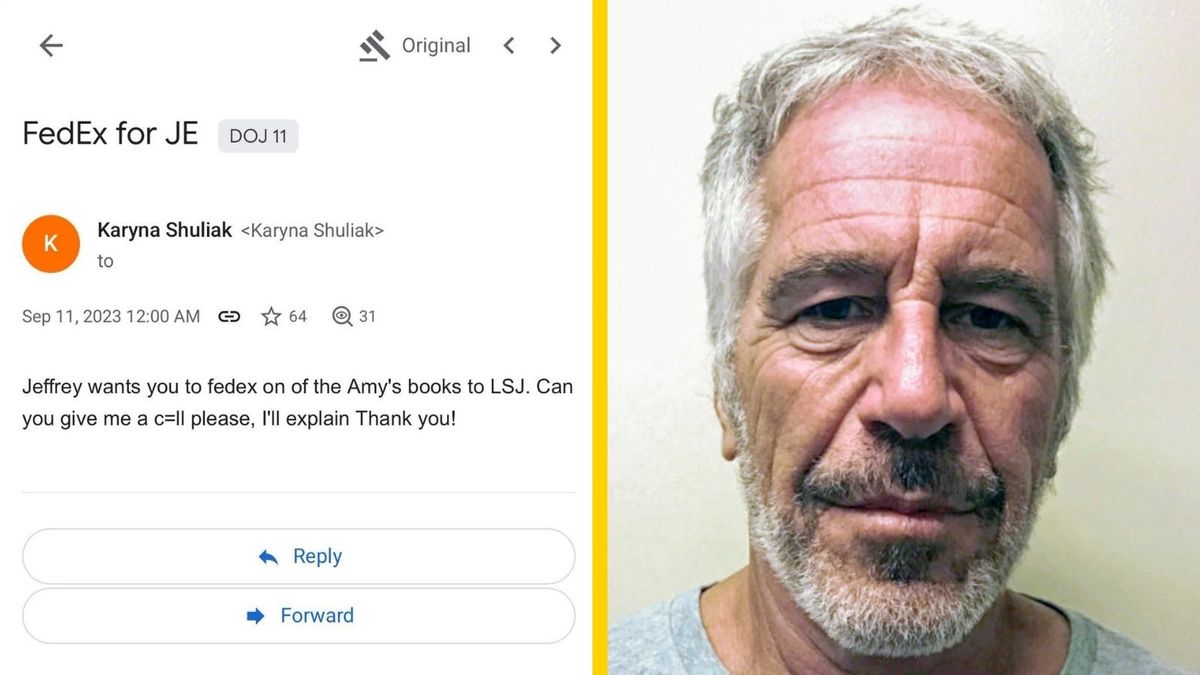
The claim centers around an email purportedly sent in 2023 by Karyna Shuliak, Epstein’s former girlfriend, requesting that “Amy’s books” be sent to his private Caribbean island of Little St. James. Since Epstein died in 2019, social media users seized on this as evidence he was still alive.
“Epstien died in 2019 right? Then what is this mail doing in 2023,” wrote one X user who shared screenshots of the email dated September 11, 2023, with the subject line “FedEx for JE.” The email contained the message: “Jeffrey wants you to fedex on of the Amy’s books to LSJ. Can you give me a c=ll please, I’ll explain Thank you!”
However, the investigation revealed this to be a simple data processing error rather than evidence of a faked death. The email in question appears on Jmail.world, a third-party website with no official connection to the U.S. Justice Department’s Epstein files library. When contacted about their research process, the social media user who promoted the theory responded only, “Its litrally written there in the email 2023.”
The explanation lies in what computer scientists call a “parsing error.” The Jmail platform, which hosts an unofficial archive of Epstein’s case files in a Gmail-style interface, incorrectly processed the date information from the original email. When examining the authentic document hosted by the Justice Department, the actual email shows only “Monday” and “Septem” as date indicators, with the remainder redacted.
Further investigation uncovered a related email in the Justice Department files dated Tuesday, September 16, 2014, which also mentioned “books from Amy.” This contextual evidence strongly suggests Shuliak’s email was actually sent on Monday, September 15, 2014 — nearly five years before Epstein’s death in August 2019.
This isn’t the only instance of date processing errors in the Jmail archive. Another example shows an email supposedly sent from Shuliak to Epstein on October 1, 2022, with the message “Just saw this at the airport…” However, the original Justice Department document clearly shows this communication occurred on October 15, 2016.
The misinterpreted email joins a growing list of conspiracy theories surrounding Epstein’s death. The disgraced financier died by suicide in his Manhattan jail cell in August 2019 while awaiting trial on sex trafficking charges. His death has been the subject of intense scrutiny and speculation, fueled partly by the high-profile nature of his case and his connections to powerful figures.
The Justice Department maintains an official Epstein files library containing properly authenticated documents released through legal channels. In contrast, third-party websites like Jmail.world, which attempt to reorganize these documents into more accessible formats, can introduce technical errors that may fuel misinformation.
Requests for comment from Jmail’s operators regarding these parsing errors have gone unanswered at the time of publication.
This case highlights the importance of verifying information through official sources, particularly when examining sensitive legal documents. It also demonstrates how technical glitches in data processing can inadvertently generate or reinforce conspiracy theories in the digital age.
Fact Checker
Verify the accuracy of this article using The Disinformation Commission analysis and real-time sources.

8 Comments
This email seems to be just a data processing error, not evidence that Epstein is still alive. It’s good the authorities investigated this thoroughly to uncover the truth and shut down the conspiracy theory.
Exactly. Verifying the legitimacy of documents and sources is key when dealing with sensitive, high-profile cases like this. Jumping to unsupported conclusions can be very misleading.
While the Epstein case has understandably fueled many conspiracy theories, this report demonstrates the importance of relying on official investigations and credible evidence rather than unverified online claims. Good to see the truth come to light.
The investigation findings make sense – an isolated email error is a much more plausible explanation than Epstein somehow faking his death. Responsible journalism and fact-checking are crucial to counter conspiracy theories.
Interesting report on the debunked conspiracy theory around Epstein’s death. It’s important to rely on credible sources and official investigations when it comes to high-profile cases like this, rather than jumping to conclusions based on questionable online evidence.
Agreed. Misinformation and unsubstantiated claims can spread quickly online, so it’s crucial to fact-check thoroughly before believing or sharing such stories.
It’s reassuring to see the authorities thoroughly investigate this email claim and debunk the conspiracy theory around Epstein’s death. Maintaining public trust requires diligent fact-checking, even for sensational stories.
Absolutely. Spreading unsubstantiated rumors, especially around such a high-profile case, can have real consequences. This investigation helps uphold transparency and accountability.