


Listen to the article
Department of Energy Debunks False “Energy Lockdown” Claims Circulating on Social Media
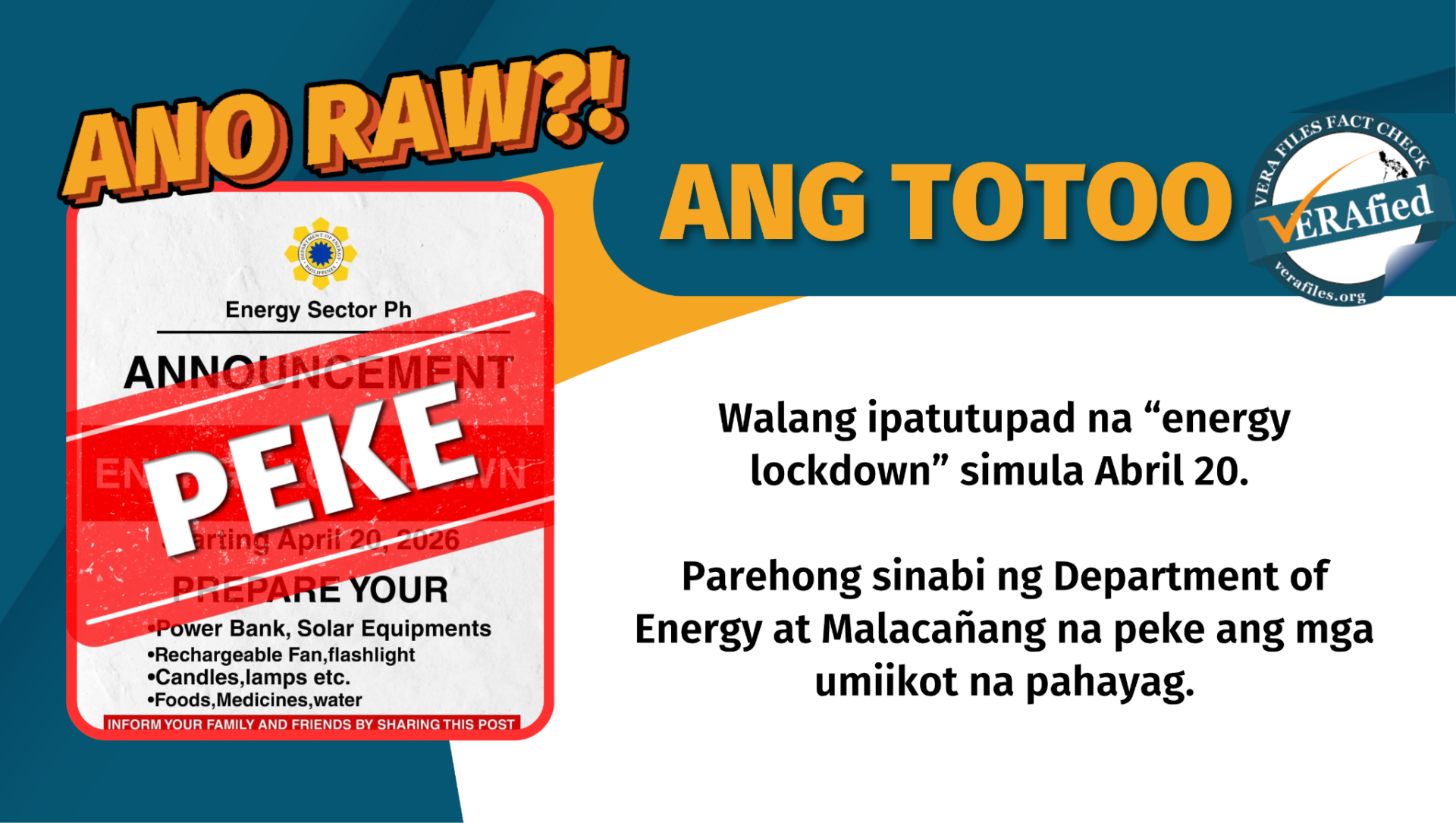
A fabricated graphic card falsely claiming an “energy lockdown” would begin on April 20 has been spreading across social media platforms, prompting official denials from both the Department of Energy (DOE) and Malacañang Palace.
VERA Files identified at least 10 instances of the fraudulent announcement shared by personal Facebook accounts between April 2 and 4. The misleading graphic, which prominently displayed the DOE logo, contained alarming instructions for citizens to prepare power banks, solar equipment, rechargeable fans, flashlights, candles, and stockpiles of food, medicine, and water ahead of a supposed nationwide energy restriction.
“This is categorically fake news,” the Department of Energy declared in an official advisory posted to Facebook on April 6. The department emphasized that no such lockdown has been announced or is being planned, urging the public to verify information through official channels before sharing content that could cause unnecessary alarm.
Malacañang Palace had already moved to quash the rumors days earlier. “Fake news ito,” Palace Press Officer Atty. Claire Castro stated definitively in a message to media outlets on April 3. During an earlier press briefing, Castro clarified that a lockdown is not under consideration despite current challenges in the energy sector.
The viral posts have gained significant traction despite their fraudulent nature, collectively accumulating more than 1,600 reactions, 600 comments, and 10,000 shares across the platform. This widespread sharing demonstrates how quickly misinformation can proliferate through social networks, particularly when it plays on public anxieties about essential services.
Energy security concerns have been heightened in recent weeks following President Ferdinand Marcos’ March 30 directive ordering all government agencies to implement measures reducing electricity and fuel consumption. This legitimate order came in response to rising global oil prices that have placed additional pressure on the country’s energy infrastructure and economy.
This isn’t the first time such fabrications have circulated. VERA Files previously debunked similar false claims about energy-related lockdowns, suggesting a pattern of misinformation that emerges during periods of genuine resource concerns.
Energy sector analysts note that while the Philippines, like many countries, faces legitimate challenges in energy supply and distribution, especially during peak demand periods, government responses typically involve calibrated conservation measures and grid management rather than dramatic “lockdowns.”
The spread of such misinformation highlights the ongoing challenge authorities face in communicating accurate information during times of economic stress. Social media platforms continue to be fertile ground for alarmist content that can rapidly reach thousands of users before fact-checkers or officials have an opportunity to respond.
Media literacy experts emphasize that consumers should exercise particular caution with dramatic announcements that aren’t featured on official government websites or verified news outlets, especially those containing urgent calls to share the information widely – a common tactic used to amplify false information.
The DOE continues to encourage citizens to follow their official social media channels and website for legitimate updates regarding energy policies and any conservation measures that might be implemented in response to global market conditions.
Fact Checker
Verify the accuracy of this article using The Disinformation Commission analysis and real-time sources.

10 Comments
Glad to see the government quickly debunk this false ‘energy lockdown’ claim. It’s important to rely on official sources and verify information before sharing potentially alarming content on social media.
It’s disheartening to see disinformation campaigns targeting critical infrastructure and services. The public deserves accurate, transparent information from trusted sources.
With rising energy costs and concerns about security of supply, I can understand why a false ‘lockdown’ claim could gain traction. But verifying information is crucial to avoid fueling undue alarm.
Absolutely. Fact-checking and relying on official channels is the best way to separate truth from fiction, especially on sensitive topics.
This episode highlights the importance of media literacy and the need to be vigilant about online content, even if it seems plausible at first glance.
Agreed. Developing the skills to spot and avoid the spread of misinformation should be a priority, especially on issues with real-world impacts.
Kudos to the authorities for their swift response. Nipping these kinds of false claims in the bud helps maintain public trust and prevent unnecessary panic.
Spreading disinformation about government policies, especially around sensitive issues like energy supply, can cause unnecessary panic. Kudos to the DOE and Palace for setting the record straight.
Fabricated graphics and misleading announcements are becoming all too common these days. Good to see the authorities take swift action to counter this kind of fake news.
While it’s concerning to see this kind of disinformation circulating, I’m glad the government took steps to address it. Transparency and fact-checking are crucial in these situations.