


Listen to the article
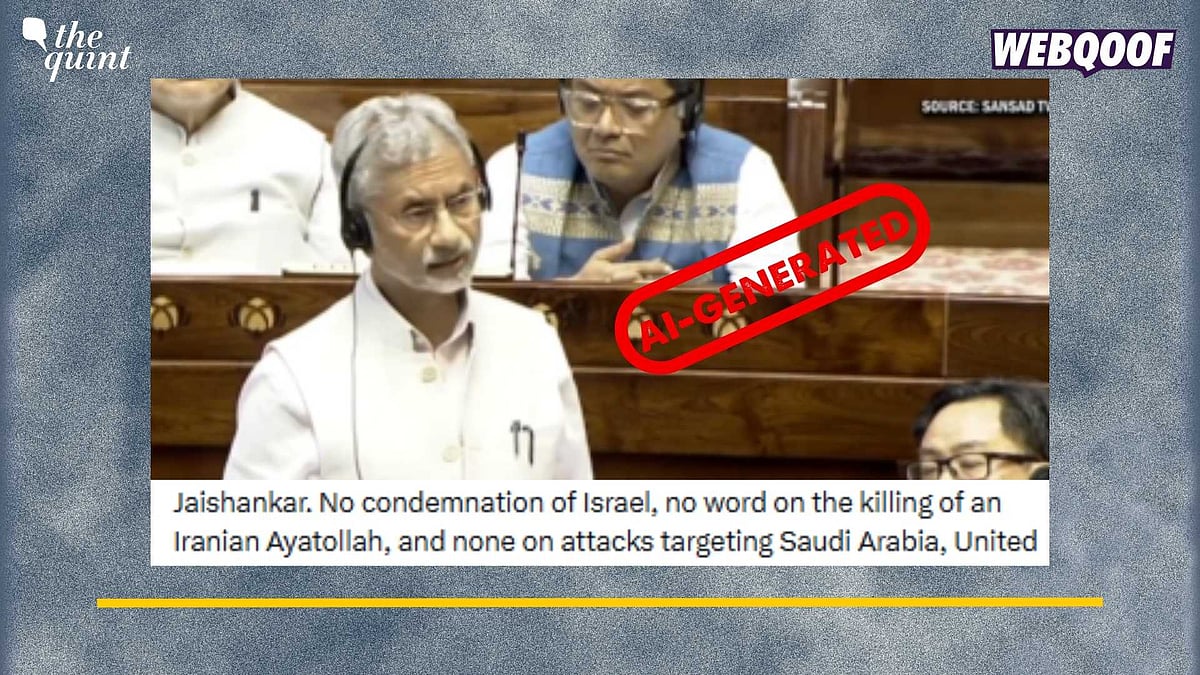
In a concerning development highlighting the growing challenge of misinformation, a viral video purportedly showing External Affairs Minister S. Jaishankar making provocative statements has been confirmed as a sophisticated deepfake.
Fact-checkers conducted an extensive investigation into the circulating clip, beginning with a comprehensive keyword search to locate any official record of the alleged statements. The search yielded no matches in any authenticated public appearances or statements by the minister.
To ensure thoroughness, investigators examined the complete transcript of Jaishankar’s parliamentary address available on the official Ministry of External Affairs (MEA) website. The detailed review confirmed that the minister had made no such remarks during his official address to lawmakers.
The Press Information Bureau’s (PIB) dedicated fact-check unit subsequently issued an official clarification, explicitly identifying the video as a “deepfake” – artificially generated content designed to mimic the minister’s likeness and voice while attributing fabricated statements to him.
This incident comes amid growing concerns about the proliferation of AI-generated deepfakes in India’s information ecosystem. Deepfakes use artificial intelligence to create highly convincing but entirely fabricated videos or audio recordings of public figures, presenting a significant challenge to information integrity.
The technology behind deepfakes has advanced rapidly in recent years, with AI tools becoming increasingly accessible to users without specialized technical knowledge. These developments have raised alarms among cybersecurity experts and government officials about the potential for such technology to disrupt democratic processes and international relations.
India’s Ministry of Electronics and Information Technology has recently expressed concerns about the rising threat of deepfakes, particularly as the country approaches major election cycles where misinformation could have far-reaching consequences.
The international diplomatic community has also noted the growing risk of deepfakes in geopolitics. Falsified statements from high-ranking officials like Jaishankar could potentially inflame tensions or create diplomatic incidents if mistaken for genuine communications.
Cybersecurity experts point out that the sophistication of this particular deepfake demonstrates how the technology has evolved beyond crude early examples. Modern deepfakes can replicate speech patterns, facial expressions, and mannerisms with alarming accuracy, making detection increasingly challenging for average viewers.
Social media platforms, where such content typically achieves its widest circulation, have implemented various measures to combat deepfakes, though the effectiveness of these safeguards remains under scrutiny. The rapid spread of this particular video before it could be debunked illustrates the continuing challenges in containing synthetic media.
The PIB Fact Check unit, established specifically to combat misinformation related to government matters, has been increasingly active in identifying and flagging such content. Their swift action in this case underscores the government’s recognition of the threat posed by sophisticated AI-generated content.
Media literacy experts emphasize that this incident highlights the growing importance of critical digital literacy among the public. They recommend that viewers exercise heightened skepticism toward sensational video clips, particularly those showing public figures making unexpected or inflammatory statements.
For now, authorities have concluded unequivocally that the viral clip attributed to External Affairs Minister Jaishankar is entirely fabricated – a product of artificial intelligence rather than an authentic recording of any actual statement by the minister.
The investigation into the source of the deepfake continues, as officials attempt to determine who created and initially distributed the falsified content, and whether it was intended as a deliberate attempt to spread misinformation or to test the capabilities of emerging AI technologies.
Fact Checker
Verify the accuracy of this article using The Disinformation Commission analysis and real-time sources.

11 Comments
This incident serves as a reminder of the importance of verifying information, especially when it comes to sensitive political or social issues. We must all remain vigilant and critical consumers of online content.
I’m glad the authorities were able to quickly identify this video as a deepfake and issue a clarification. Combating the spread of fake content is an important challenge we must address.
Absolutely. Fact-checking and debunking efforts are crucial to maintain trust in public discourse.
I commend the efforts of the fact-checkers and authorities in exposing this deepfake. Their work is crucial in maintaining the integrity of public discourse and preventing the spread of harmful misinformation.
It’s encouraging to see the government and media outlets taking this issue seriously and working to expose fake content. Maintaining the integrity of information is vital for a healthy democracy.
I hope this case serves as a wake-up call for policymakers and tech companies to invest more in developing robust deepfake detection and mitigation strategies. Proactive measures are essential to stay ahead of this evolving threat.
The proliferation of deepfakes is a complex challenge that requires a multifaceted approach. I hope this case inspires further research, policy discussions, and public education efforts to address this issue effectively.
The growing prevalence of deepfakes is a worrying trend. We need robust strategies to detect and counter these sophisticated forms of disinformation, both at the technical and policy levels.
While deepfakes are a concerning development, I’m glad to see that fact-checkers and authorities were able to swiftly identify and debunk this particular instance. Continued diligence and public awareness are key to combating misinformation.
This incident highlights the importance of media literacy and critical thinking when consuming online content. We must all be vigilant in verifying claims, especially those related to public figures and important issues.
This is a concerning example of how AI-generated deepfakes can be used to spread misinformation. It’s crucial that we remain vigilant and fact-check claims, especially those involving public figures.