


Listen to the article
In a digital maze of legal documents tied to the Jeffrey Epstein case, a misinterpreted email has sparked unfounded allegations across social media platforms, highlighting the technical challenges in handling large-scale document releases.
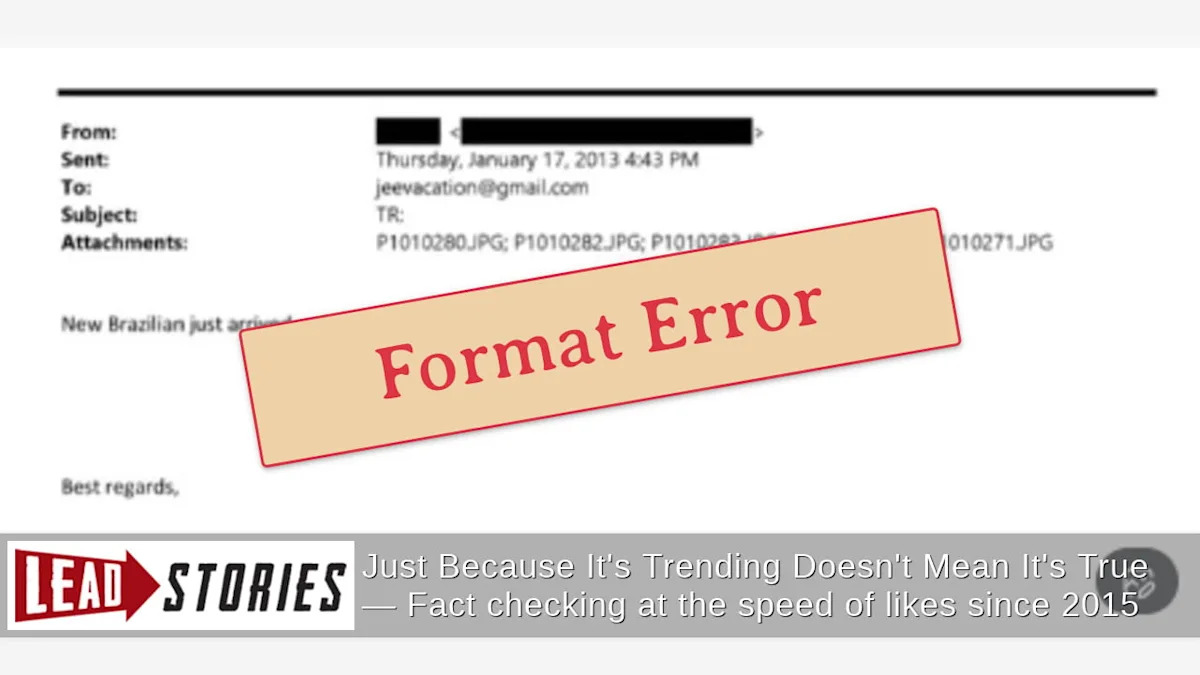
A recent post on X (formerly Twitter) claimed that Department of Justice files contained an email to Epstein referencing a “New Brazilian just arrived, sexy and cute, 9yo,” suggesting evidence of child trafficking. However, investigation into the original documents reveals this to be a technical error rather than evidence of crimes against younger children.
Digital forensic experts have confirmed that the original email actually referred to a “19yo,” not a “9yo.” The discrepancy stems from a common technical glitch that occurs during document processing and conversion. When emails are exported or “flattened” into PDF format, encoding markers such as equal signs may remain in place of characters they were meant to modify, transforming “19” into “=9” in some instances.
This type of conversion error is well-documented among technical professionals. A simple search engine query reveals numerous discussions among Adobe users and document specialists about similar substitution issues during file conversions. The problem is particularly common when handling large volumes of digital evidence that must be processed through optical character recognition (OCR) scanning and other automated systems.
The Department of Justice was tasked with releasing millions of pages of investigators’ files related to the late financier, who was convicted of sex crimes before his death in custody in 2019. The scale of this document release required automated processing, which introduced various technical artifacts into the public record.
Further supporting the explanation of technical error is the existence of duplicate copies of the same document in the DOJ’s online Epstein library. Researchers located an alternative version of the same email that clearly shows “19yo” in a sans-serif blue typeface, distinctly different from the “Best regards” sign-off in a black serif font. This version also contains multiple black redaction blocks covering the sender’s name and references to attached JPG images.
The misconstrued document has fueled conspiracy theories across social media, with the original X post claiming, “They are openly buying 9-year-old children, and our DOJ is protecting their names” and “The DOJ are the enemy of our nation.” These inflammatory statements gained significant traction despite being based on a demonstrable technical error.
This incident highlights the challenges facing both government agencies and the public when interpreting digitized legal documents. The Justice Department’s massive Epstein file release, while intended to provide transparency, has inadvertently created opportunities for misinterpretation when technical glitches occur.
Document integrity experts note that such conversion errors are particularly problematic in high-profile cases where public interest is intense and misinformation can spread rapidly. The combination of automated processing systems, varying file formats, and the sheer volume of material creates numerous opportunities for technical artifacts that can be misconstrued as substantive evidence.
While Epstein was convicted of serious crimes involving minors and investigations into his associates continue, this particular claim about a “9yo” appears to be nothing more than a digital processing error rather than new evidence of trafficking younger children.
The incident serves as a reminder for journalists, researchers, and the public to approach raw document dumps with careful scrutiny and technical understanding, particularly when serious allegations are being formulated based on potentially corrupted digital text.
Fact Checker
Verify the accuracy of this article using The Disinformation Commission analysis and real-time sources.

11 Comments
Interesting to see how technical issues can lead to misinformation. Glad the forensic experts were able to uncover the true details and correct the record. Highlights the importance of verifying information, especially on sensitive topics.
Absolutely. Sloppy data handling and conversion errors can have serious consequences. Good that they were able to investigate and clarify the facts here.
It’s good to see the authorities taking the time to investigate this issue and provide clarity. Data errors are common, and it’s important not to let them fuel unfounded speculation or accusations.
This is a prime example of why it’s crucial to rely on authoritative sources and expert analysis when dealing with complex legal and technical matters. Jumping to conclusions based on partial information can be extremely harmful.
Agreed. It’s a good thing the authorities took the time to thoroughly investigate the issue and provide the correct context. Responsible reporting is essential in these types of situations.
I appreciate the detailed investigation into this issue. It’s a good reminder that we need to be cautious about jumping to conclusions, even when dealing with seemingly incriminating evidence. Technical errors can easily lead to misunderstandings.
While the initial claim was alarming, I’m glad the experts were able to trace the discrepancy back to a technical glitch in the document conversion process. Rigorous fact-checking is essential to prevent the spread of misinformation.
Absolutely. This case highlights the importance of verifying information, especially when it comes to sensitive topics that could have serious consequences if mishandled.
This is a cautionary tale about the pitfalls of jumping to conclusions without thoroughly vetting the facts. The digital forensics investigation uncovered the true nature of the email, preventing further spread of false information.
Agreed. It’s critical to avoid rushing to judgment and instead take the time to properly analyze the evidence, especially on sensitive topics like this.
The forensic experts’ findings highlight the importance of due diligence and fact-checking, even when dealing with seemingly straightforward digital evidence. Technical glitches can easily lead to misinterpretations with serious consequences.