


Listen to the article
Viral Document Falsely Claims Assam CM’s Wife Holds UAE Passport
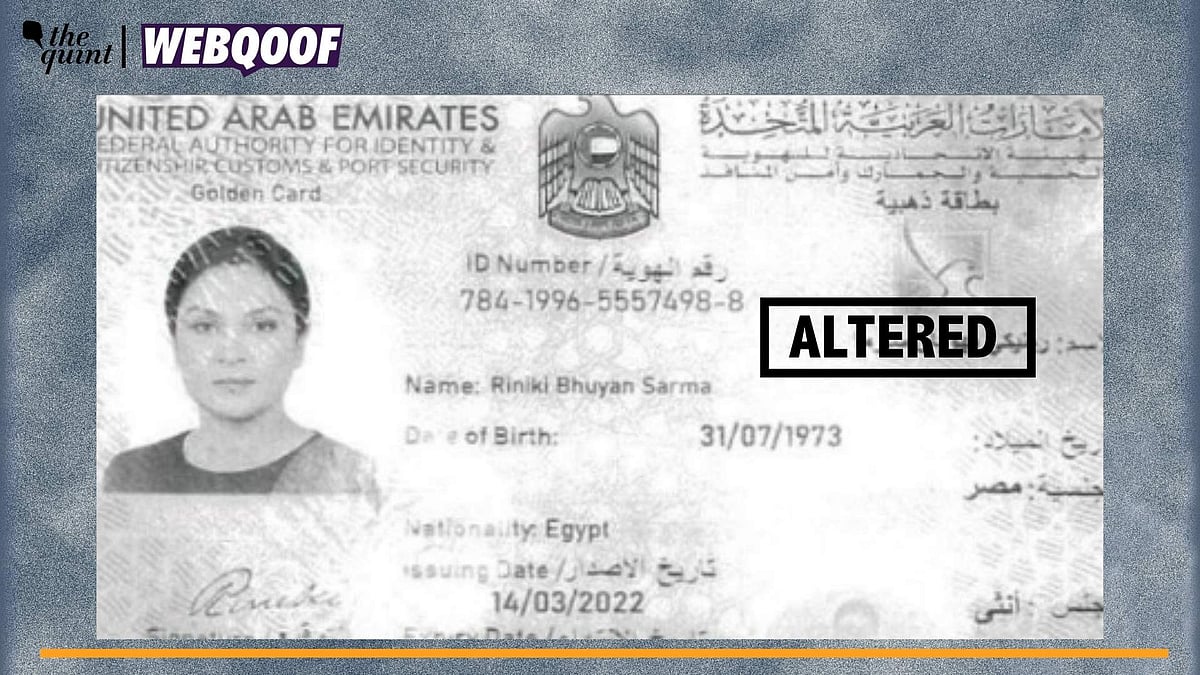
Claims circulating on social media suggesting that Riniki Bhuyan Sharma, wife of Assam Chief Minister Himanta Biswa Sarma, possesses a United Arab Emirates passport have been debunked as false, according to an investigation of the viral document.
The allegations first gained traction following an April 5 press conference by Congress spokesperson Pawan Khera, who claimed that Sharma held multiple passports. Since then, a purported identification document has been widely shared across social media platforms including Facebook and Instagram as supposed evidence of her UAE citizenship.
However, analysis reveals the viral document is fabricated. The image being circulated shows what appears to be an Emirates identification card, not a UAE passport as claimed. The distinction is significant as an identification card does not confer citizenship rights or indicate passport ownership.
The timing of these allegations comes amid heightened political tensions in Assam, where Chief Minister Sarma has been a prominent BJP leader since defecting from Congress in 2015. Political observers note this represents the latest in a series of allegations traded between the ruling BJP and opposition Congress in the northeastern state.
UAE citizenship is notoriously difficult to obtain, with the Emirates maintaining some of the world’s strictest naturalization laws. The country only recently modified its citizenship rules in 2021, allowing select foreigners to obtain Emirati nationality under very specific circumstances, primarily targeting investors, specialized talents, and professionals in rare fields.
The spread of the false document highlights growing concerns about misinformation in India’s political landscape, particularly as the country approaches the 2024 general elections. Digital rights advocates have pointed to an increase in doctored images and fabricated documents being used to target political figures across party lines.
Social media platforms have struggled to contain the spread of such misinformation despite enhanced fact-checking measures. The viral nature of these claims demonstrates how quickly unverified information can spread, often crossing platforms before verification processes can intervene.
Neither Riniki Bhuyan Sharma nor the Chief Minister’s office has issued an official statement addressing these specific allegations as of press time, though the CM has previously dismissed similar claims against his family as politically motivated.
Sharma, an entrepreneur in her own right, heads a regional media company in Assam and has maintained a relatively low political profile despite her husband’s prominent position. Political analysts suggest that family members of high-profile politicians increasingly find themselves targets of misinformation campaigns designed to undermine their relatives’ credibility.
The false document continues to circulate despite fact-checking efforts, highlighting the persistent challenge social media platforms face in preventing the spread of manipulated content. Digital forensics experts note that the document contains several inconsistencies that reveal its fabricated nature, though these technical details might not be apparent to casual viewers.
Legal experts point out that creating or sharing falsified identification documents, particularly those purporting to represent official government credentials, could potentially violate multiple laws regarding forgery and defamation.
As election season intensifies across India, media literacy advocates have called for greater public awareness regarding the verification of claims and documents before sharing them online. This incident serves as a reminder of how easily manipulated images can be weaponized in political discourse, particularly when involving prominent public figures.
The Assam government has repeatedly urged citizens to rely on official channels for verification of information concerning state officials and their families, though the effectiveness of such appeals remains limited in the face of viral social media content.
Fact Checker
Verify the accuracy of this article using The Disinformation Commission analysis and real-time sources.

10 Comments
It’s concerning to see how quickly unverified claims can go viral on social media. This fact-check provides a valuable lesson on the need to critically examine the sources and evidence behind such allegations, especially in a politically charged environment.
You’re right, this case highlights the risks of uncritically sharing information online. The article’s clear explanation of the distinction between an ID card and a passport helps dispel the misleading claim.
While political tensions can fuel the spread of unsubstantiated claims, it’s important that media outlets take the time to carefully fact-check the evidence. This article provides a balanced and well-researched analysis of the viral passport allegation.
Agreed, this fact-check article demonstrates the importance of responsible journalism in addressing politically charged misinformation. The level of detail helps readers understand the nuances of the case.
This fact-check article is a good example of the importance of investigative journalism and fact-checking in the digital age. It’s crucial to verify claims and provide accurate, well-researched information to the public, especially on sensitive political issues.
Absolutely, the level of detail and analysis in this article is commendable. It’s a valuable contribution to combating the spread of misinformation and upholding journalistic integrity.
This case highlights the need for caution when evaluating claims made on social media. Fabricated documents can be easily shared and mistaken for facts. Thorough investigations like this one are crucial to combat the spread of disinformation.
Yes, verifying the authenticity of documents is key. The article does a good job of explaining the differences between an ID card and a passport to clarify the misleading claim.
Interesting fact-check on the viral passport claims. It’s important to verify information and not spread misinformation, especially on sensitive political topics. The distinction between an ID card and a passport is an important clarification.
Agreed, these types of allegations can be politically charged, so it’s good to see a detailed fact-check that looks at the evidence objectively.