


Listen to the article
Doctored Image of Obama “Bowing” to Iranian Supreme Leader Debunked
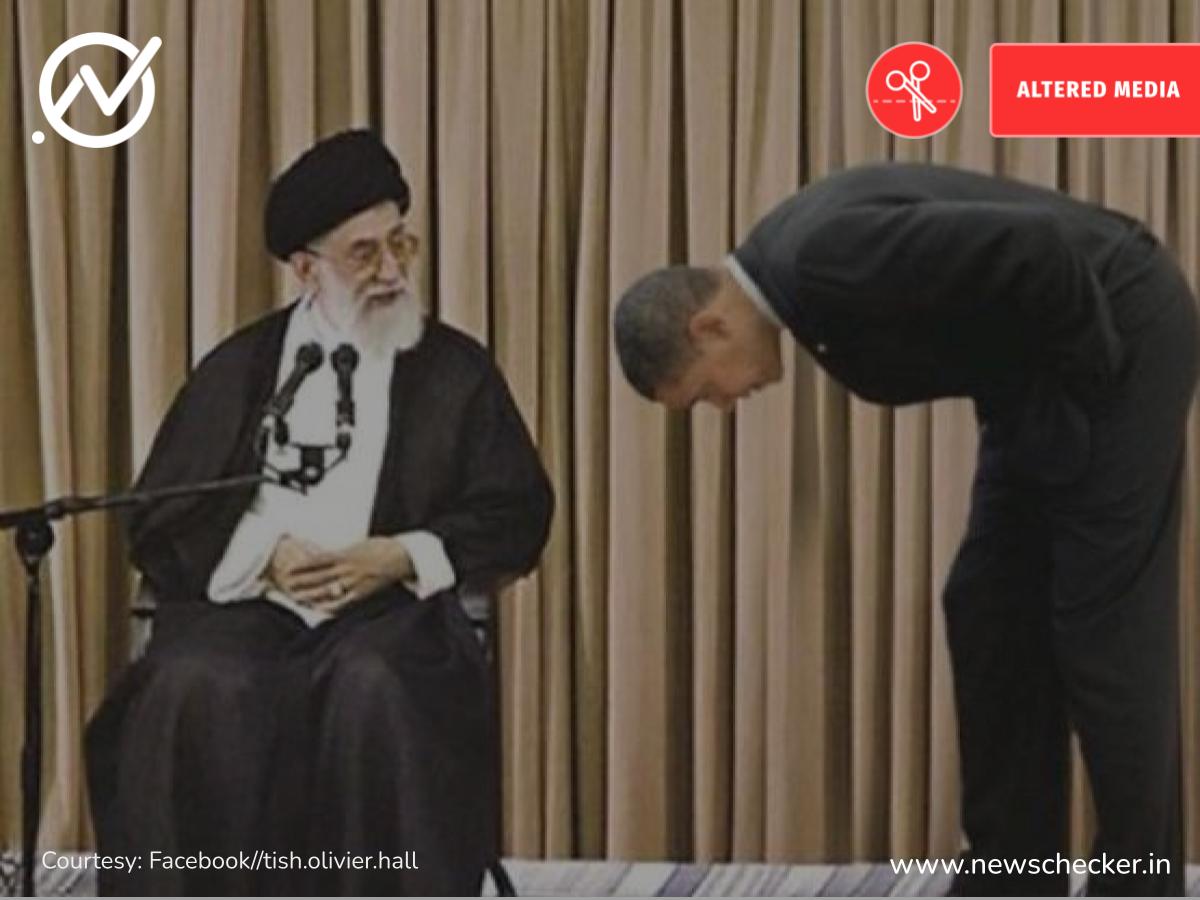
A manipulated photograph circulating on social media falsely depicts former U.S. President Barack Obama bowing before Iran’s Supreme Leader Ayatollah Ali Khamenei, fact-checkers have confirmed after thorough investigation.
The doctored image, which has gained traction particularly on Facebook, represents the latest example of misinformation targeting diplomatic relations between the United States and Iran, countries whose tensions have defined much of Middle Eastern geopolitics over recent decades.
Digital forensic analysis reveals that the viral image is a composite of two entirely unrelated photographs taken years apart and in completely different contexts. Extensive keyword searches for meetings between Obama and Khamenei yielded no credible reports supporting the alleged interaction shown in the image.
The original photograph of Barack Obama was taken on May 8, 2009, in the Oval Office of the White House. In this authentic image, archived by the White House and shared by Obama on his Facebook page on April 16, 2010, the then-president is seen bending down to interact with a child—specifically, the son of a White House staffer. The moment captured shows Obama’s well-documented tendency to engage warmly with children visiting the presidential office, not any diplomatic gesture toward a foreign leader.
Meanwhile, the image of Ayatollah Khamenei comes from an entirely different event and era. The photograph was taken on August 3, 2005, during Iran’s presidential inauguration ceremony in Tehran. The original image, distributed by AFP and available through Getty Images, shows Khamenei alongside then-President Mahmoud Ahmadinejad and other Iranian officials during this formal government ceremony.
The fabricated composite deliberately places these two unrelated images together to create a misleading narrative suggesting an act of deference by a U.S. president toward the Iranian leadership—a scenario that would have represented a significant diplomatic incident had it actually occurred.
This manipulated image emerges against the backdrop of consistently strained relations between the United States and Iran throughout Obama’s presidency. While the Obama administration did negotiate the 2015 Iran nuclear deal (JCPOA), which temporarily eased some tensions, the two leaders never met in person. In fact, high-level direct meetings between U.S. presidents and Iran’s supreme leaders have not occurred since the 1979 Iranian Revolution and subsequent hostage crisis that severed diplomatic relations.
The circulation of such manipulated imagery reflects the ongoing information warfare surrounding U.S.-Iran relations. Similar fabricated images have appeared periodically, especially during moments of heightened tension between the two nations, such as during nuclear negotiations or military incidents in the Persian Gulf region.
Digital misinformation experts note that such images exploit existing political divisions and tap into emotional responses around sensitive foreign policy issues. The doctored photograph plays on existing narratives among critics who accused the Obama administration of being too conciliatory toward Iran during nuclear negotiations.
This incident serves as a reminder of the importance of digital literacy in an era when sophisticated image manipulation tools are widely accessible. Social media users are encouraged to verify the authenticity of provocative images through reverse image searches and by consulting reliable news sources before sharing potentially misleading content.
As relations between the United States and Iran continue to evolve under subsequent administrations, fabricated imagery that misrepresents diplomatic history remains a persistent challenge in public discourse around this complex international relationship.
Fact Checker
Verify the accuracy of this article using The Disinformation Commission analysis and real-time sources.

13 Comments
The level of detail provided in this fact-check is impressive. It’s important to call out these types of deceptive tactics and hold those responsible accountable.
Agreed. Fact-checking and debunking misinformation is essential for maintaining trust in our information ecosystem.
This is a good reminder that we should always approach viral images and claims with a healthy dose of skepticism. Thorough investigation is crucial to uncover the truth.
The details provided in the fact-check about the origins of the two original photos are quite compelling. It’s clear this was a deliberate attempt to create a misleading narrative.
Yes, the level of forensic analysis done to uncover the truth here is impressive. It’s heartening to see such diligent fact-checking.
This is a good example of why it’s important to be skeptical of images and videos shared on social media. Digital forensics can reveal a lot about the authenticity of this kind of content.
It’s troubling how easily misinformation can spread online these days. This case highlights the need for robust fact-checking and media literacy efforts to combat the problem.
Absolutely. We all have a responsibility to be critical consumers of online content and to fact-check before sharing or believing questionable information.
Interesting to see such a clear case of image manipulation being debunked. It’s important to be vigilant about verifying the authenticity of online content, especially when it relates to political leaders and international relations.
Absolutely. Doctored images like this can be very misleading and damaging. Fact-checking is crucial to combat the spread of misinformation.
Manipulated images like this can have serious consequences, especially when they involve political figures and international relations. I’m glad to see this one was quickly debunked.
It’s concerning how quickly false narratives can gain traction on social media these days. I’m glad to see thorough investigations exposing the truth behind this manipulated photo.
Agreed. We need to be more vigilant in scrutinizing online content and not just accepting it at face value.