


Listen to the article
AI-Generated Image Falsely Links Trump Family to Jeffrey Epstein
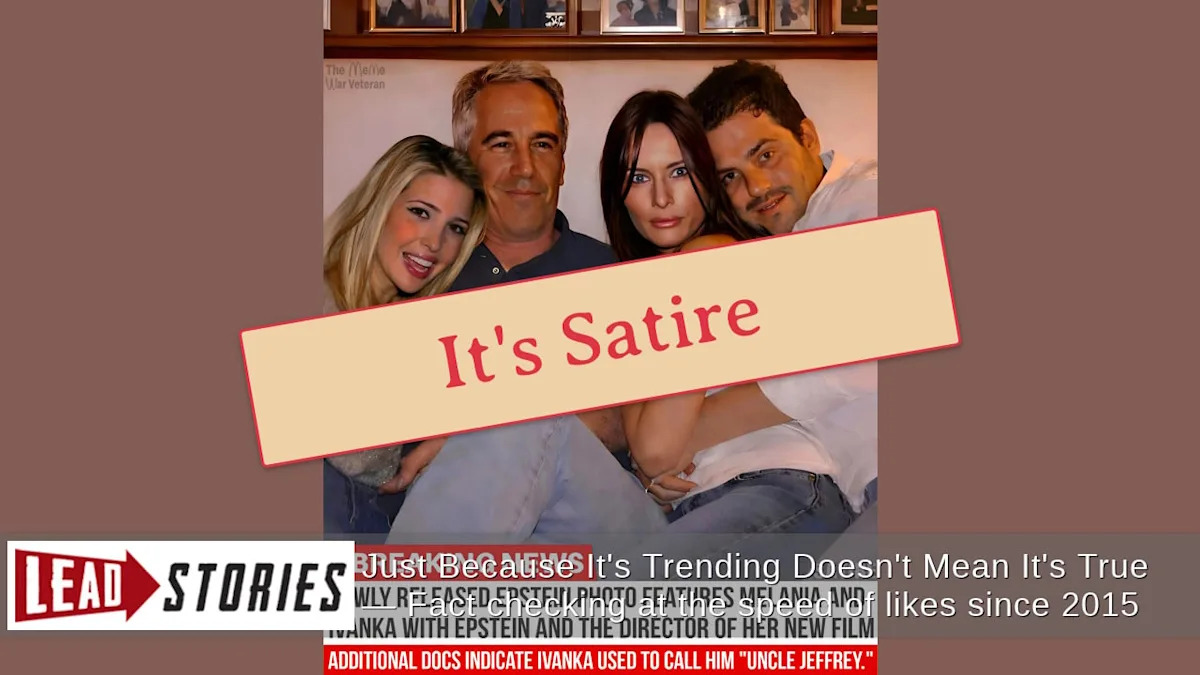
A manipulated image circulating on social media falsely depicts Ivanka Trump and Melania Trump in close quarters with convicted sex offender Jeffrey Epstein and film director Brett Ratner. The fabricated photo, which first appeared on Facebook on February 2, 2026, has been confirmed as artificial intelligence-generated content.
The image was designed to mimic a CNN breaking news broadcast, complete with a news ticker claiming “newly released Epstein photo features Melania and Ivanka with Epstein and the director of her new film” and alleging that “additional docs indicate Ivanka used to call him ‘Uncle Jeffrey.'”
While the Facebook post from account @TheMemeWarVeteran included “satire” in both the caption and visibly marked on the image itself, when shared across other platforms like X.com, these disclaimers were often overlooked or deliberately omitted, leading to potential confusion among viewers.
Digital forensics experts at Lead Stories submitted the image to Hive Moderation, an AI-generated content detection tool, which scored the photo as 87.8% likely to be artificially created. The analysis confirms what careful observers might notice: telltale signs of AI generation, including unusual proportions and inconsistent lighting patterns typical of synthetic media.
The timing of the fake image coincides with the release of a film titled “Melania,” suggesting an attempt to capitalize on public interest in the Trump family. Brett Ratner, the film director mentioned in the false caption, has no confirmed connection to any Epstein-related investigations.
This fabricated image represents a growing trend of increasingly sophisticated AI-generated misinformation targeting political figures. As artificial intelligence tools become more accessible to the public, distinguishing between authentic and manipulated content grows increasingly challenging for social media users.
Jeffrey Epstein, who died in prison in 2019 while awaiting trial on sex trafficking charges, continues to be a contentious figure in American politics. His connections to numerous high-profile individuals across the political spectrum have made him a frequent subject of both legitimate reporting and baseless conspiracy theories.
Digital media literacy experts warn that even when labeled as satire, such images can contribute to misinformation when shared without context. The rapid spread of this particular image demonstrates how quickly fabricated content can move beyond its original context, potentially misleading viewers who encounter it without the original disclaimers.
Social media platforms continue to grapple with policies regarding AI-generated content, particularly when it involves public figures. While some platforms have implemented policies requiring disclosure of AI-generated content, enforcement remains inconsistent.
The fabricated CNN-style format adds another troubling dimension to this misinformation, as it exploits the visual language and credibility of established news organizations to lend an air of authenticity to completely fictional content.
For social media users, this incident serves as a reminder to approach sensational images with skepticism, particularly those depicting public figures in controversial situations, and to look for verification from credible news sources before accepting such content as authentic.
Fact Checker
Verify the accuracy of this article using The Disinformation Commission analysis and real-time sources.

8 Comments
This is a timely reminder of the need for stronger safeguards against AI-generated content. While the original post claimed it was satire, the lack of clear disclaimers elsewhere is concerning. We must stay vigilant against the spread of misinformation.
I agree. Maintaining trust in media and public institutions is critical, especially when it comes to sensitive topics involving prominent individuals. Fact-checking and digital forensics will be essential going forward.
I’m glad the experts were able to confirm this image as AI-generated. Spreading false narratives, even inadvertently, can have serious consequences. Fact-checking and digital forensics are crucial in an age of rapidly evolving technology.
It’s disheartening to see how easily manipulated images can spread and potentially mislead people. We should all be more vigilant about verifying information, especially when it involves public figures. Maintaining trust in media is so important.
Absolutely. Disinformation can have real-world impacts, so it’s crucial that we all do our part to combat it, whether that’s through fact-checking, calling out suspicious content, or simply being more discerning consumers of online information.
Doctored images like this are never a good thing. We should be careful about spreading misinformation, even if it’s presented as satire. It’s important to verify the facts before jumping to conclusions.
The proliferation of AI-generated content is a complex issue that requires a multifaceted approach. While this particular image was identified as fabricated, we must remain diligent in verifying information and combating the spread of misinformation online.
This is an interesting case study on the proliferation of AI-generated content online. While the original post claimed it was satire, the lack of clear disclaimers on other platforms is concerning. We need better tools to detect and combat these types of manipulations.