


Listen to the article
DNA Test Claims Involving Prince Harry Proven False, Analysis Shows
Viral social media claims suggesting Prince Harry had an emotional breakdown in court after DNA tests allegedly revealed King Charles III is not his biological father have been thoroughly debunked as false.
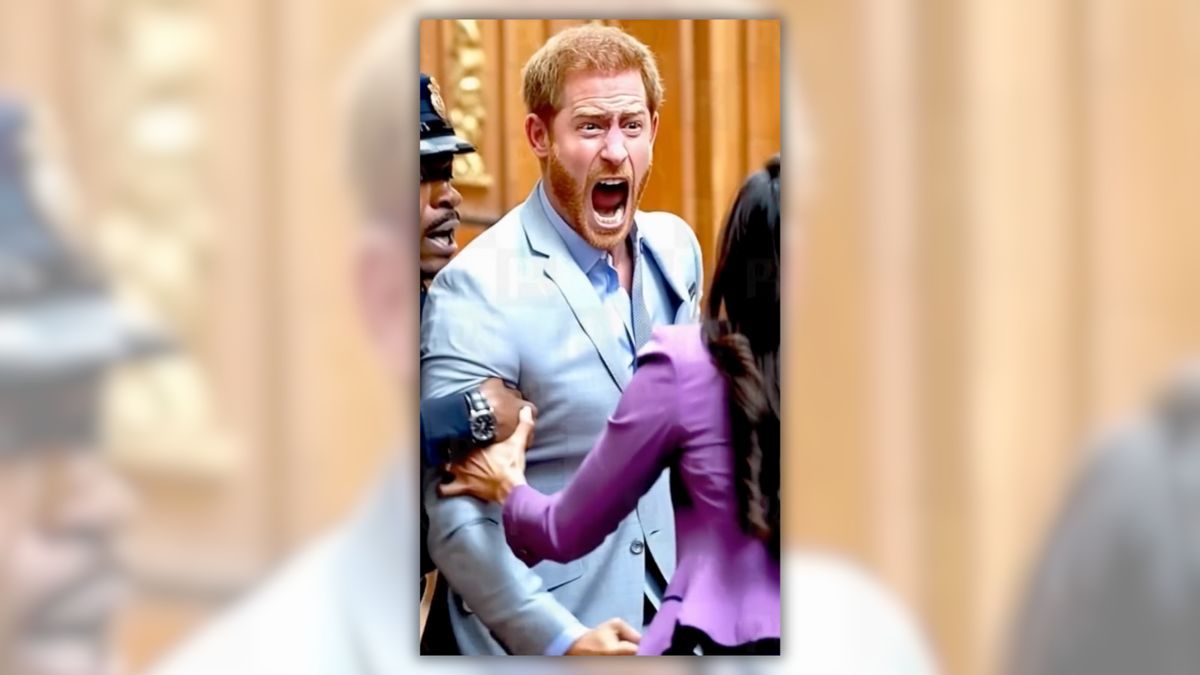
The fabricated story began circulating on social media platforms in November and December 2025, featuring a video purportedly showing the Duke of Sussex being physically restrained while having an emotional outburst. One Facebook post that gained significant traction showed a man resembling Harry screaming as two individuals struggled to control him, with the caption: “Prince Harry Goes Off the Rails in Court After Dismissing DNA Test: ‘My mother didn’t lie…'”
The claim quickly spread across multiple Facebook accounts, with many posts featuring links to advertisement-filled articles hosted on WordPress blogs, suggesting a coordinated attempt to generate traffic and revenue through misinformation.
A comprehensive search across major search engines including Google, Bing, Yahoo, and DuckDuckGo found no legitimate news coverage of any DNA test involving Prince Harry and King Charles. Such a significant royal development would have generated extensive coverage from established media organizations worldwide had there been any truth to the claims.
Further analysis of the video revealed multiple signs of artificial intelligence manipulation. While the individual in the footage bore a passing resemblance to Harry, close inspection showed several inconsistencies. The person depicted had dark eyes, whereas recent authenticated photographs from Getty Images confirm Prince Harry has blue eyes. Additionally, the badge visible on the uniform of the supposed law enforcement officer restraining “Harry” contained nonsensical symbols rather than recognizable letters from any known alphabet—a telltale sign of AI-generated content.
Technical issues with the video further exposed its fraudulent nature. The audio was noticeably out of sync, with the sound of screaming preceding the corresponding facial expressions, indicating poor-quality digital manipulation.
Despite this specific claim being definitively false, speculation about Harry’s parentage has persisted throughout his life. In his 2023 autobiography “Spare,” Harry addressed these rumors directly, noting that “nearly every biography of me, every longish profile in a paper or magazine” has referenced the long-standing speculation that he might be the son of James Hewitt, a British cavalry officer who reportedly had a five-year relationship with Princess Diana in the late 1980s.
Harry revealed in his memoir that King Charles never discussed these rumors with him, writing: “If Pa had any thoughts about Major Hewitt, he kept them to himself.”
Hewitt himself categorically denied being Harry’s father in a 2002 interview with the Sunday Mirror, pointing out that Harry “was already a toddler” when he first met Diana in 1986. Prince Harry was born on September 15, 1984, approximately two years before Diana and Hewitt’s relationship reportedly began.
Ken Wharfe, Princess Diana’s former bodyguard, corroborated this timeline in his 2002 book “Diana: Closely Guarded Secret,” writing that “Diana did not meet James until the summer of 1986, and the red hair, gossips so love to cite as proof is, of course, a Spencer trait,” referencing Diana’s family surname.
The spread of this fabricated story highlights the growing challenge of distinguishing authentic news from AI-generated misinformation, particularly when it involves high-profile public figures. Social media platforms continue to struggle with effectively identifying and removing such content before it reaches wide audiences.
While Prince Harry has faced genuine controversies throughout his life, including past incidents that have been accurately reported, this alleged DNA test and courtroom meltdown joins a growing list of completely fabricated stories targeting members of the royal family.
Fact Checker
Verify the accuracy of this article using The Disinformation Commission analysis and real-time sources.

6 Comments
Fabricated stories like this erode public trust. I’m glad the analysis shows these DNA test claims about Prince Harry are false. We should be cautious about believing unverified social media posts, even if they get a lot of traction.
Agreed. Fact-checking and verifying information from reliable sources is crucial, especially when it comes to sensitive topics like the royal family.
While gossip and speculation about the royals can be entertaining, we need to be careful not to spread unsubstantiated information. These DNA test claims seem to be just another example of social media misinformation. I’m glad the facts were set straight.
It’s disappointing to see misinformation being spread, likely for financial gain. These kinds of fabricated stories are irresponsible and do a disservice to the public. I hope people will be more discerning about what they believe online.
This looks like another unfounded rumor trying to stir up controversy. Without credible evidence from reputable sources, I’m skeptical of these DNA test claims. It’s important to rely on facts, not salacious gossip.
Thanks for debunking these false claims. It’s important to separate fact from fiction, especially when it comes to high-profile individuals. I appreciate the thorough analysis that exposed this as a coordinated disinformation campaign.