


Listen to the article
AI-Generated Images Falsely Link Filmmaker Mira Nair to Jeffrey Epstein
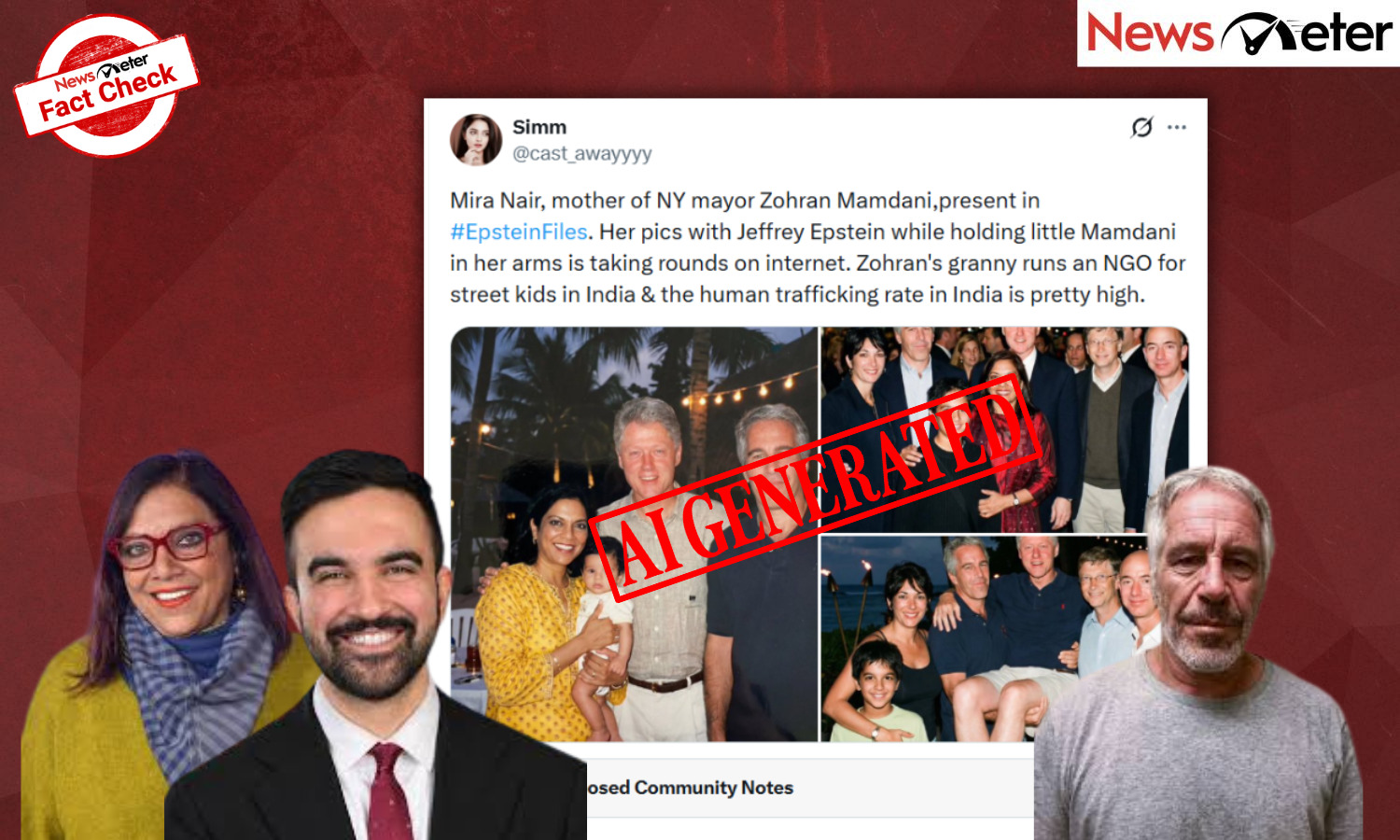
Misleading images purporting to show Indian filmmaker Mira Nair and her son Zohran Mamdani with convicted sex trafficker Jeffrey Epstein are circulating on social media, an investigation has revealed. The images, which have gained traction amid recent releases of court documents related to Epstein, were found to be entirely AI-generated.
The fabricated photos began circulating following mentions in U.S. Justice Department files that Nair had allegedly attended an “after party” at the townhouse of Ghislaine Maxwell, who was convicted of sex trafficking in connection with Epstein. These images have been shared to suggest close personal connections between Nair, the mother of New York City Assembly member Zohran Mamdani, and Epstein, who died in custody in 2019.
Social media posts featuring these images have made serious allegations. One X user claimed, “Mira Nair, mother of NY mayor Zohran Mamdani, present in #EpsteinFiles. Her pics with Jeffrey Epstein while holding little Mamdani in her arms are taking rounds on the internet. Zohran’s granny runs an NGO for street kids in India, and the human trafficking rate in India is pretty high.”
Upon closer examination, several red flags indicate the images’ fraudulent nature. The photos display tell-tale signs of AI generation, including unnaturally glossy appearances and conspicuously blurred backgrounds. More definitively, the images contain a watermark reading “DFF”—an abbreviation for a parody account on X called “DumbFckFinder” that regularly posts AI-generated content.
This account has a history of creating AI-generated visuals of public figures, including Bill Clinton, Bill Gates, and Jeff Bezos—some of whom have been mentioned in authentic Epstein-related court documents. The account appears to exploit these legitimate connections to create sensationalized, fabricated content.
To verify these observations, the images were analyzed using AI-detection tools. Tests conducted with Undetectable AI confirmed the images were artificially created. Further analysis using Google DeepMind’s SynthID detector identified that the images were specifically generated using Google AI technology.
This incident highlights the growing challenge of misinformation spread through increasingly sophisticated AI-generated images. As court documents related to high-profile cases like Epstein’s become public, the potential for fabricated visual “evidence” to spread rapidly online presents serious concerns for public discourse and the reputations of those falsely implicated.
The case is particularly troubling as it attempts to connect Mamdani, who is actually a New York State Assembly member rather than New York City’s mayor as claimed in the posts, to a serious criminal network based on completely fabricated evidence. The posts also make unfounded insinuations about Mamdani’s grandmother’s charitable work in India.
Digital literacy experts warn that as AI technology becomes more accessible and sophisticated, the public needs to develop greater skepticism toward images shared on social media, particularly those related to controversial or high-profile figures and events.
This incident serves as a reminder that even visually convincing images can be entirely fabricated, and verification through multiple sources remains essential before accepting visual “evidence” of serious allegations.
Fact Checker
Verify the accuracy of this article using The Disinformation Commission analysis and real-time sources.

6 Comments
It’s alarming to see how quickly AI-generated images can spread and gain traction, especially around sensitive topics like this. Rigorous verification and fact-checking must be the norm to prevent the weaponization of this technology for malicious purposes.
I agree. The proliferation of these fabricated images demonstrates the urgent need for stronger media literacy education and policies to combat the rising tide of online misinformation. We must remain vigilant and critical consumers of digital content.
This is a stark reminder of the potential dangers of AI-generated media and the need for greater digital literacy. Fact-checking and media verification should be standard practice to avoid amplifying disinformation, even if the content seems plausible at first glance.
Well said. With the increasing sophistication of AI and deepfakes, we must all be more discerning consumers of online content. Relying on credible, fact-based reporting is crucial to avoid falling prey to manipulated narratives.
Fascinating that AI-generated images can be used to spread such harmful misinformation. It’s crucial to verify claims and sources before sharing online, especially related to sensitive topics like this. Fact-checking is so important to combat the spread of false narratives.
Absolutely. Spreading unverified, AI-fabricated photos as evidence is highly irresponsible and can have serious consequences. We must be vigilant in separating truth from fiction, especially when it comes to prominent public figures.