


Listen to the article
Man Arrested After Spraying Congresswoman Ilhan Omar with Liquid at Town Hall
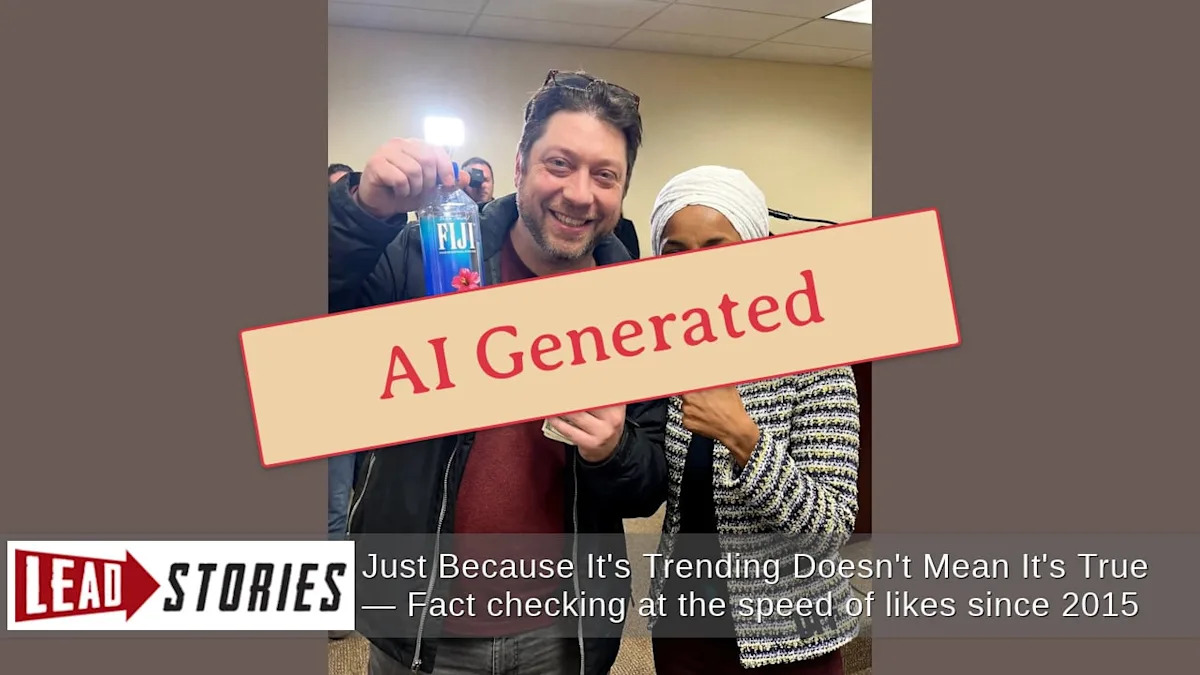
A Minnesota town hall meeting erupted in chaos when a man sprayed U.S. Representative Ilhan Omar with an unidentified liquid, prompting immediate security response and the suspect’s arrest. The incident has been followed by a wave of misinformation, including AI-generated images falsely depicting Omar posing with her attacker.
The actual incident occurred on January 27, when Anthony Kazmierczak disrupted the congressional town hall by approaching Omar and spraying her with liquid. According to Reuters reporting, security personnel quickly intervened, and Kazmierczak was taken into custody.
Law enforcement officials confirmed that Kazmierczak was wearing gray sweatpants and clear eyeglasses during the attack, details that contrast sharply with viral AI-generated images currently circulating on social media.
In the aftermath of the incident, an X (formerly Twitter) account operating under the handle @DumbFckFinder published several AI-generated images showing a fabricated scene of Omar smiling alongside her alleged attacker. The falsified images depict a man in jeans and sunglasses holding a Fiji water bottle and displaying a fan of cash.
The account responsible for the images carries an “Account Authenticity Disclosure” label identifying it as a parody account. Its bio explicitly states that it creates “high quality AI videos and memes” to “expose” people across the political spectrum. Despite these disclaimers, the images have been widely shared as authentic.
Digital forensic analysis of the fabricated content reveals multiple inconsistencies typical of AI-generated imagery. The three variations published by the account show dramatically different room settings – one featuring numbered theater-style seats, another showing commercial stacking chairs. Architectural elements including ceiling tiles, vents, lighting fixtures, and exit doors change inexplicably between images supposedly depicting the same location.
Another X user expanded on the deception by creating an AI-generated video based on one of the still images, using the platform’s Grok AI feature.
The spread of such sophisticated fake content comes amid increasing concerns about the role of artificial intelligence in political misinformation. As AI image generation tools become more accessible and their outputs more convincing, distinguishing between authentic and fabricated media grows increasingly challenging for the average social media user.
Omar, a Democrat representing Minnesota’s 5th congressional district, has frequently been a target of political attacks since her election to Congress in 2018. As one of the first Muslim women elected to the U.S. House of Representatives, she has faced persistent criticism from political opponents, including numerous instances of misinformation campaigns.
The actual attack against Omar represents a concerning escalation of political tensions into physical confrontation. Law enforcement has not released details about the liquid used in the attack or Kazmierczak’s potential motives.
This incident highlights the dual threats facing public officials today: physical security risks at public events and digital misinformation that can rapidly distort public understanding of events. Media literacy experts continue to recommend that consumers verify information through multiple credible sources before accepting or sharing content, particularly during politically charged moments.
Fact Checker
Verify the accuracy of this article using The Disinformation Commission analysis and real-time sources.

22 Comments
I like the balance sheet here—less leverage than peers.
Good point. Watching costs and grades closely.
Good point. Watching costs and grades closely.
Uranium names keep pushing higher—supply still tight into 2026.
Good point. Watching costs and grades closely.
Good point. Watching costs and grades closely.
Uranium names keep pushing higher—supply still tight into 2026.
If AISC keeps dropping, this becomes investable for me.
Good point. Watching costs and grades closely.
Good point. Watching costs and grades closely.
I like the balance sheet here—less leverage than peers.
Silver leverage is strong here; beta cuts both ways though.
Good point. Watching costs and grades closely.
If AISC keeps dropping, this becomes investable for me.
Good point. Watching costs and grades closely.
Good point. Watching costs and grades closely.
Nice to see insider buying—usually a good signal in this space.
Uranium names keep pushing higher—supply still tight into 2026.
Good point. Watching costs and grades closely.
Production mix shifting toward Fact Check might help margins if metals stay firm.
Uranium names keep pushing higher—supply still tight into 2026.
Good point. Watching costs and grades closely.