


Listen to the article
Confusion persists over COVID-19 vaccine access following contentious Senate hearing where Health and Human Services Secretary Robert F. Kennedy Jr. claimed that “anybody” can still get vaccinated despite new restrictions.
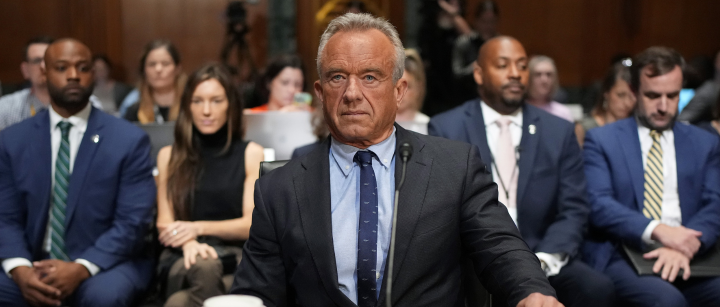
During a September 4 Senate hearing marked by heated exchanges, Kennedy’s assertion that COVID-19 vaccines remain universally available contradicted concerns raised by senators from both parties about limited access under new FDA guidelines.
The Food and Drug Administration approved four COVID-19 vaccines on August 27 for the upcoming season—Nuvaxovid (Novavax), Comirnaty (Pfizer/BioNTech), and Spikevax and mNEXSPIKE (both from Moderna). However, unlike previous years, the approvals are limited to people 65 years and older or those with at least one underlying health condition. The vaccines have been updated to target recent JN.1 or LP.8.1 omicron subvariants.
“Anybody can get the booster,” Kennedy insisted during questioning by Sen. Elizabeth Warren, though he later qualified this by saying “it depends on the states” while maintaining that “everybody can get it.” When Republican Sen. Bill Cassidy presented letters documenting vaccine access difficulties and concluded “we’re denying people vaccines,” Kennedy responded, “I think you’re wrong.”
An HHS spokeswoman defended Kennedy’s position, stating, “HHS is not limiting access to the COVID vaccine. The COVID vaccine remains available for anyone who chooses it in consultation with their healthcare provider.” The department pointed to comments from FDA Commissioner Marty Makary about the prevalence of off-label prescribing in the United States.
While it’s technically true that physicians can prescribe vaccines off-label, public health experts note this creates significant practical barriers. “Our vaccine system doesn’t usually function that way,” explained Jason Schwartz, professor at the Yale School of Public Health. Unlike other medications, off-label use of vaccines is uncommon, with doctors typically following CDC recommendations.
The situation is further complicated by state-by-state regulations affecting pharmacy administration. According to CVS, nine states plus Washington, D.C. currently require prescriptions for COVID-19 vaccines at their pharmacies. In other states, pharmacies can vaccinate without a prescription if individuals self-attest they meet FDA criteria.
The Centers for Disease Control and Prevention’s Advisory Committee on Immunization Practices (ACIP) is expected to meet on September 18 to discuss COVID-19 vaccine recommendations. Kennedy dismissed the entire committee over the summer and has appointed new members, several with histories of spreading misleading claims about vaccines.
ACIP’s recommendations carry significant weight, as they determine what private insurers must cover and what Medicaid will cover. Without favorable ACIP recommendations, many Americans could face out-of-pocket costs of approximately $140 per dose, according to CDC price lists.
Medical organizations have expressed concern about the narrowed approval. The American Academy of Pediatrics called the FDA’s policy change “deeply troubling,” and the Infectious Diseases Society of America highlighted constraints on pharmacists’ ability to provide off-label vaccines.
The New York Times reported that the decision to narrow COVID-19 vaccine approvals was made by an administration appointee who overruled career FDA staff, according to internal memos.
Public health experts describe the resulting vaccine availability as a “patchwork” across the country. The Washington Post has reported that people are having different experiences trying to get vaccinated at pharmacies even within the same state.
“These COVID vaccines are harder to access” for people outside the FDA’s designated groups, Schwartz concluded, noting that while vaccines may be technically available, significant new barriers exist regarding where to get them, who will administer them, and cost considerations that weren’t present a year ago.
Fact Checker
Verify the accuracy of this article using The Disinformation Commission analysis and real-time sources.

7 Comments
The shifting COVID vaccine guidelines highlight the challenges of responding to an evolving pandemic. I’m curious to see how state-level decisions impact access and equity in the months ahead.
The disparity between federal claims of universal access and the reality of restricted eligibility is concerning. Transparent and evidence-based policymaking is needed to ensure vulnerable populations aren’t left behind.
The shifting guidelines on COVID vaccine eligibility seem to be causing some confusion. I’m curious to see how states respond to ensure those most in need can still get vaccinated.
Vaccine access is a critical issue, especially as new variants emerge. It’s important regulators balance safety with accessibility. I wonder how they’ll address the concerns raised by senators on both sides of the aisle.
Vaccine access is a complex issue with many stakeholders involved. I hope regulators can find a balanced approach that prioritizes public health while also minimizing barriers to vaccination.
This debate over vaccine access underscores the need for clear, evidence-based policymaking. I hope regulators can find ways to address concerns from both sides while keeping public health as the top priority.
Interesting debate around COVID vaccine access. It’s concerning to hear about limited availability, despite earlier claims of universal access. I hope regulators can work to ensure equitable distribution, especially for vulnerable populations.