


Listen to the article
Cold AC and Liver Health: Separating Fact from Fiction
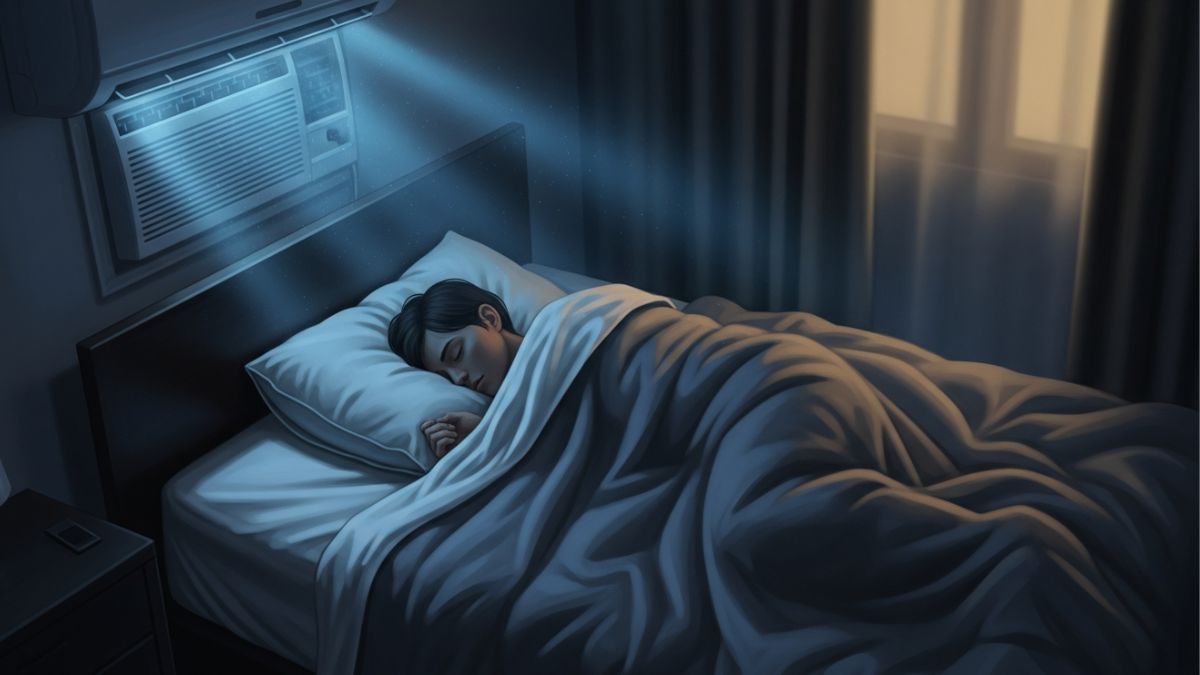
A viral Instagram reel that has amassed over 325,000 views has sparked debate about whether sleeping in cold, air-conditioned rooms impairs the liver’s natural detoxification processes. The claim, shared by fitness influencer Priyank Mehta to his million followers, suggests that cold environments force the body to divert blood flow away from the liver to maintain core temperature, potentially compromising overnight recovery.
In the widely-shared reel, which has garnered over 3,300 likes and 5,500 shares, Mehta presents a dialogue where a woman explains that the liver undergoes critical repair and detoxification at night. She claims that when room temperatures drop below 18-19°C, the body prioritizes heat conservation over liver function, resulting in compromised recovery despite seemingly adequate sleep.
The post’s caption acknowledges that air conditioning itself isn’t problematic but warns against “extreme cold,” recommending temperature settings of 22-24°C, avoiding direct airflow, using light blankets, and steering clear of late or heavy dinners.
However, medical experts and scientific literature tell a different story.
Dr. Chetan Kalal, Associate Director of Hepatology at Gleneagles Hospital Mumbai and Maharashtra’s first DM Hepatologist, dismisses the claim outright. “There is no scientific evidence to suggest that ambient temperature, including sleeping in an air-conditioned room, directly affects liver detoxification or regeneration,” he explains.
Dr. Kalal emphasizes that while sleep timing and quality significantly impact liver function, temperature plays a negligible role. “To the best of my knowledge, there is not a single human study showing that cold temperatures or AC air can impair liver regeneration or detoxification,” he adds.
The liver, he explains, functions continuously like a factory that “operates tirelessly,” filtering, storing, and metabolizing substances around the clock regardless of environmental temperature.
Dr. Amit Gupta, Senior Neonatologist and Paediatrician at Motherhood Hospitals in Noida, concurs. “Liver detoxification is a continuous biological process. It does not stop or slow down just because the room temperature is changed,” he states. He notes that any morning sluggishness from sleeping in colder environments likely stems from sleep disturbance rather than impaired liver function.
The scientific research often cited in support of these temperature-related liver claims comes primarily from animal studies conducted under extreme laboratory conditions. A 2022 study exposed mice to prolonged cold stress, showing increased inflammatory markers and liver enzyme activity. Similarly, a 2023 study subjected rats to extreme temperatures of -10°C for eight hours, conditions dramatically different from typical bedroom environments.
Both studies demonstrated that severe cold stress could trigger pathological changes in animal liver tissue. The 2023 research highlighted that extreme cold exposure activates cell damage pathways and affects multiple internal systems beyond just surface tissues.
However, experts caution against applying these findings to humans sleeping in air-conditioned rooms. Dr. Gupta points out that “many of these temperature-related liver studies are conducted on animals, especially reptiles or under extreme laboratory conditions,” with no solid human evidence demonstrating that normal AC use pushes the body into “survival mode.”
Instead of focusing on room temperature, both physicians emphasize lifestyle factors that genuinely impact liver health. Dr. Kalal advises avoiding excess carbohydrates, sugary drinks, alcohol, unnecessary medications, and chemical toxins. “Regular physical activity, stress management, and adequate sleep of at least seven to eight hours are far more important,” he says.
The consensus among medical professionals is clear: while maintaining comfortable sleeping conditions is important for quality rest, there’s no scientific basis for concerns that moderate air conditioning hampers liver function. As Dr. Kalal succinctly puts it, “The idea that cold air can ‘stop’ liver detox is scientifically incorrect.”
For those concerned about liver health, the medical recommendation focuses on balanced nutrition, regular exercise, adequate hydration, and sufficient sleep—factors proven to support the liver’s natural functions—rather than worrying about the temperature setting on your thermostat.
Fact Checker
Verify the accuracy of this article using The Disinformation Commission analysis and real-time sources.

7 Comments
I’m a bit skeptical of the claims in the viral reel, especially given the pushback from medical experts. But I do think there’s value in exploring the relationship between environmental factors, sleep, and liver function further. More rigorous research would help clarify this issue.
Interesting study on the potential impact of cold AC on liver function during sleep. I wonder if there are any mitigation strategies beyond just adjusting temp settings, like using a light blanket or avoiding heavy meals late at night.
Good point. The article mentioned some simple tips like that, which could help minimize any negative effects. More research would be helpful to fully understand the mechanisms involved.
As someone who relies on AC, this is a bit concerning. While the experts seem skeptical, I’ll probably try adjusting my overnight temp and see if I notice any difference in how I feel upon waking. Little changes can sometimes have an impact.
This is an intriguing finding, though the medical experts seem to disagree with the claims in the viral reel. I’d be curious to see if there are any follow-up studies that can shed more light on the potential connection between cold temps and liver recovery during sleep.
Agreed, the conflicting views from experts make me want to see more rigorous scientific evidence on this topic. It’s an interesting hypothesis but needs further investigation.
The idea that cold temps could impair overnight liver recovery is intriguing, even if the current evidence is mixed. I wonder if certain populations or health conditions might make someone more susceptible to this potential effect.