


Listen to the article
In a dramatic display of digital deception, a coordinated network of false news stories has been circulating on social media claiming that prominent American celebrities have exposed names from the Jeffrey Epstein files during a live broadcast. These fabricated claims, which have generated substantial engagement online, represent a sophisticated misinformation campaign with international origins.
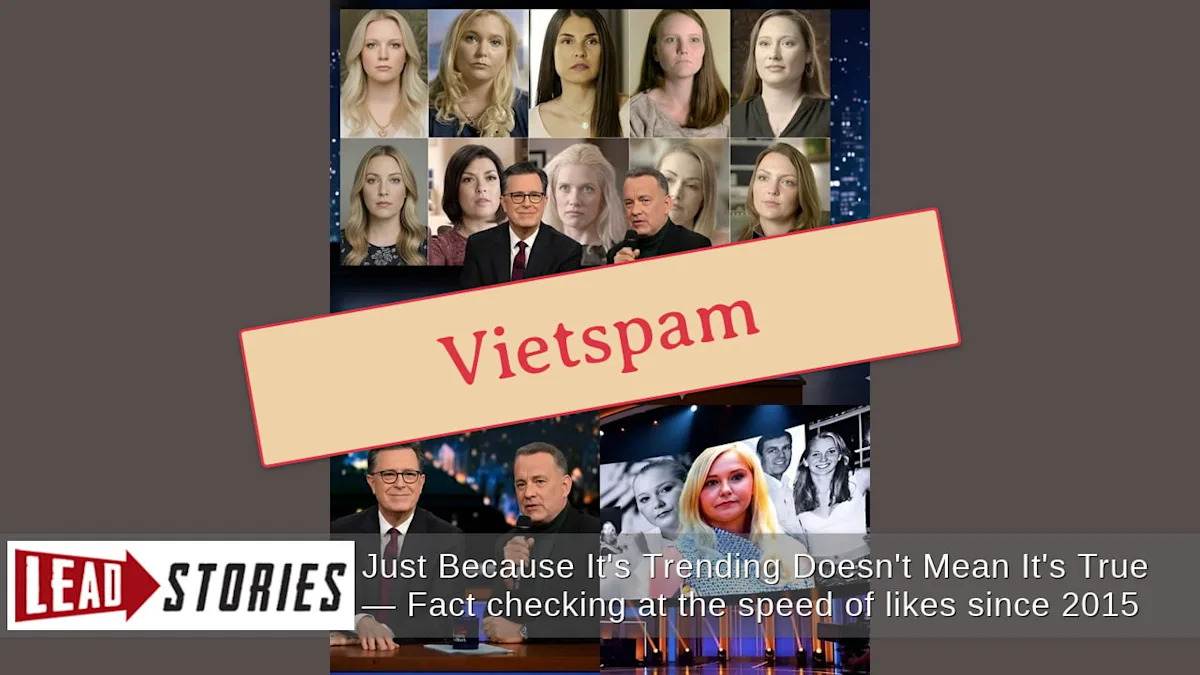
The viral posts, which began appearing on Facebook around February 17, feature sensational headlines claiming that television personalities Stephen Colbert and Tom Hanks, among others, had “named 12 figures for the first time mentioned in part two of the Epstein files” during a broadcast that purportedly reached “1.2 billion views” within hours.
An investigation into these claims reveals no credible evidence of such broadcasts occurring. Searches across major news platforms and social media yield no legitimate reporting of these alleged celebrity revelations. Instead, what emerges is a pattern of nearly identical stories being published by a network of suspicious websites and Facebook pages.
Particularly noteworthy is the foreign origin of this misinformation. The Facebook page promoting one version of the story, called “The News 247,” lists its administrators as four individuals based in Vietnam. This connection is significant because fact-checking organizations have previously identified Vietnam as a major source of AI-generated false stories that exploit celebrity names to drive traffic and engagement.
The technical footprint of these fabrications extends beyond Vietnam. The websites linked to these Facebook posts, such as “Triforce347,” provide no information about their editorial teams and, according to WHOIS data, operate from Brazilian IP addresses. This international web of misinformation suggests a sophisticated operation designed to monetize false content.
A deeper analysis reveals a template-like approach to these fabrications. The posts feature interchangeable elements—different celebrities are named as the supposed whistleblowers, with varying numbers of “exposed” individuals and wildly different view counts. Some versions replace Colbert and Hanks with Jon Stewart or other notable personalities, while maintaining the same sensationalist structure.
This pattern of interchangeable celebrity names is a hallmark of what fact-checkers have dubbed “Viet spam”—false stories generated at scale from Vietnam that exploit public interest in both celebrities and controversial topics to maximize engagement and, presumably, advertising revenue.
The technical sophistication of these campaigns has increased in recent years, with AI-generated content making the text appear more natural than earlier, more obvious scams. However, the lack of corroborating evidence from legitimate news sources remains a clear indicator of fabrication.
Media literacy experts note that sensational claims about high-profile figures making dramatic revelations should trigger immediate skepticism, especially when such “news” appears exclusively on unfamiliar websites or is shared solely through social media platforms.
The Epstein case, which involves investigations into a network of sexual abuse and trafficking linked to the late financier Jeffrey Epstein, remains a topic of significant public interest. This makes it an attractive subject for misinformation campaigns seeking to capitalize on audiences’ desire for justice and transparency in the case.
Fact-checking organizations continue to monitor and debunk these false claims, with many publishing guidelines on how to identify “Viet spam” and other forms of coordinated misinformation. Experts recommend verifying news through multiple credible sources before sharing content, especially when it involves sensational claims about public figures.
As digital literacy becomes increasingly essential in navigating today’s information landscape, the proliferation of such coordinated misinformation campaigns underscores the importance of critical evaluation of sources and claims, particularly when they align too perfectly with audience expectations or desires.
Fact Checker
Verify the accuracy of this article using The Disinformation Commission analysis and real-time sources.

9 Comments
This story serves as a reminder of the need for greater transparency and accountability in the media landscape. Responsible journalism and a commitment to truth-telling are essential in countering the proliferation of fabricated stories.
This is a timely reminder of the need for greater media literacy and critical thinking when consuming news and information online. Verifying claims through reputable sources is essential to avoid falling victim to manipulative misinformation campaigns.
While the story of celebrities exposing names from the Epstein files may be attention-grabbing, the lack of credible evidence undermines its validity. We should be wary of sensationalized stories that seem too good to be true.
Well said. Extraordinary claims require extraordinary evidence, and this story clearly falls short on that front. Maintaining a healthy skepticism is crucial in an era of pervasive misinformation.
This story highlights the ongoing challenge of combating the proliferation of fake news online. Fact-checking and media literacy are crucial tools in identifying and debunking these types of coordinated disinformation campaigns.
Agreed. Maintaining a healthy skepticism towards sensational claims, especially those lacking credible sources, is important in an age of rampant misinformation.
It’s troubling to see how quickly false narratives can gain traction and spread across social media. This underscores the importance of fact-checking and media literacy efforts to combat the rise of clickbait and disinformation.
I’m curious to learn more about the international origins and networks behind this false news story. Understanding the tactics and motivations of those spreading disinformation can help us develop more effective strategies to counter it.
It’s disappointing to see such blatant misinformation being spread, especially around high-profile figures. We should be vigilant in fact-checking claims before sharing them, to avoid contributing to the spread of clickbait and false narratives.