


Listen to the article
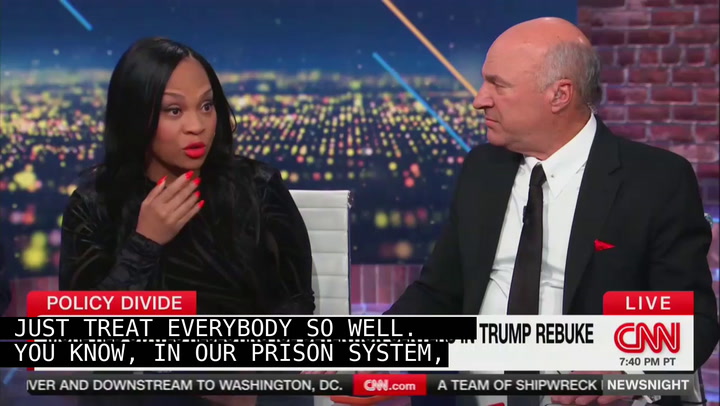
CNN anchor Abby Phillip intervened during a heated panel discussion to fact-check “Shark Tank” investor Kevin O’Leary after he dismissed legitimate concerns raised by a fellow commentator.
The exchange occurred during a segment focused on the economic outlook under the Biden administration. Political analyst Maria Cardona had been making a point about economic improvements when O’Leary abruptly cut her off, attempting to redirect the conversation.
“She’s making a legitimate point,” Phillip firmly interjected, stepping in to ensure Cardona could complete her thought. The moment highlighted the ongoing challenge news programs face in maintaining productive discourse when discussions become contentious.
Cardona had been citing positive economic indicators, including the recent drop in inflation rates, improved job numbers, and economic growth that has outpaced many other developed nations. These metrics have been central to the Biden administration’s narrative about economic recovery following the pandemic-induced downturn.
O’Leary, known for his blunt assessments on financial matters, appeared eager to shift the conversation to areas where he felt the economy was underperforming. The wealthy investor has frequently criticized government spending and regulatory approaches on various news programs.
The exchange reflects the increasingly polarized nature of economic discussions in media. While economic data can be interpreted in multiple ways, political affiliations often influence which metrics commentators emphasize and which they downplay.
CNN, like other major news networks, has struggled with balancing different perspectives while ensuring discussions remain factual and productive. Phillip’s intervention represents the delicate role moderators play in these situations – allowing diverse viewpoints while preventing the conversation from devolving into talking points that ignore substantive facts.
Financial experts have noted that economic discussions on television often suffer from oversimplification and partisan framing. The complex nature of economic indicators – from GDP growth and unemployment figures to inflation rates and wage growth – means that selective focus can paint dramatically different pictures of economic health.
“Television discussions about the economy often fail to capture nuance,” said Dr. Emily Cartwright, economics professor at Georgetown University. “Viewers would benefit from understanding that economic reality is complex, with positive and challenging indicators often coexisting.”
The incident also underscores the growing importance of fact-checking in real time. As misinformation and selective use of statistics have become more prevalent in public discourse, journalists like Phillip find themselves increasingly in the position of having to correct the record during live broadcasts.
CNN has faced criticism from both sides of the political spectrum regarding its coverage of economic issues. Conservative viewers have accused the network of highlighting positive economic news to support the Biden administration, while liberal viewers have criticized platforms that give voice to wealthy business figures like O’Leary without adequate context about how policy affects different economic classes.
Phillip, who previously served as a White House correspondent before moving to anchor duties, has developed a reputation for pressing guests regardless of political affiliation. Her intervention in this case demonstrates how anchors increasingly must balance facilitating conversation with ensuring factual accuracy.
The exchange between Cardona, O’Leary, and Phillip encapsulates the challenges of economic discourse in today’s media environment. As the 2024 election cycle approaches, economic performance under the Biden administration will undoubtedly remain a central point of contention, with each side highlighting the metrics that best support their narrative.
For viewers, such moments serve as a reminder of the importance of consuming economic news from diverse sources and understanding that no single metric tells the complete story of economic health. As media consumers navigate these discussions, the role of moderators like Phillip in maintaining fact-based discourse becomes increasingly vital to public understanding.
Fact Checker
Verify the accuracy of this article using The Disinformation Commission analysis and real-time sources.

8 Comments
The economic recovery appears to be progressing, but there are likely still areas of concern. It will be interesting to see how the different perspectives play out in the public discourse.
It’s good to see journalists stepping in to ensure important points aren’t overshadowed by more forceful personalities. Balanced coverage is key, especially on complex economic issues.
Absolutely. Giving a platform to diverse viewpoints, while also fact-checking claims, helps viewers form a more nuanced understanding of the issues.
This exchange highlights the importance of allowing all perspectives to be heard, even when they challenge conventional narratives. Fact-checking is crucial for maintaining productive discourse.
This exchange highlights the ongoing challenges faced by news programs in fostering productive discourse, especially when discussions become heated. Maintaining balance and civility is key.
While investors like O’Leary may have strong opinions, it’s important to consider a range of data points and expert analysis when assessing the state of the economy.
Agreed. A nuanced understanding of economic conditions requires looking beyond any single individual’s perspective, no matter how prominent they may be.
Kudos to Abby Phillip for standing up for the legitimate concerns raised. Maintaining civility and ensuring all voices are heard is crucial for informative discussions.