


Listen to the article
Viral “Frozen Sea Monster” Video Exposed as AI-Generated Hoax
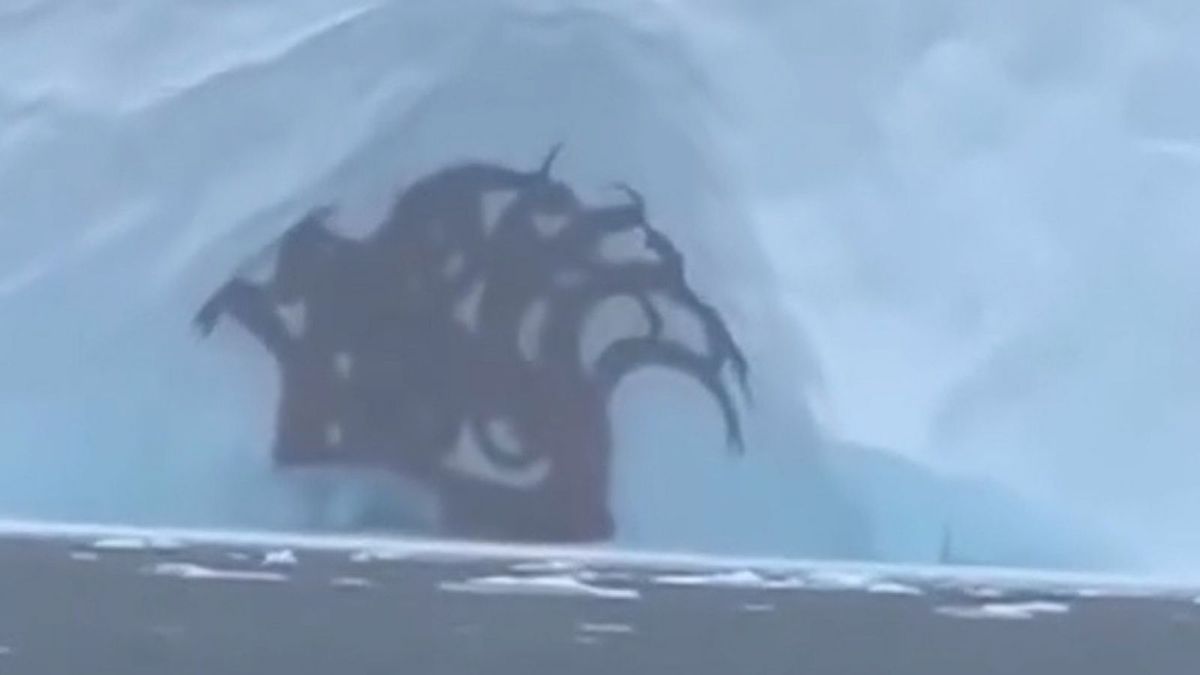
A video purporting to show a monstrous creature frozen within an Arctic ice shelf has gone viral across social media platforms, accumulating tens of millions of views since February. The 10-second clip, which depicts what appears to be a dark, tentacled beast embedded in ice, has sparked widespread speculation about mythological sea monsters—but digital forensics has revealed it to be entirely artificial.
The footage first appeared on January 28 on a Facebook page called “Viajes al Desconocido” (Journeys Into the Unknown), before being reposted on X (formerly Twitter) by user @Crazymoments01 with the caption “You’re still here, sleeping beast.” From there, the video spread rapidly across multiple platforms including Instagram, Threads, and YouTube, with some versions appearing horizontally mirrored.
Social media users eagerly compared the supposed creature to various fictional and mythological entities, including Godzilla’s King Ghidorah, dragons from “Game of Thrones,” the Lovecraftian Cthulhu, and biblical sea monsters like Leviathan. Others debated whether the image might represent natural ice tunnels or a case of pareidolia—the psychological tendency to perceive meaningful patterns in random visual stimuli.
Digital investigation specialists determined the origin of the clip by downloading all 300 frames of the video and conducting extensive reverse image searches. This process led back to the original Spanish-language Facebook page, which hosts hundreds of similar AI-generated videos featuring fantastical creatures in snowy or icy environments.
The telltale characteristics of AI generation are evident throughout the page’s content. Each video maintains a suspiciously consistent duration of exactly 10 or 15 seconds—typical maximum lengths for videos created by current AI image generation tools. The page also features numerous thematically related clips, including follow-up videos showing what commenters identified as a “Hydra” with seven heads, captioned “From another angle, this is just getting started.”
This incident highlights the growing challenge of distinguishing between authentic and artificially generated content online. As AI technology becomes increasingly sophisticated and accessible, social media platforms have seen a surge in convincing but entirely fabricated imagery circulating as genuine documentation.
The rapid spread of the “frozen monster” video demonstrates how easily AI-generated content can capture public imagination and go viral, particularly when it appeals to longstanding fascinations with cryptozoology and unexplored oceanic depths. Despite having no basis in reality, such content often gains credibility through mass sharing and engagement.
Marine biologists and polar researchers note that genuine discoveries in Arctic and Antarctic environments typically appear in scientific publications with extensive documentation and peer review, rather than as brief, contextless social media clips.
This is not the first time fabricated marine creatures have captured public attention. Unlike this AI-generated hoax, however, some unusual marine species do occasionally make headlines—such as the authentic “little sea monster” with humanlike teeth previously documented by marine scientists.
The “frozen sea monster” joins a long tradition of mythical marine creatures, from the Loch Ness Monster to various regional sea serpent legends. Unlike those historical myths, however, today’s digital fabrications can be created and distributed globally within minutes, presenting new challenges for digital literacy and fact-checking in the AI era.
As of publication, attempts to contact the operators of the “Viajes al Desconocido” Facebook page for comment on the AI tools used to create the video have not received a response.
Fact Checker
Verify the accuracy of this article using The Disinformation Commission analysis and real-time sources.

10 Comments
Well, color me disappointed – I was hoping this ‘frozen sea monster’ might actually turn out to be some newfound prehistoric creature! But alas, it seems the truth is a bit more mundane. Still, I appreciate the diligence of the researchers in getting to the bottom of this viral hoax.
Haha, same here! The idea of an ancient, mythical sea monster lurking in the ice was a fun thought. But you’re right, the reality of it being an AI-generated fake is a bit less exciting. At least the fact-checkers were on the case to set the record straight.
Ah, the wonders of modern technology! While I’m a bit let down to learn this ‘Hydra-like sea monster’ was just an AI-generated hoax, I have to admire the technical skill that went into creating such a convincing illusion. Kudos to the fact-checkers for their investigative work.
You’re right, the technology behind these kinds of digital fakes is pretty impressive. It just goes to show how important it is to approach viral videos and images with a critical eye these days. Fact-checking is key!
While it’s disappointing to learn this ‘frozen sea monster’ is just an AI hoax, I appreciate the diligence of the fact-checkers in getting to the bottom of it. Viral videos can be so powerful in shaping narratives these days, so it’s important we scrutinize them carefully.
Agreed. It’s a good reminder that not everything we see online is real, even if it looks convincing. Kudos to the researchers for taking the time to properly investigate and expose this as a digital fabrication.
Fascinating stuff! I love when the truth behind viral media hoaxes is revealed. Clearly this ‘frozen sea monster’ was just an AI-generated fabrication. Still, it’s fun to see how people’s imaginations can run wild with these kinds of mysterious videos.
Absolutely, it’s amazing how quickly misinformation can spread online these days. Glad the fact-checkers were able to expose this one as a digital hoax.
Haha, I can just imagine the conspiracy theories that must have been swirling around this ‘Hydra-like sea monster’. People love to get carried away with tales of ancient, mythical creatures lurking in the deep. Good to know it was just an AI trick and not a real-life Cthulhu sighting!
For sure, the internet loves a good cryptid story. But I’m glad the researchers were able to debunk this one as digitally fabricated rather than some newfound prehistoric creature.